Metabolic Friendship
Metabolic Friendship
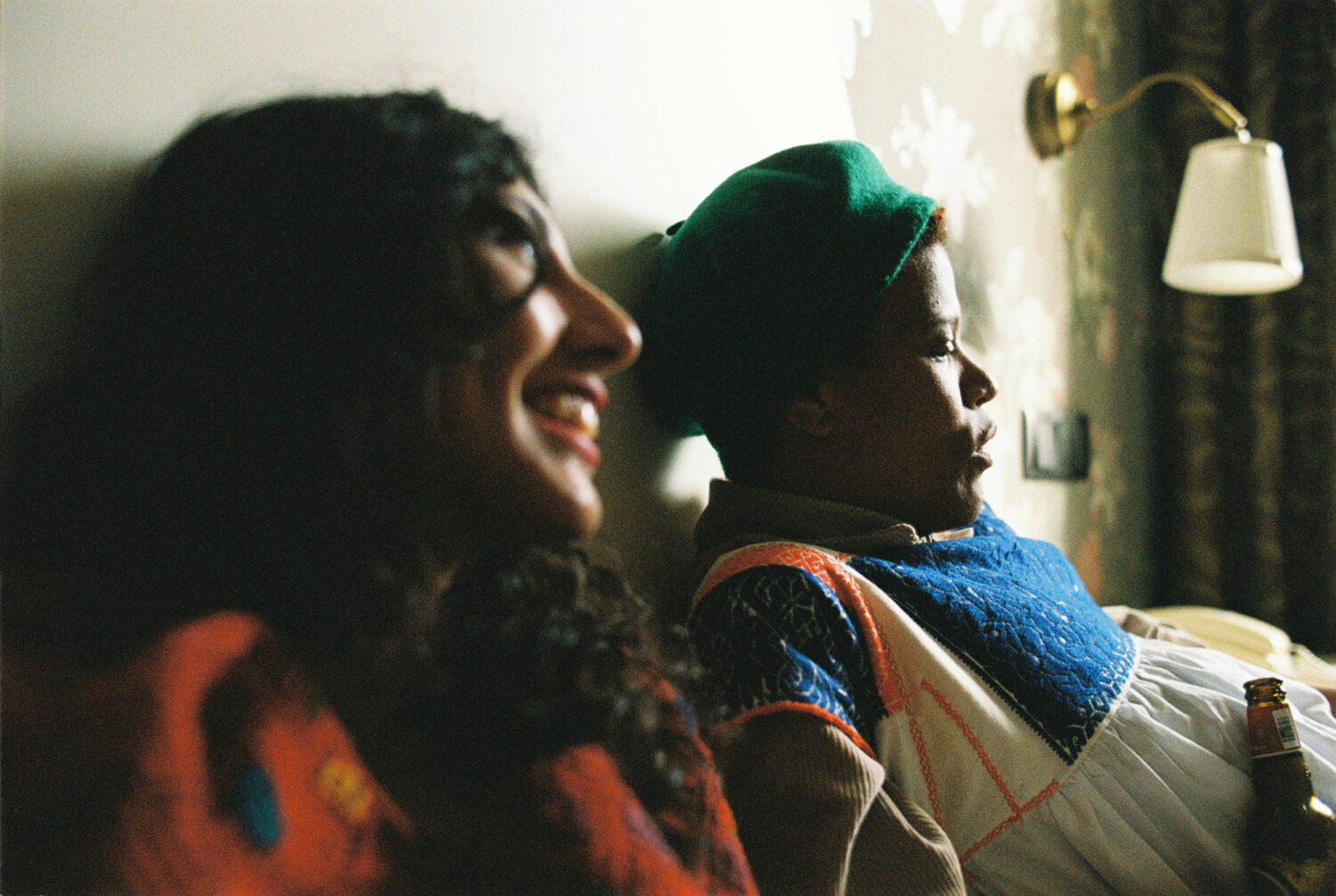
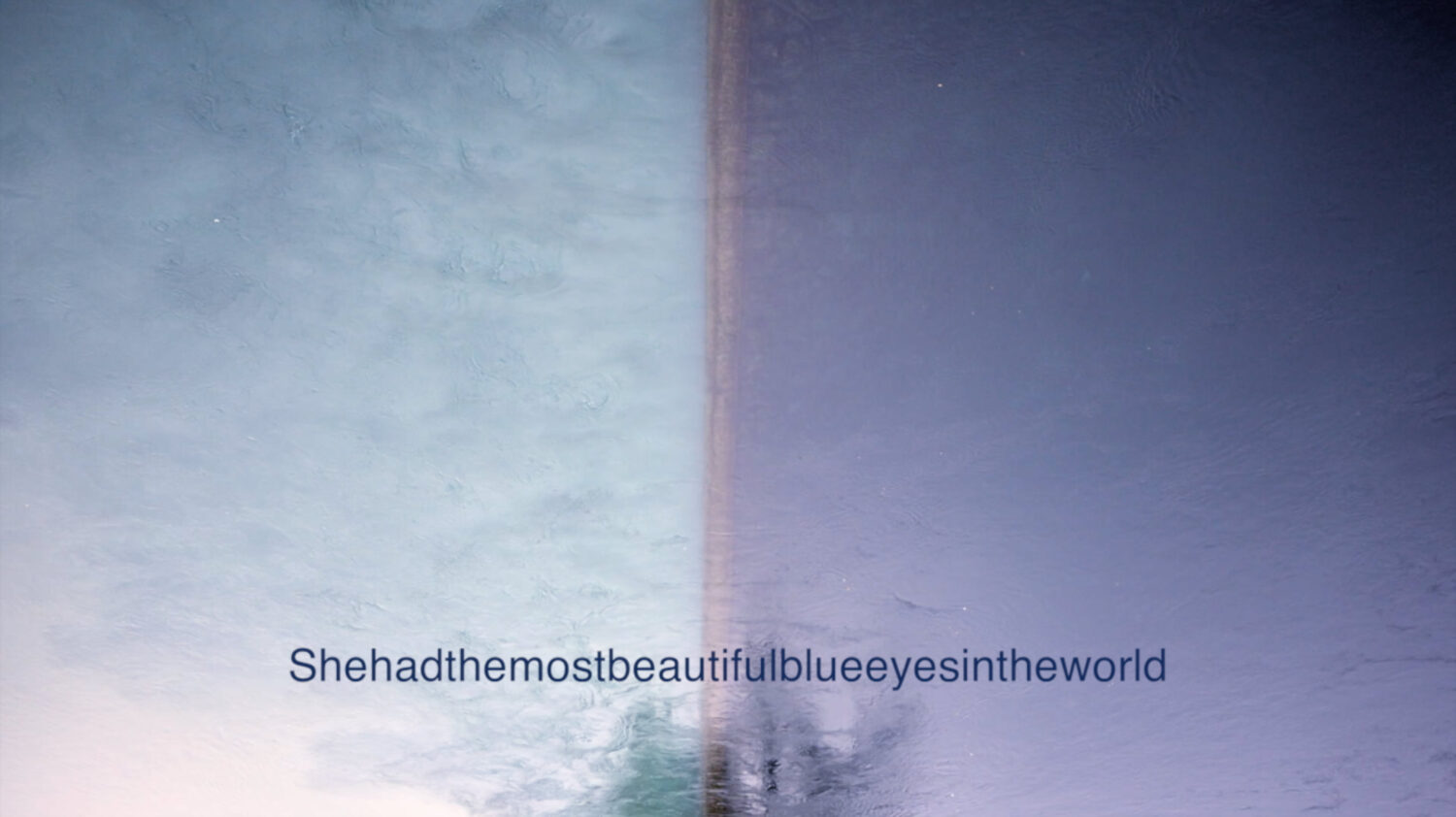
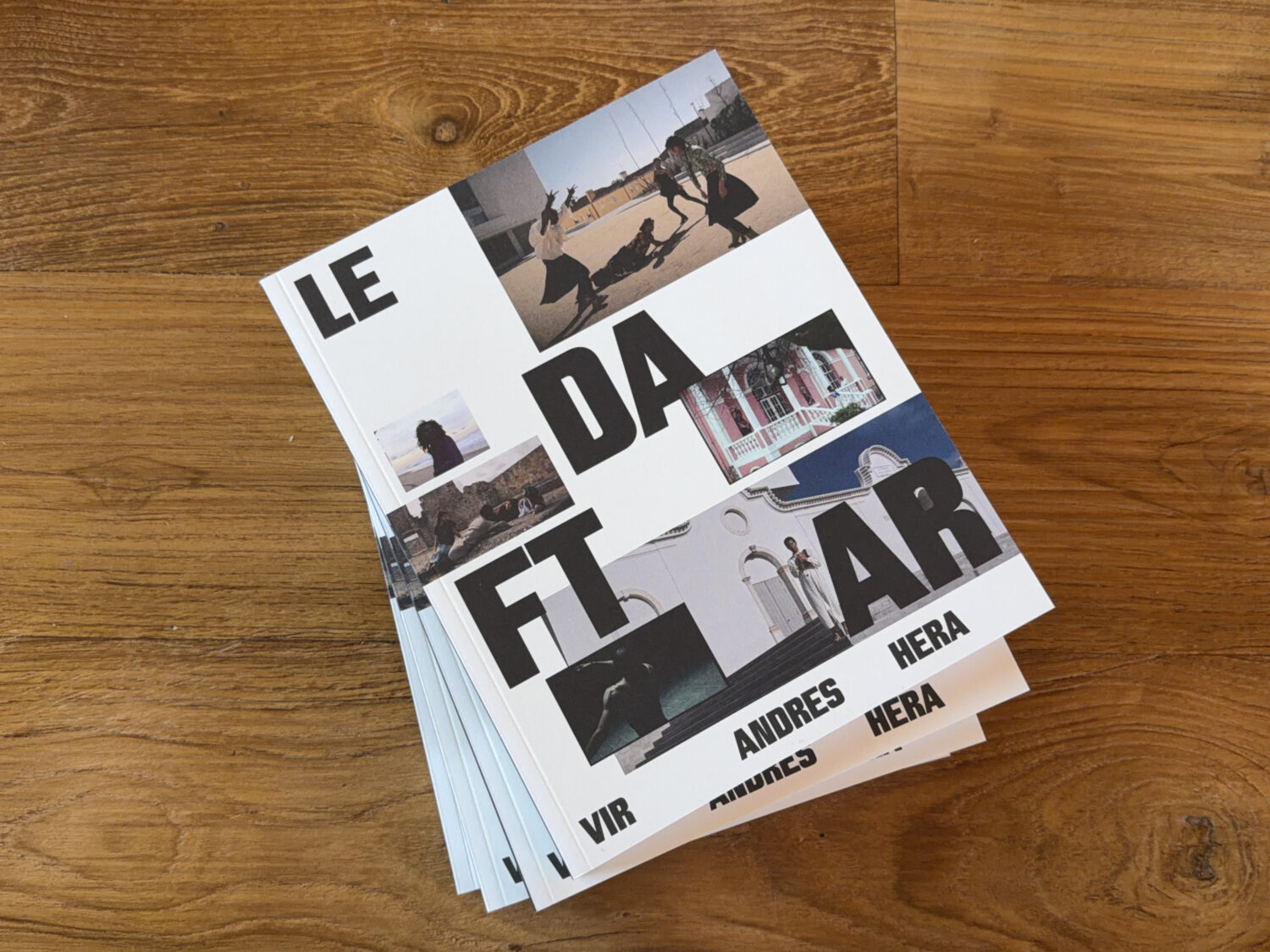
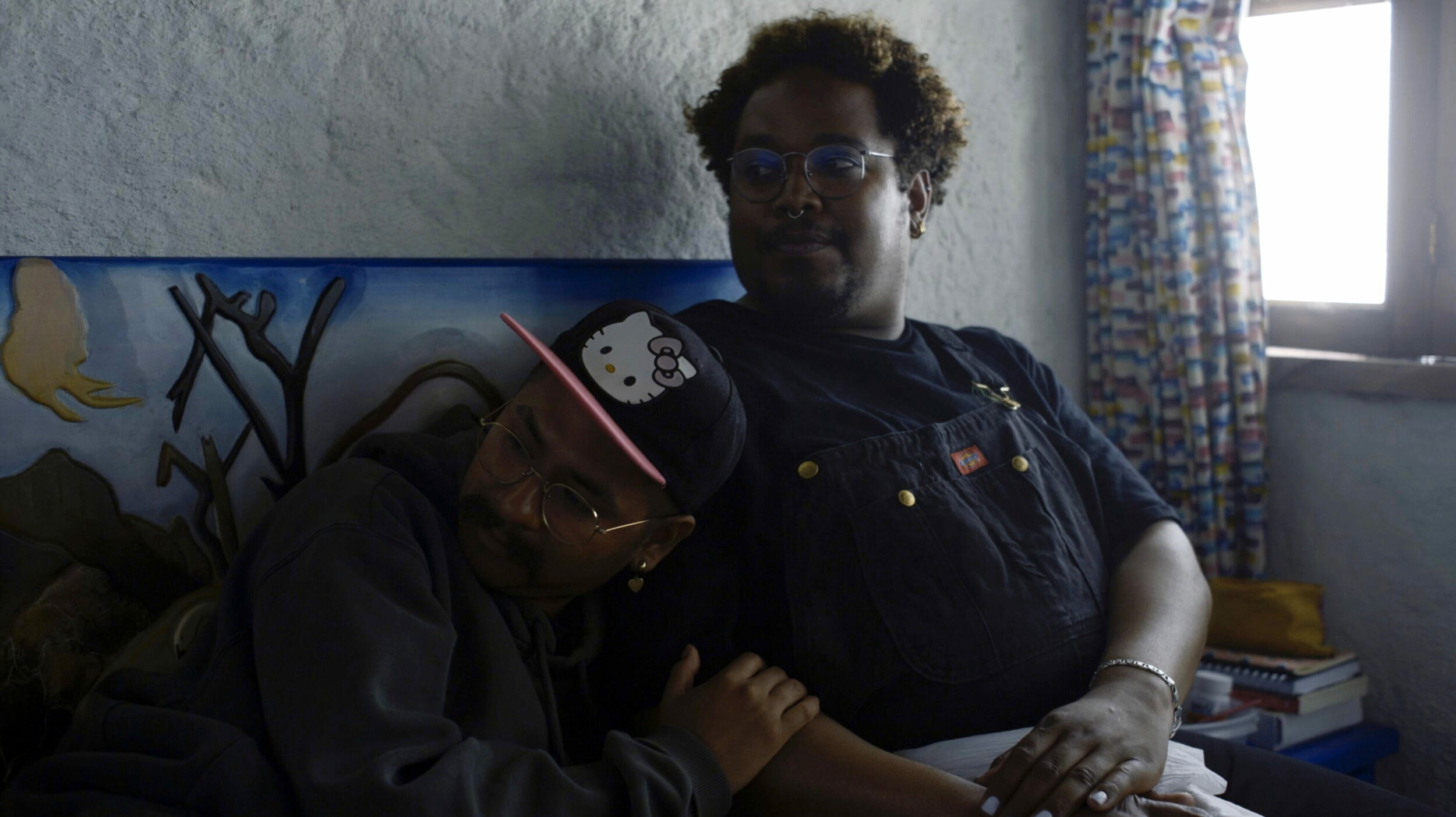
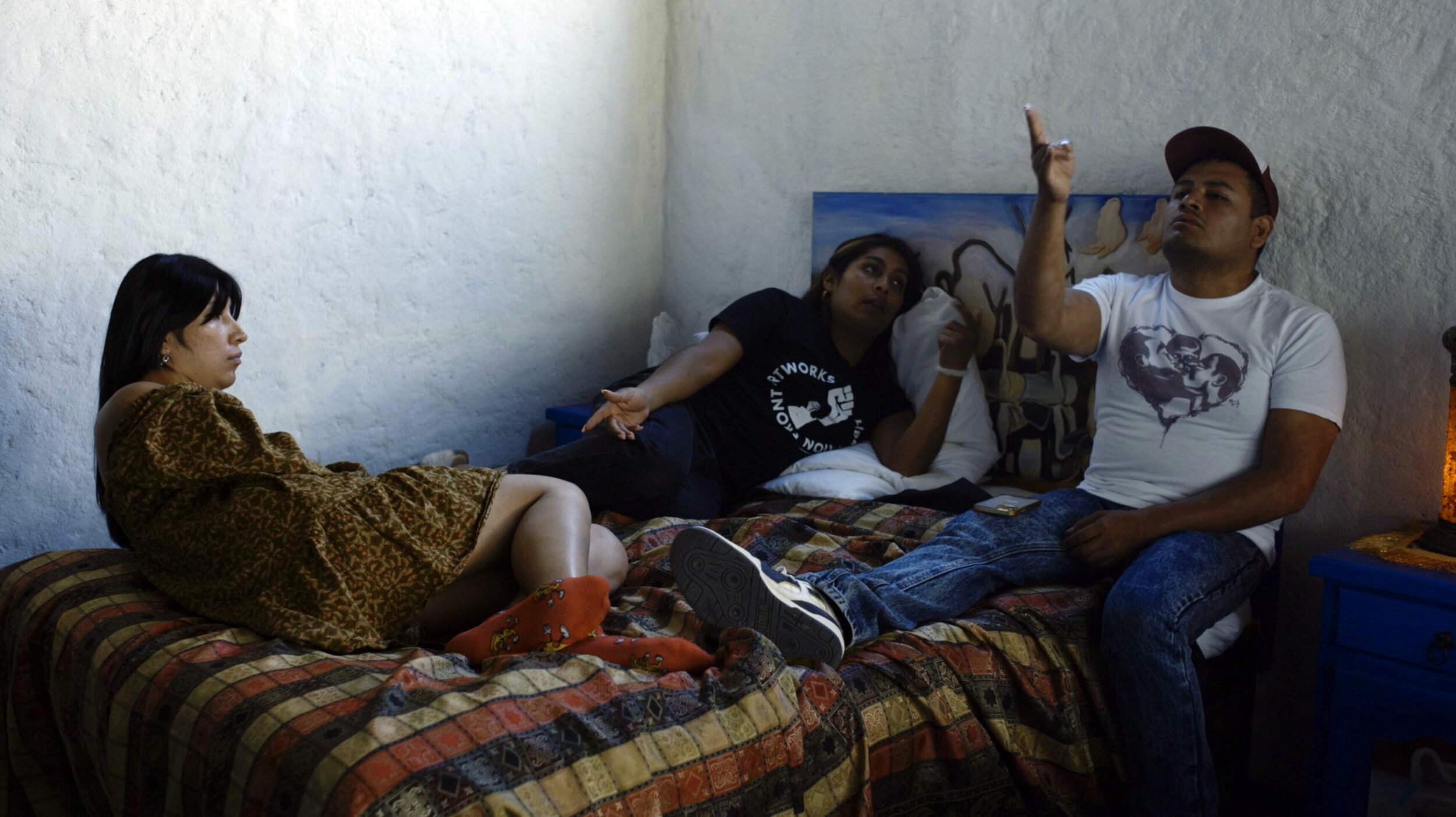
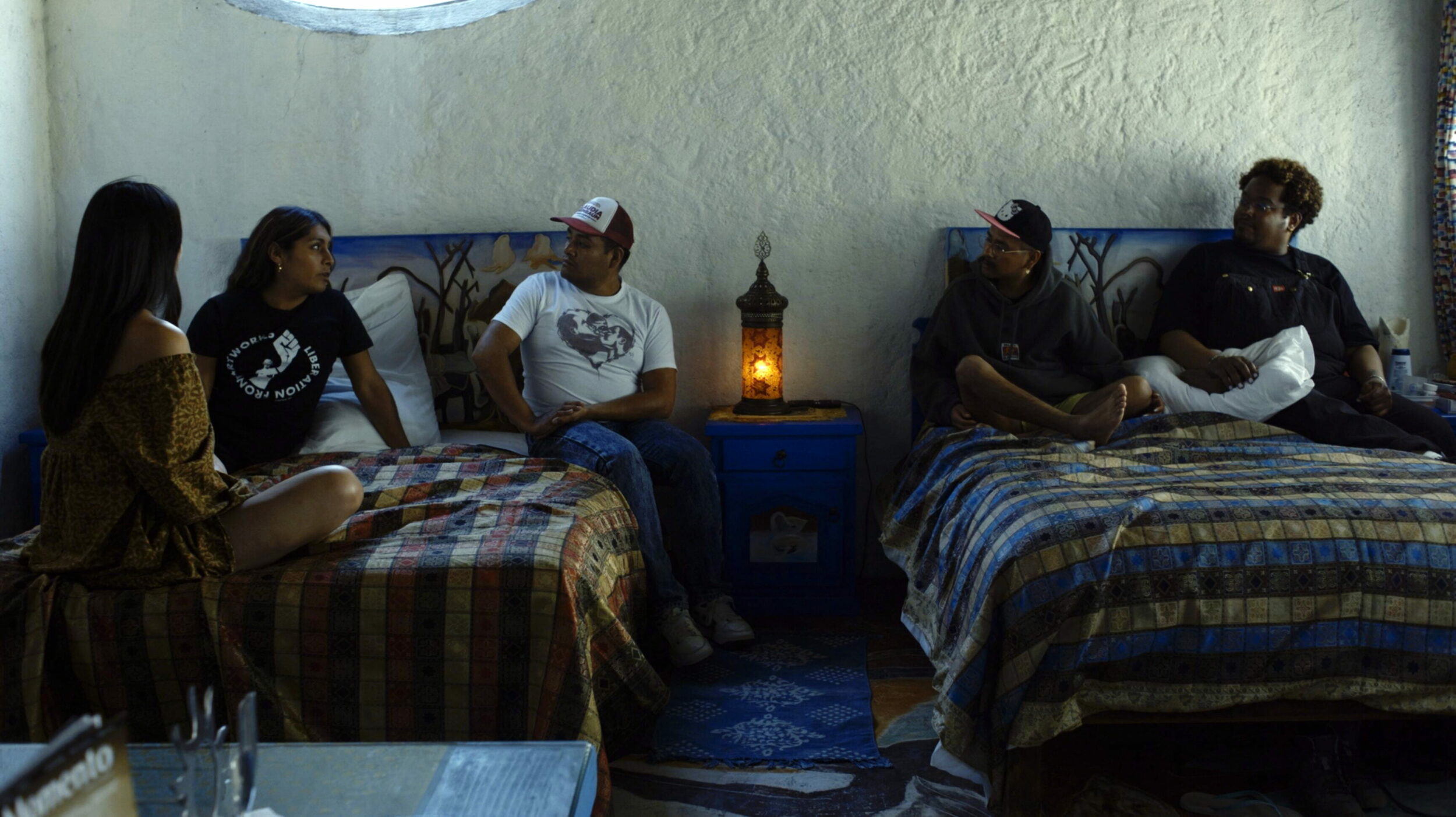
Between the four walls of a room, fifteen people are in motion. Some are on the bed, exchanging confidences; at the foot of the bed, someone sketches out dance steps. Others, off screen, film this brightly colored crew. Despite the crowded closed-door quality, the camera pushes past the limits of the room. At its center, the bed. A place of retreat, of refuge, it is also a place of escape, deeply diasporic in how it lets bodies travel to a thousand other elsewheres. For friendship, the bed is a safe place, at once nourishing and experimental; an intimate but political setting for the construction of identities. » 1 « In this room and these beds from Le Daftar & Amoxtli, Vir Andres Hera opens a possible alternative to normative spaces, the very spaces they set out to crack open in the performance series The Sacred, Without World. From the bed we move to the museum, from closeness to distance, but in both cases what is at stake is survival. How does friendship survive in a heteronormative society that grants it only a secondary role? How can the deeply colonial legacy of museums rise back to the surface of institutions’ universalist discourse? The artist navigates between these two unfathomable questions, weaves them together, and offers a few threads of Ariadne to hold onto.
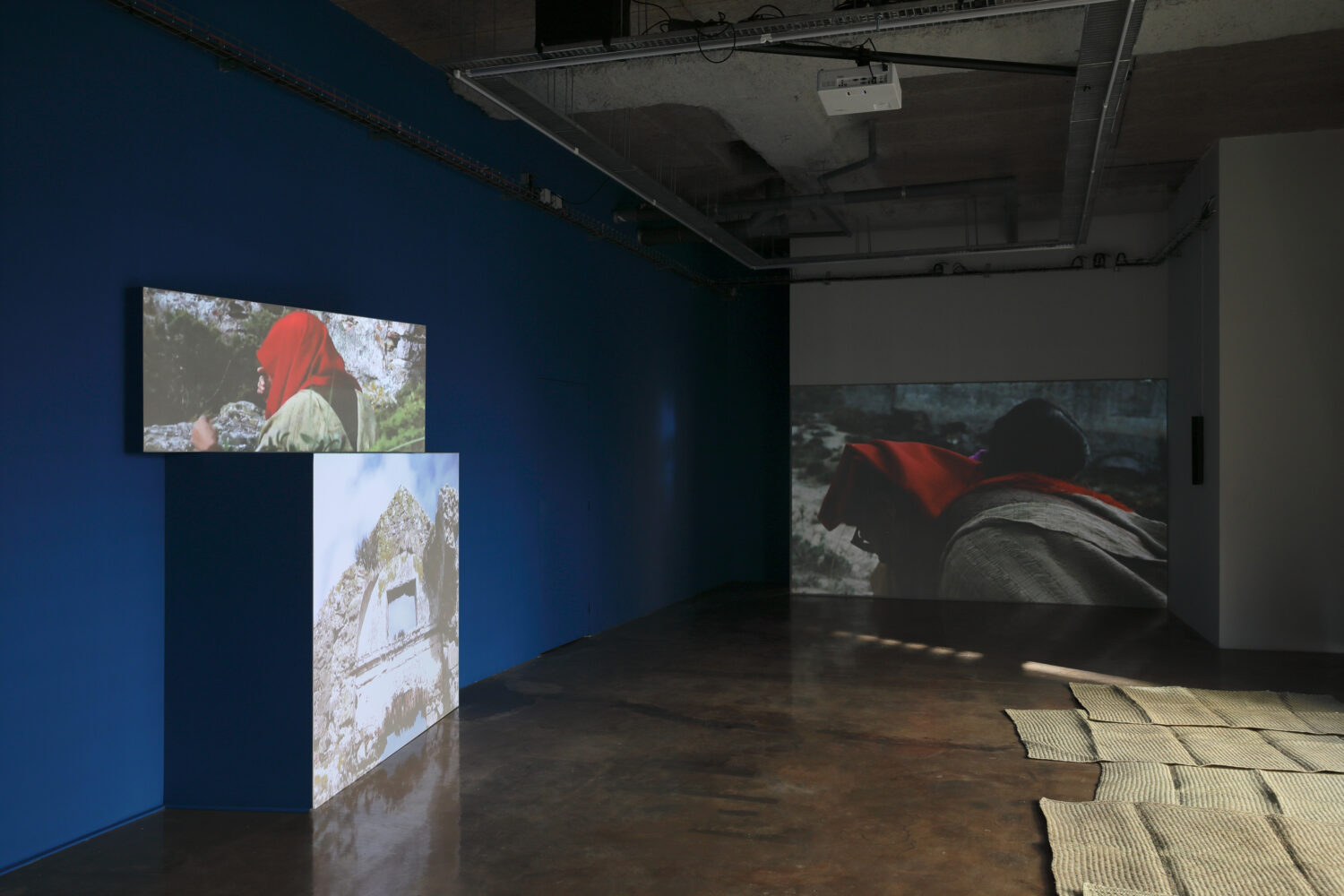
One of their hypotheses is critical fabulation, in the manner of Saidiya Hartman. » 2 « In the chapter Las Ancestras [A conversation over the ruins] from the film Amoxtli, the group talks and imagines, in fragments, what life on this archaeological site might have been. Collective fiction comes to inhabit the ruin. It circulates between the stones, fills the gaps. It works like matsutake, the mushroom that only grows in destroyed forests. » 3 «
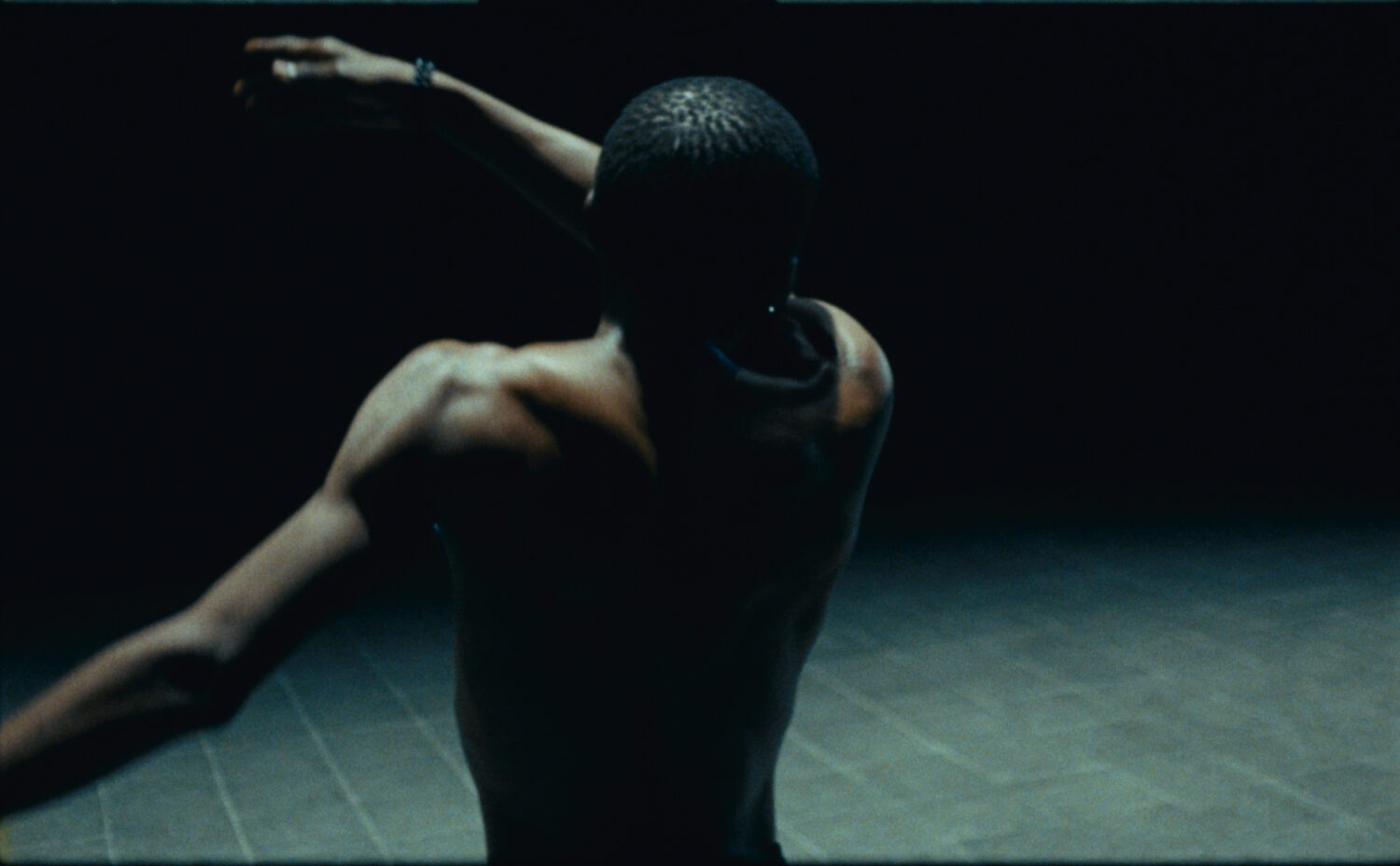
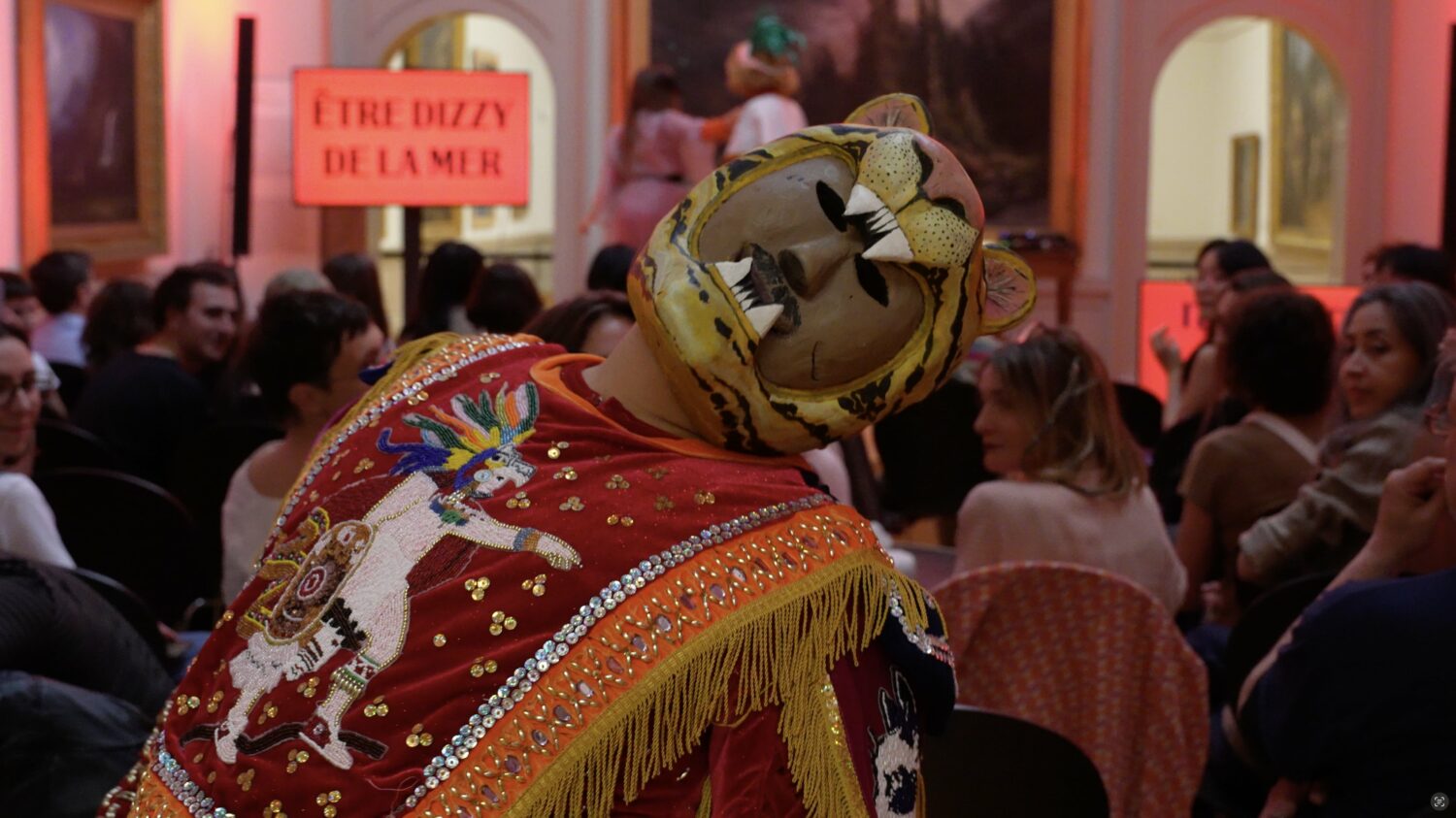
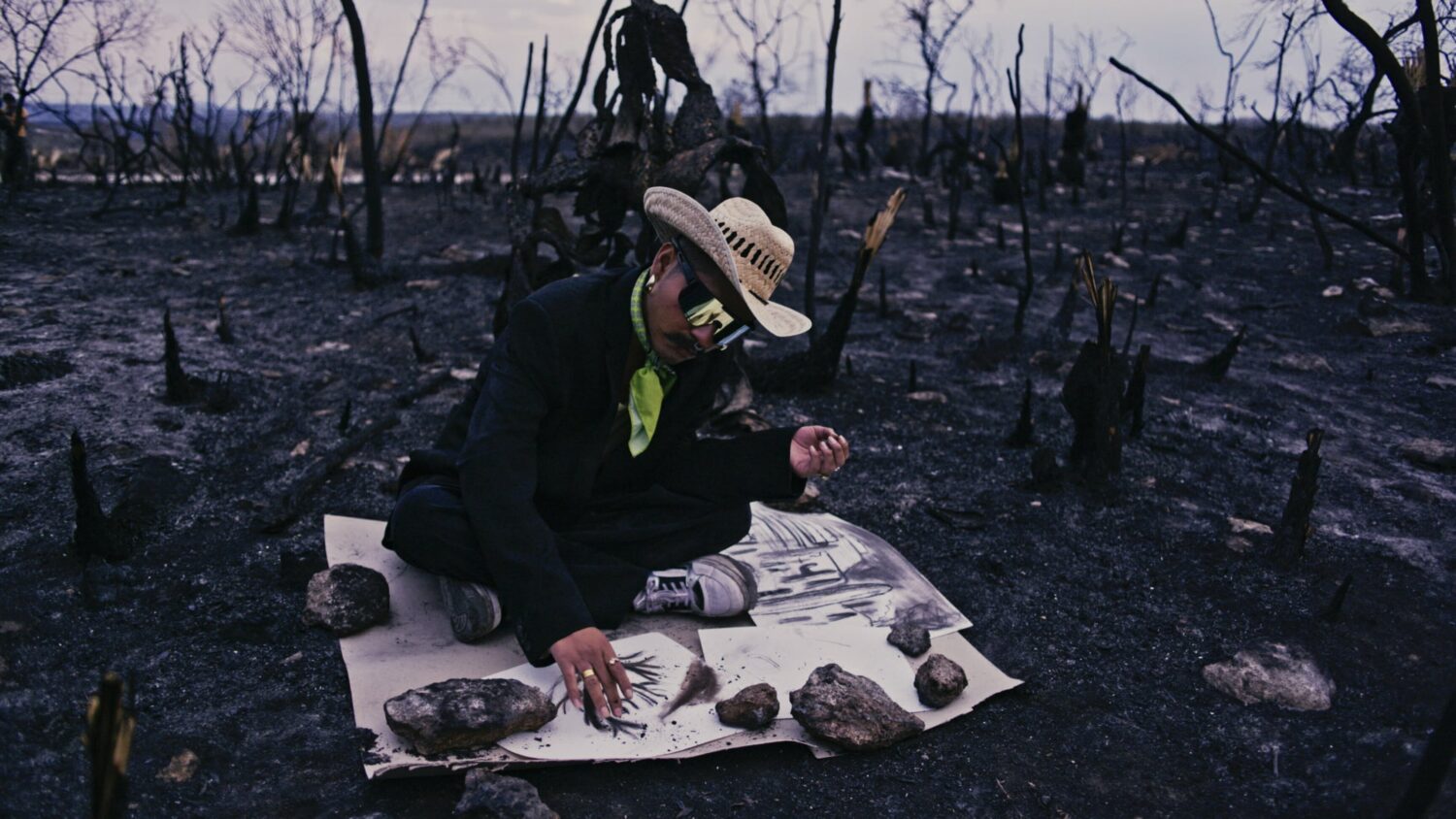
Ruins are not only heaps of old stones, but also the state our pasts and inheritances are in. Inspired by Elena Garro’s novel La culpa es de los tlaxcaltecas (1964), in which a man in Indigenous dress returns from the past to de-westernize the heroine, the character in carnival costume that the artist plays in The Sacred, Without World walks backwards. To move forward while going backwards becomes a way of undoing Western choreographies of the body and opting instead for disorientation. » 4 «
By refusing forward motion in this performance, or by diffracting the image across several screens in their films, new relational possibilities open up. Bodies brush against each other, seek each other out, move apart and come back. Everything seems thought from the sense of touch. The camera is no longer a typically ocular tool but the extension of a body among other bodies, circulating at skin level. The image becomes haptic: » 5 « it no longer only seeks to show, it seeks to make felt.
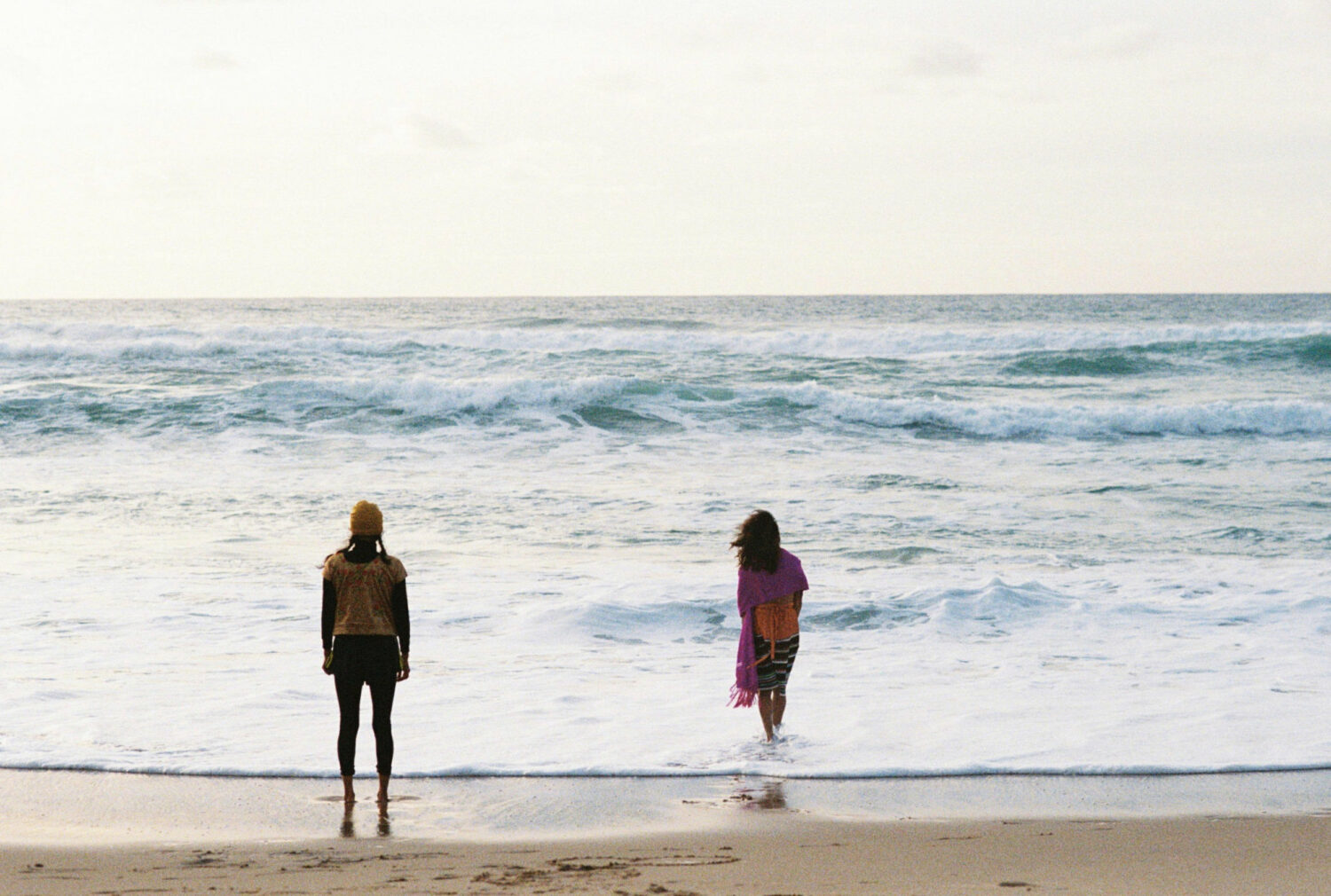
In their working process as in their films, the artist circulates friendly energies. You feel them at your fingertips, they slip into the hollow of your ear, you can wear them and adorn yourself with them. These back-and-forths are so many memorial affects passing from body to body rather than through the authority of the archive, joining what Diana Taylor calls the repertoire. » 6 « Weeks after watching the chapter Everywhere my brown shoe steps, a phrase still resonates in me: “friendship as a necklace.” » 7 «
Pleasant as the experience is, not everything is rosy, smooth and harmonious. Vir Andres Hera carefully avoids the trap of liberal, consensual friendship, the kind that admits no disagreement and silences rupture. On the contrary, conflict could well appear in the credits of Amoxtli, so much did it punctuate exchanges and takes. To think of conflict as dysfunction is a Western reduction. bell hooks encourages it, and puts it forward as an active principle of sisterhood. » 8 «
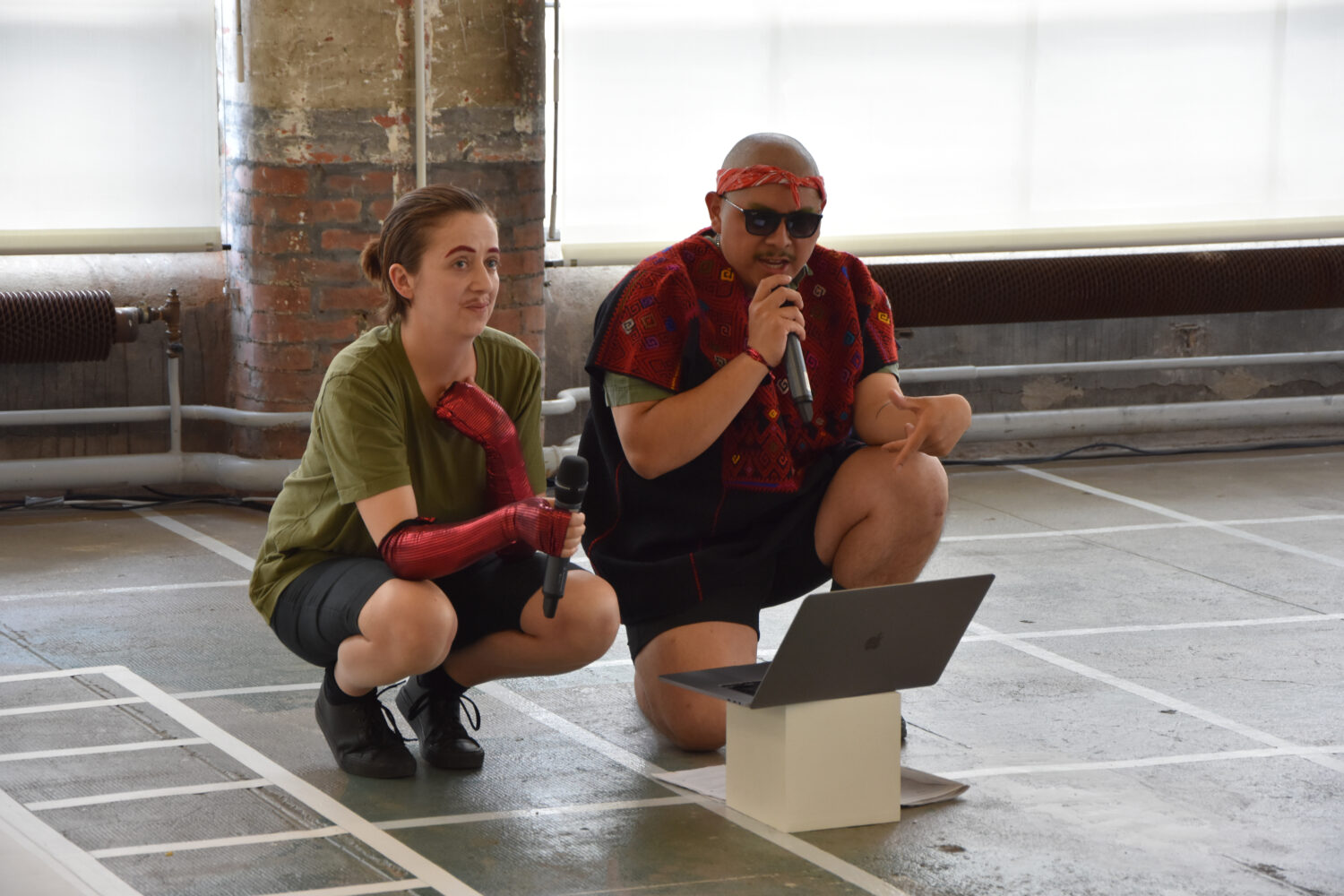
This queer and decolonial rereading of human relations also takes on the notion of discomfort, of incomodidad, to borrow the term from the chapter No tengas miedo de los truenos [Fête foraine]. In their practice, the artist reverses the roles and the unease attached to them, confronting the museum with its contradictions, in the story it tells about itself as much as in its working methods. The official narrative is parasited by rumor and by the political power of gossip. “Kin as a millenary tradition of spilling the tea with your comadres” » 9 « is in fact one of the mantras of the fête foraine. The depreciation of gossip has mirrored the devaluation of women and gender minorities, up to their violent silencing with the “gossip bridle,” » 10 « a literal instrument of torture. Vir Andres Hera chooses to cut this bridle and brandish it as witness to an emancipation, a reclaiming of orality.
A reclaiming that goes through the mouth: the words and whispers that come out of it, but also what it lets us ingest and digest. In the continuity of the destruction of the colonial text and language called for by M. NourbeSe Philip, » 11 « Vir Andres Hera literally eats paper archives before our eyes. Then ingests sugar leaf, whose symbolism is unambiguous. An iconoclastic gesture par excellence, almost against nature, so many times were we told, as model schoolchildren, not to eat paper. It is the Western sacredness of the written that they chew and swallow.
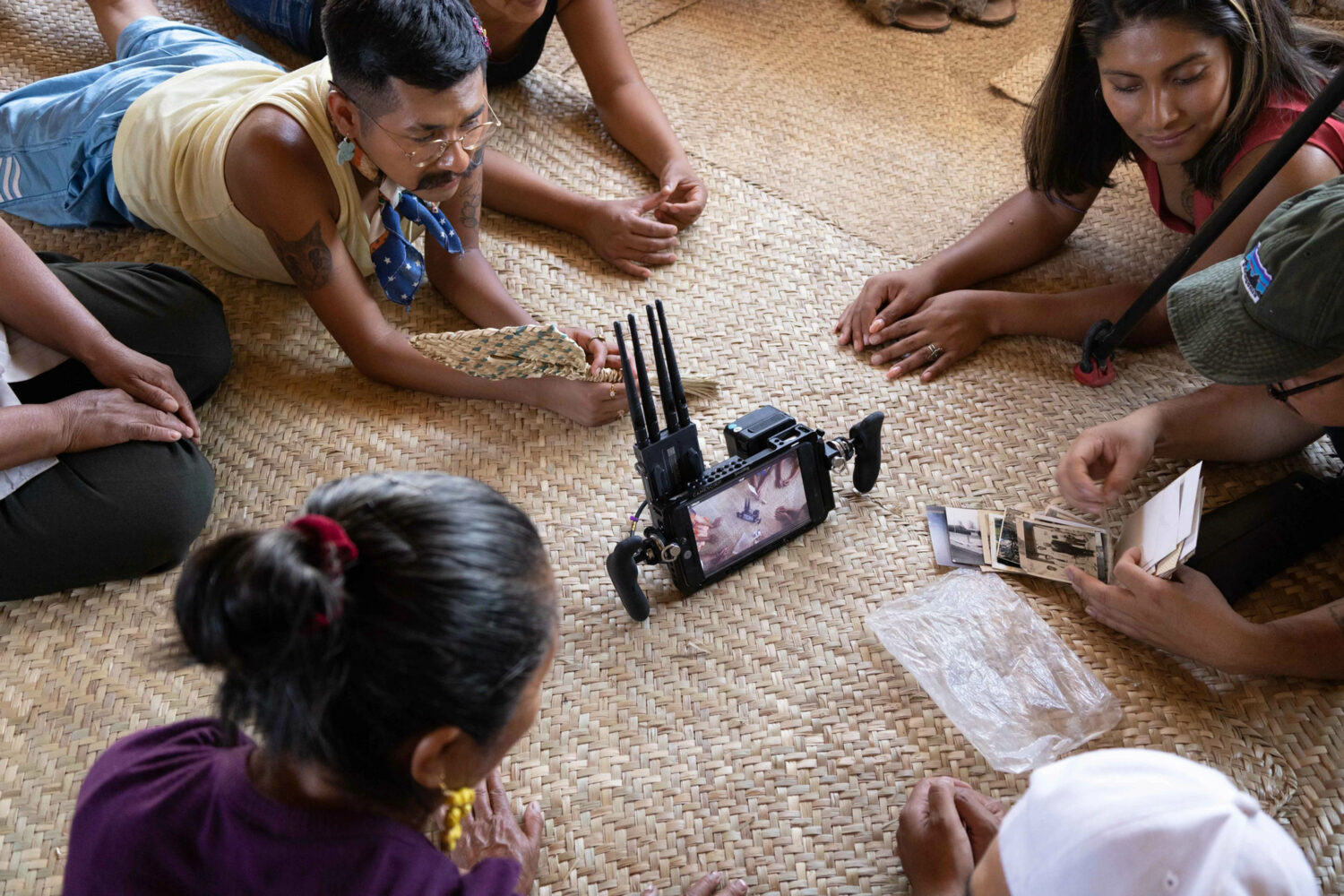
In Amoxtli, digestion is played out in the choice of an international team: Europeans and Latinos. An almost anthropophagic strategy, to borrow Oswald de Andrade’s terms, which consists in devouring Europe to transform relations of domination. » 12 « Part of the team is made up of Mexican activists and performers; the other brings together French technicians and translators, or ones based in France. On set no one shares the same codes. Work reflexes differ, not to say oppose. The performers wait for instructions while Vir Andres Hera deliberately gives none, entrusting the unfolding of the scenes to trial and error, spontaneity, mistake. In this friction of pedagogies, the possibility of a metabolic friendship is built. As Édouard Glissant put it, no identity is pure, » 13 « none can, none should take over. It is relation and coexistence that make mutual transformation possible, and that lead to the final choral and creole film.
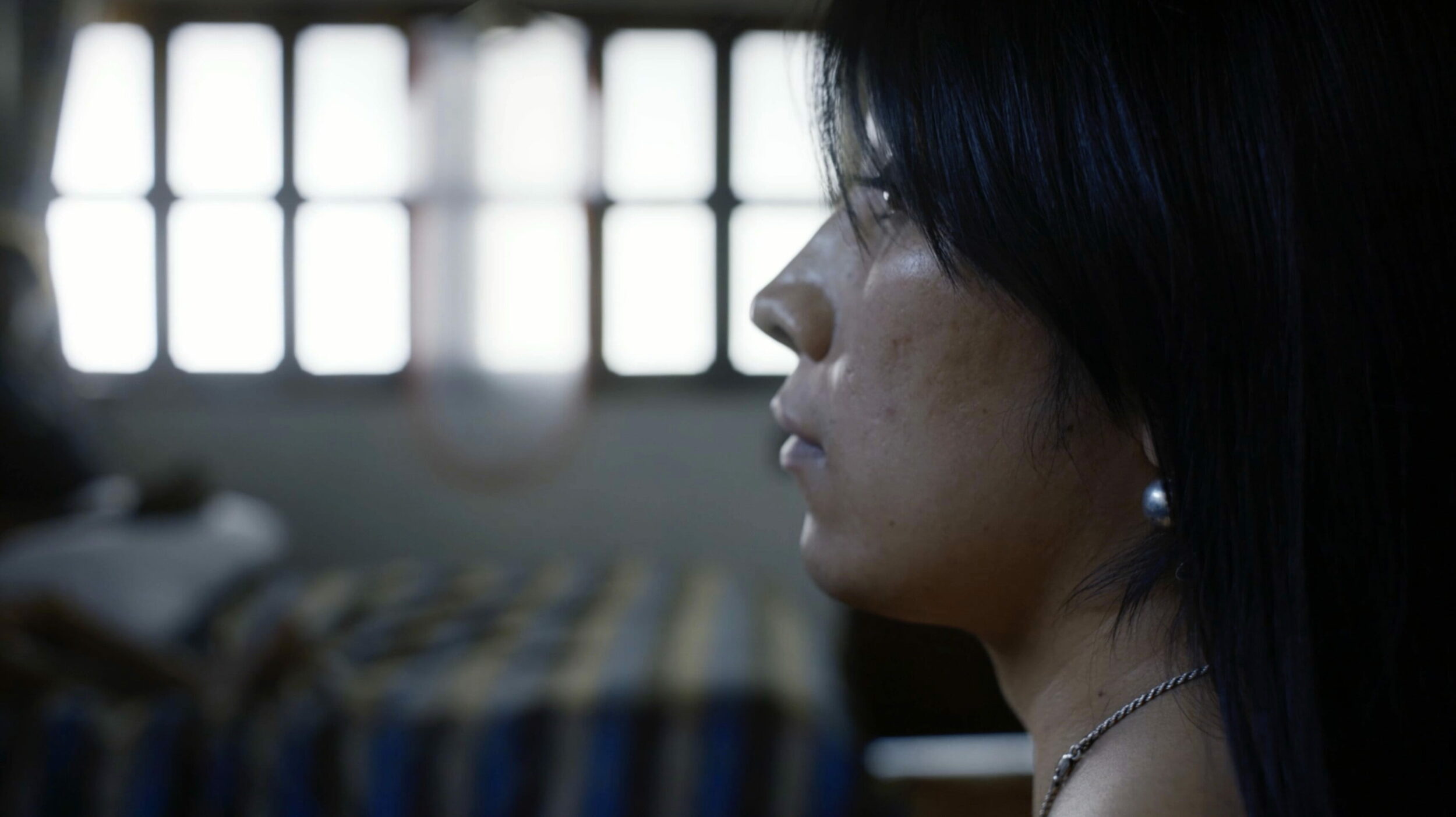
This reciprocal contamination is at work when it comes to finding common ground between the protagonists to move the film forward, but it is also present at the scale of Vir Andres Hera’s artistic practice as a whole. The performances are cinematographic, following rigorously written scenarios and scripts. They bathe in millimetric lighting and alternate shots and framings with virtuosity. The films are photographic; premeditation gives way to improvisation. What happens seems to flow from a developer fluid spreading between performers and technicians.
Finally, the negotiation or shortening of distances is not only spatial, not only at the scale of continents. The artist shares their practice with the generations that follow. In the performance Re-membrances, they invite a group of students from the Beaux-Arts de Montpellier to activate the texts of their personal notebooks, kept during their own student years. Friendship crosses ages and meets again around problems that are timeless anyway: exile, the relation to language, marginalization. A polyphony that looks into the past to grasp the present, Re-membrances lights the path toward queer futurity. » 14 « A horizon freed from the norms of white heteropatriarchy. Because we are not there yet, because the road is long, but because the iconography Vir Andres Hera patiently builds gives us a desirable, joyful glimpse of it.
Andréanne is a France-based curator and art critic. Her transhistorical practice stages frictions between contemporary art and pre-modern periods, especially the Middle Ages, taking friendship, gossip, and disagreement as serious sites of critical thought.