James Evans, Beatrix and the EPV
James Evans, Beatrix and the EPV
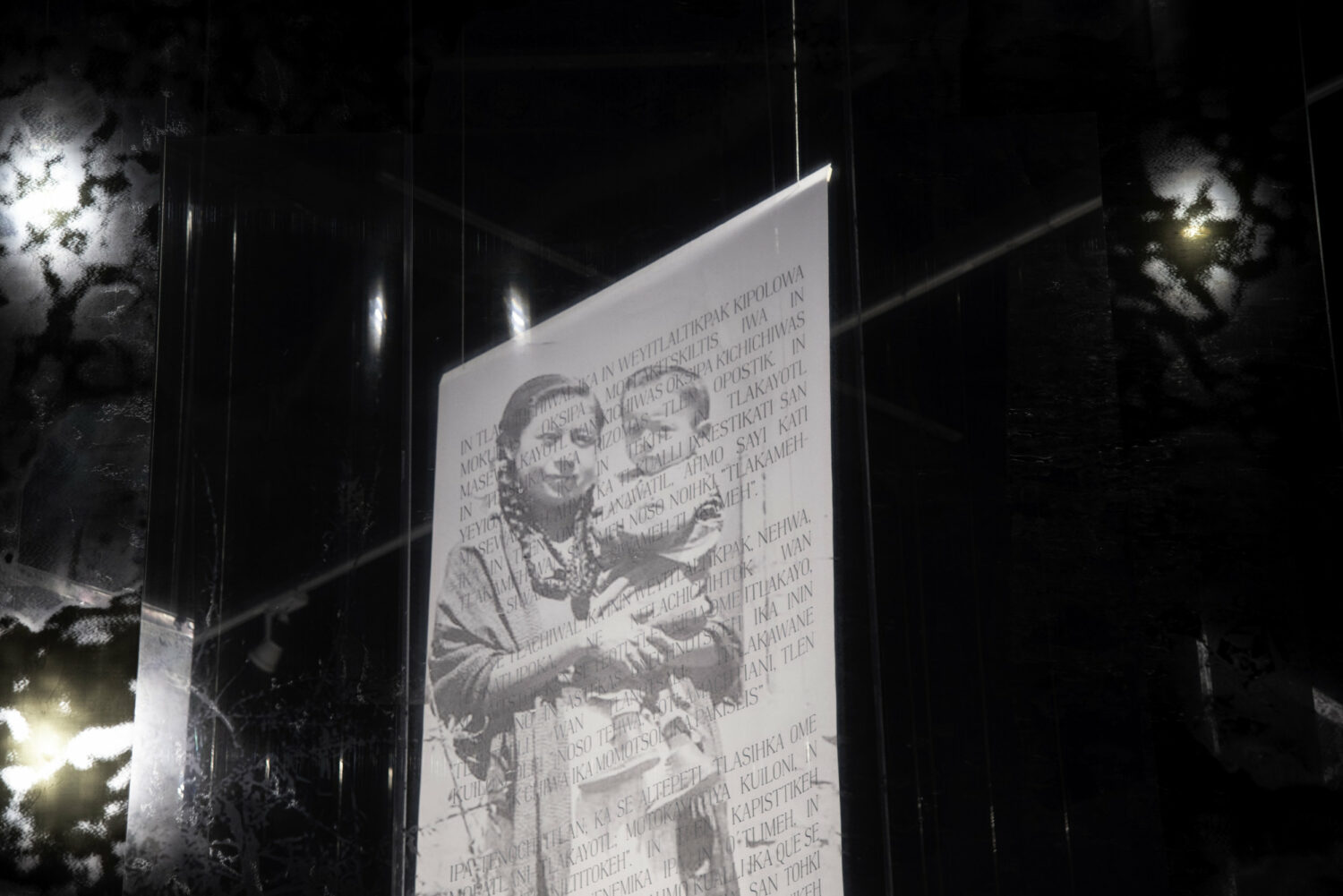
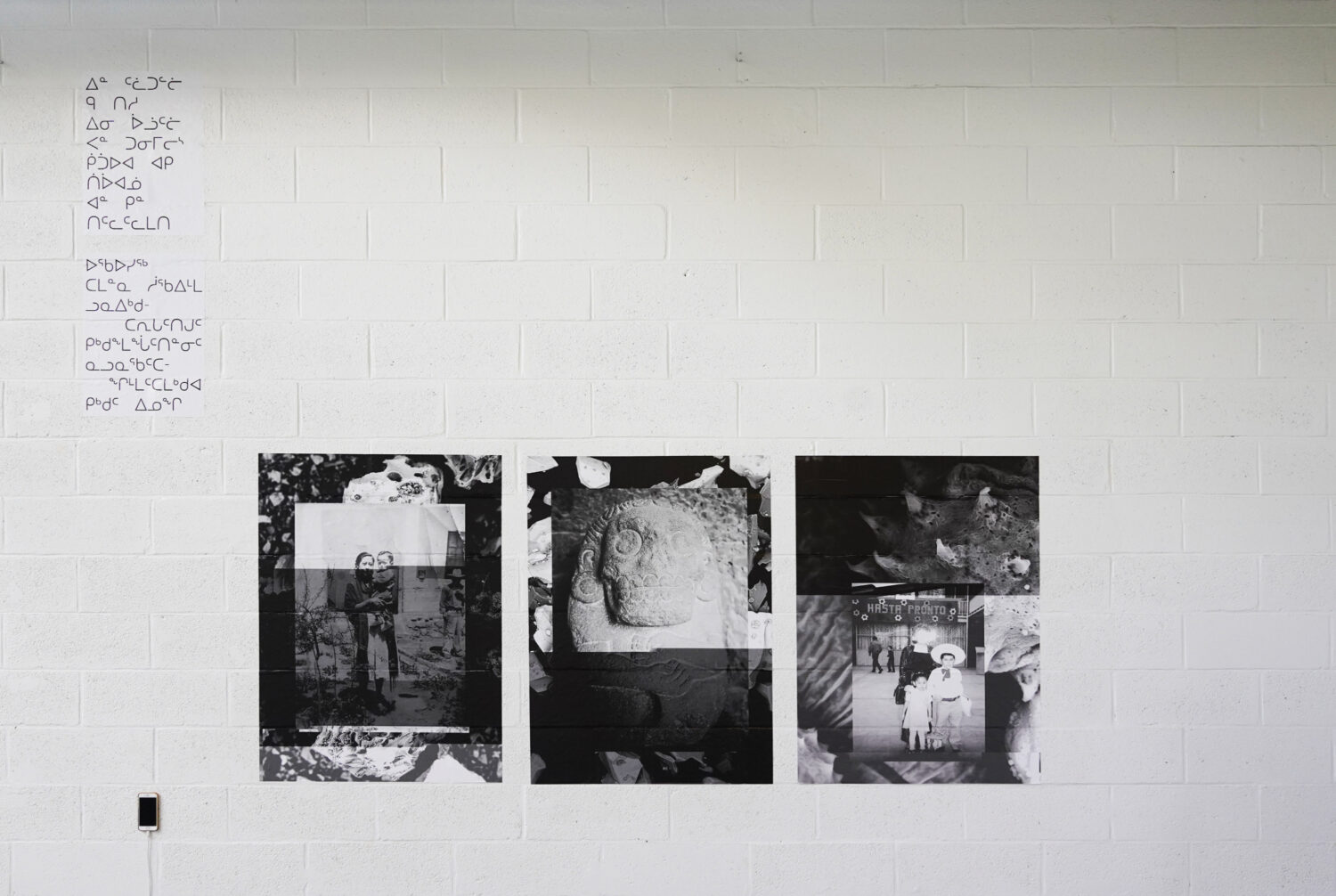
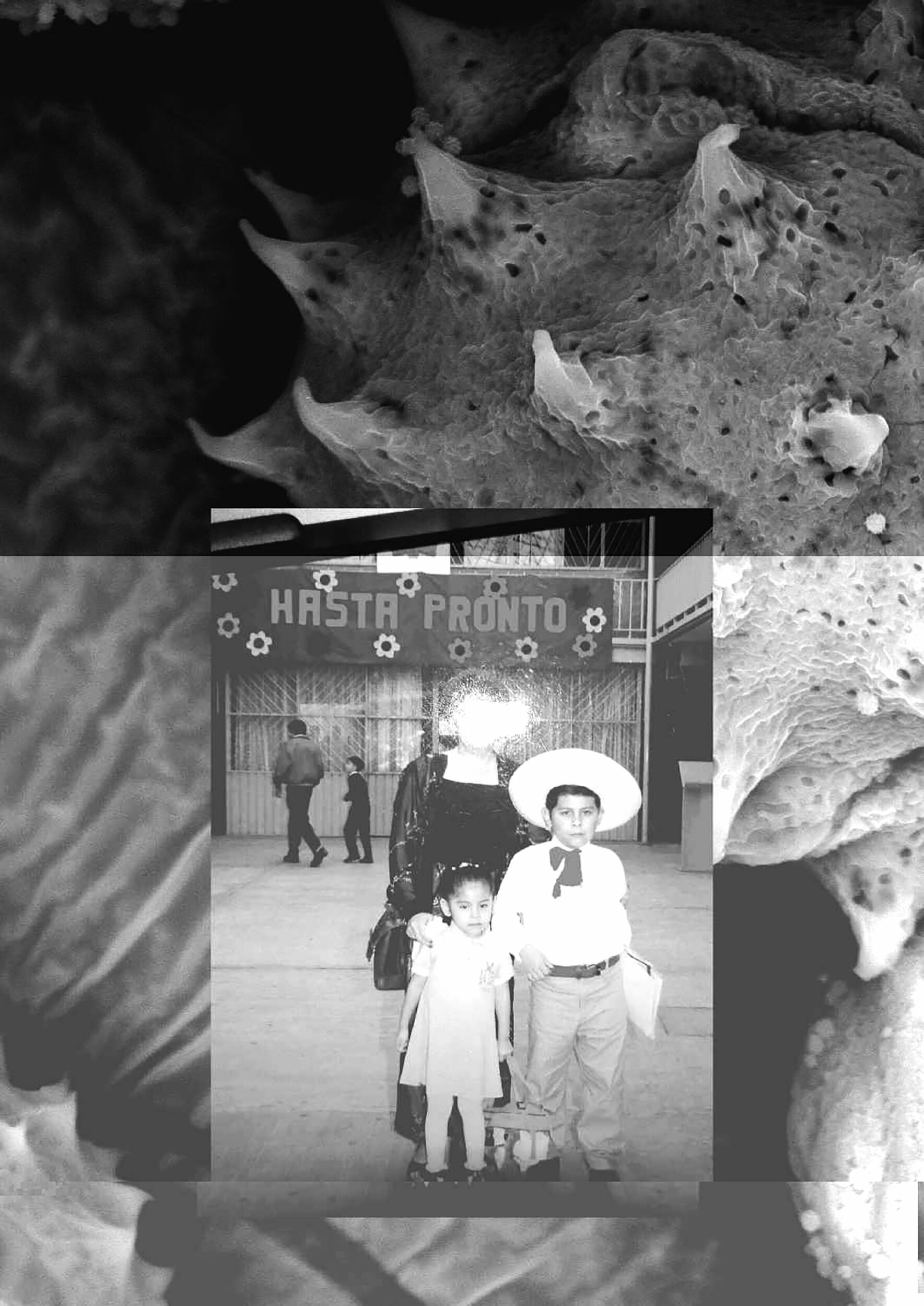
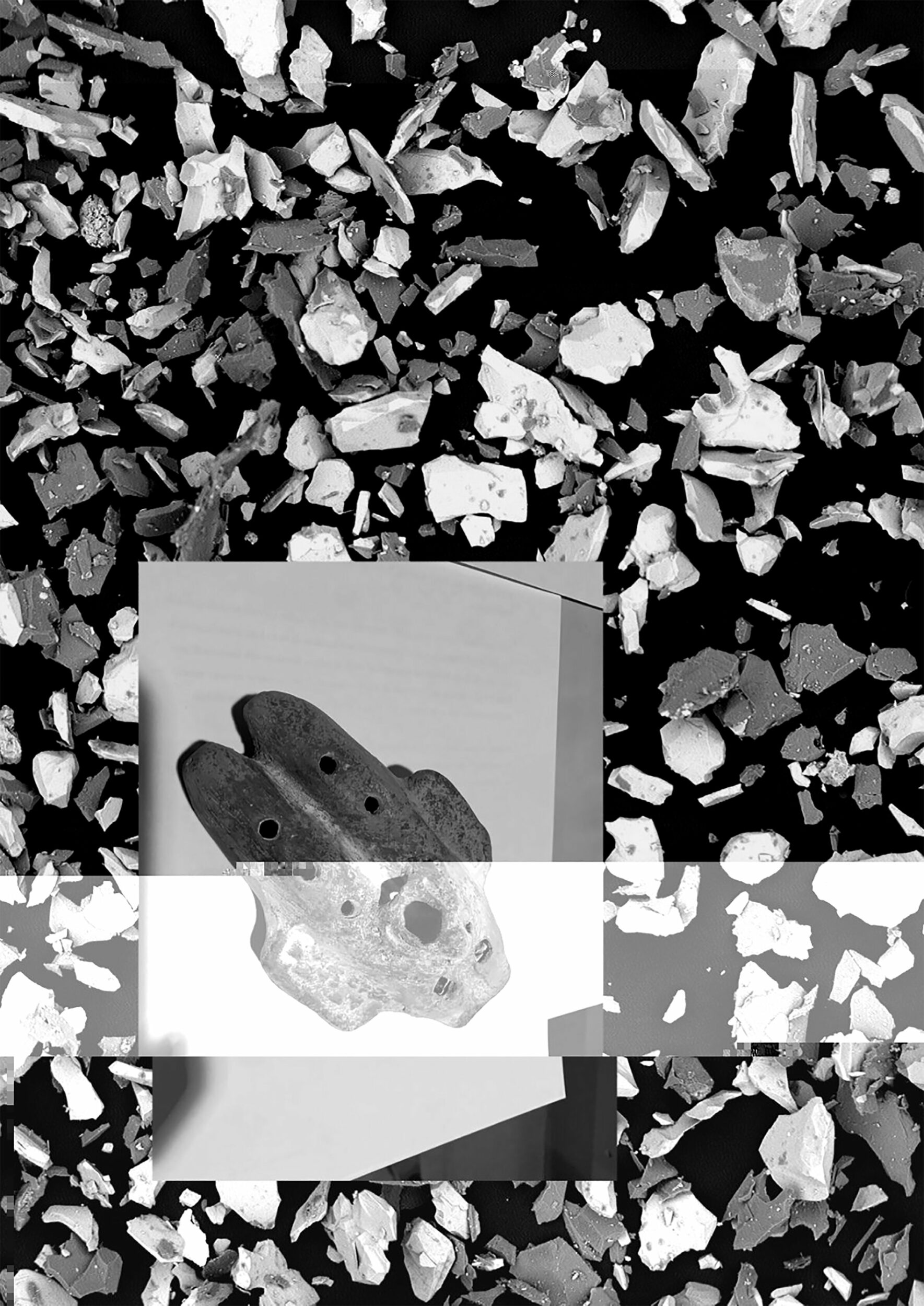
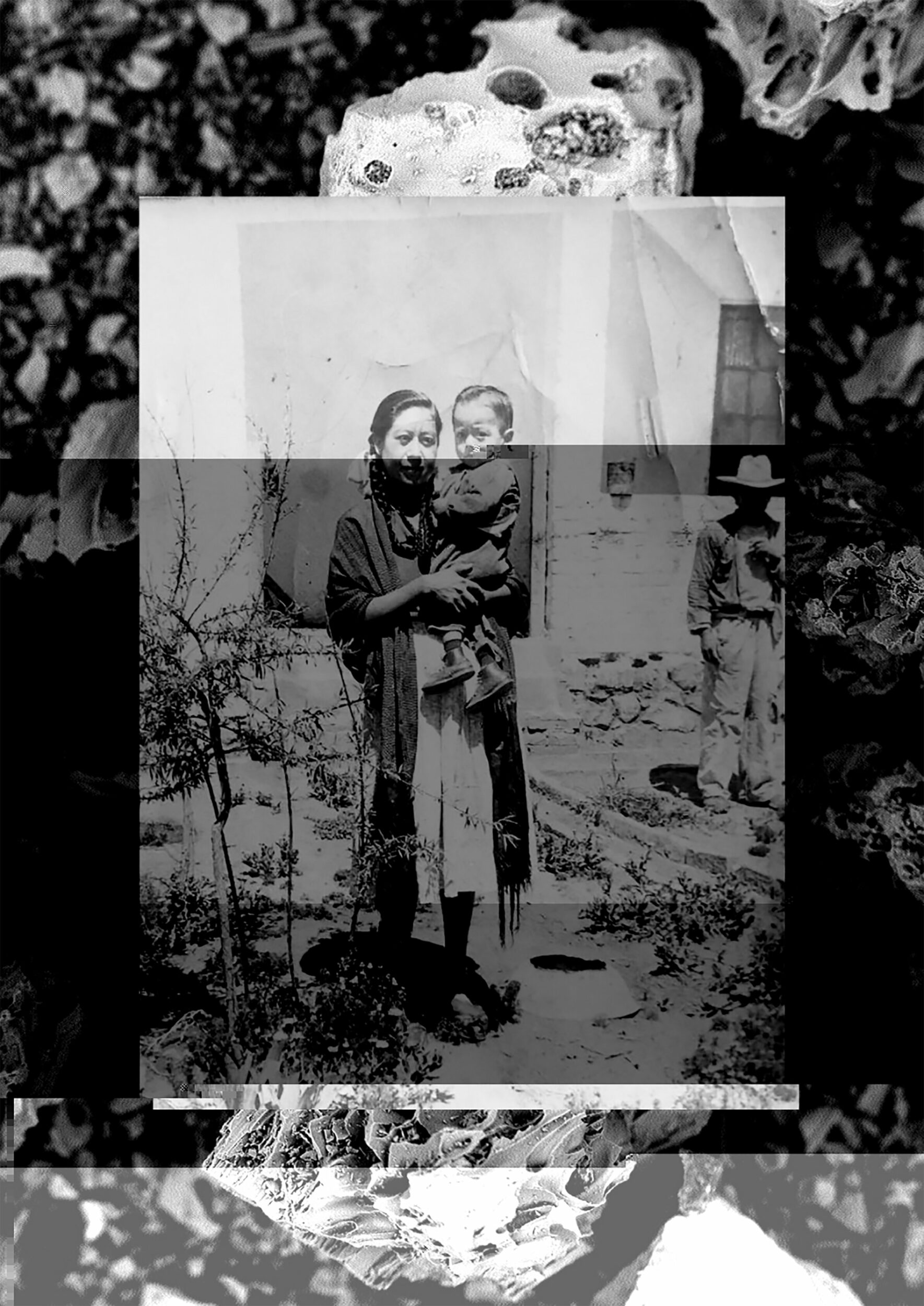
James Evans, Beatrix and the EPV is a photographic series in which family archives, national histories and colonial infrastructures of language collide. The work stages visual and linguistic interference between personal memory and political classification.
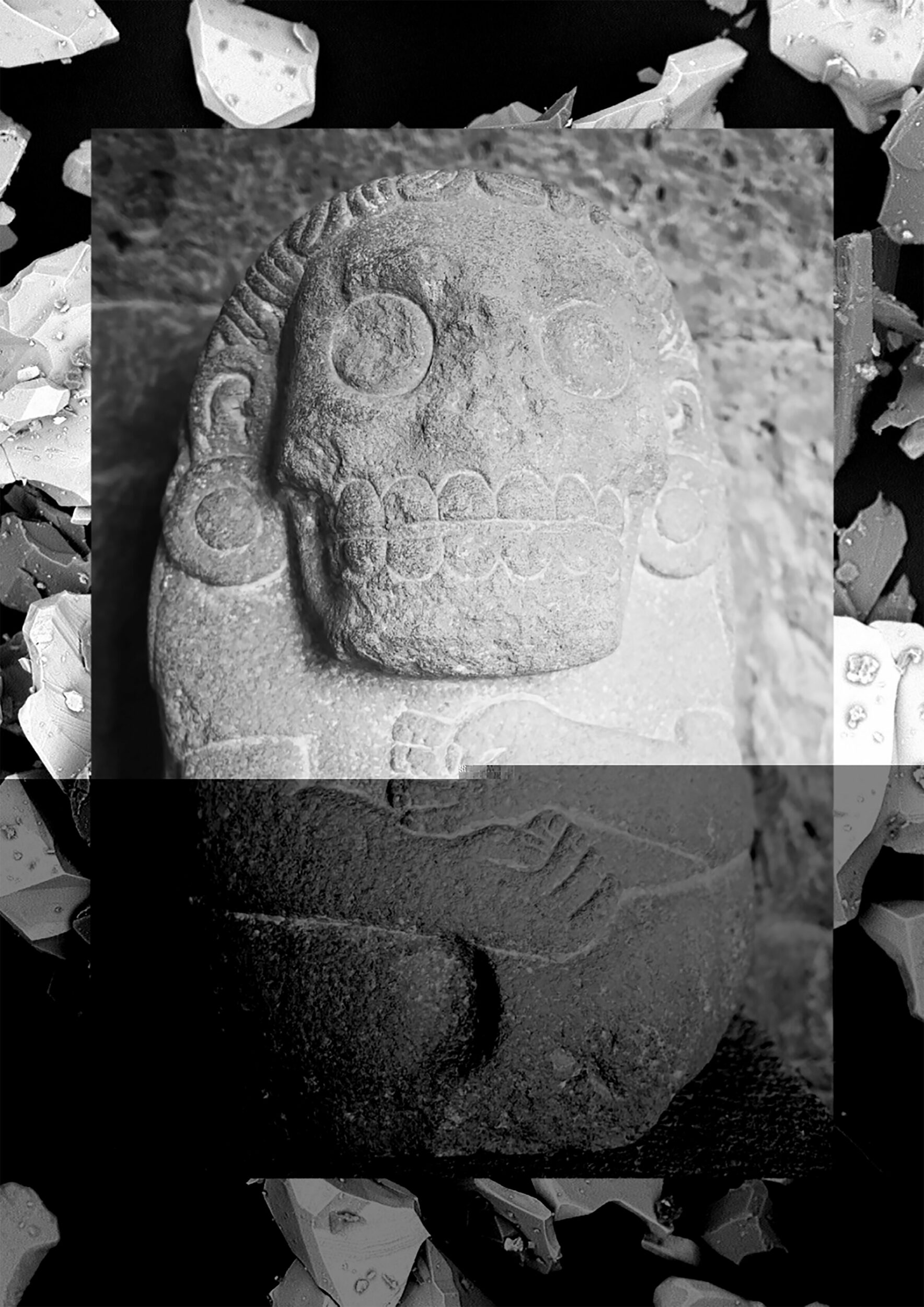
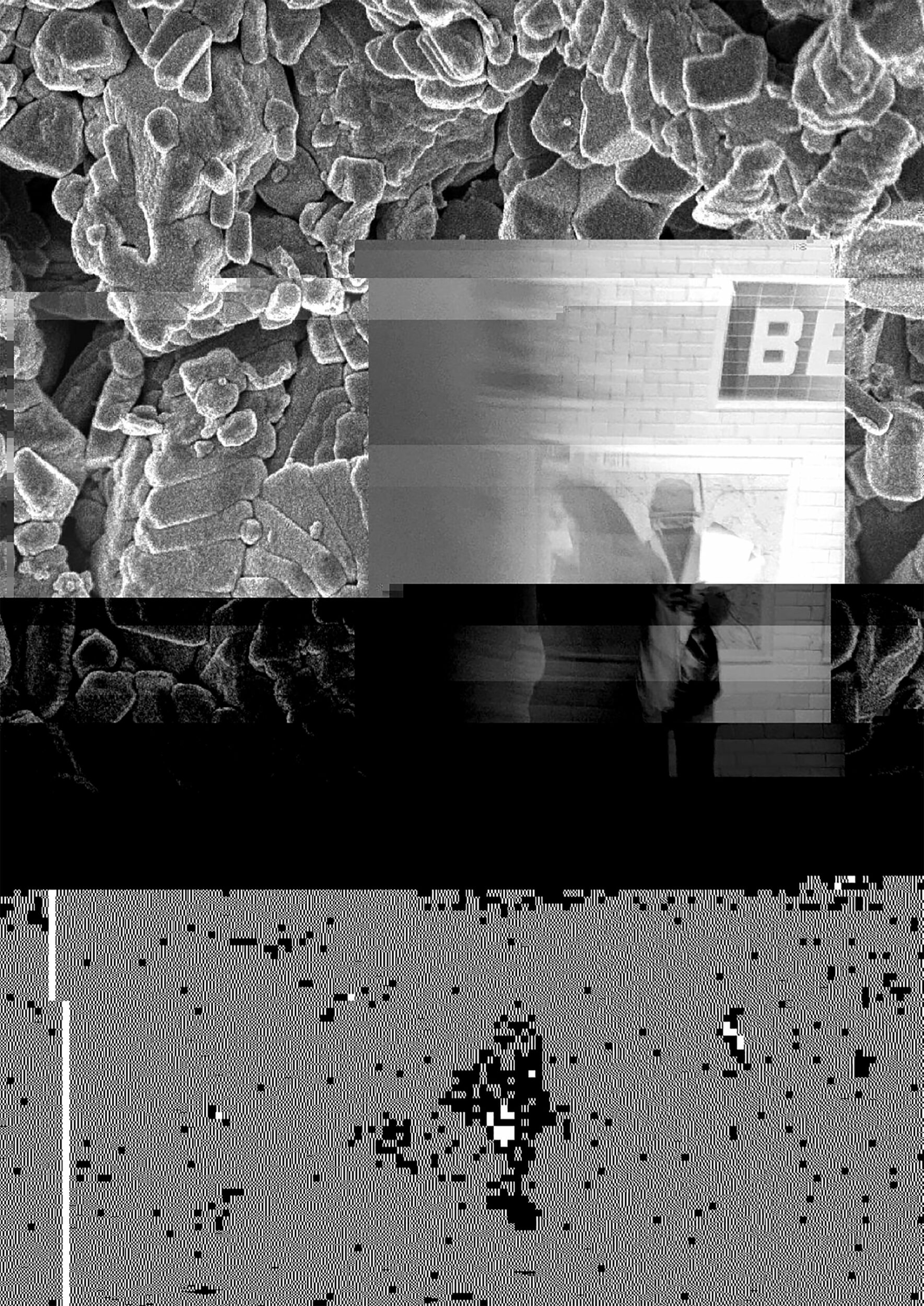
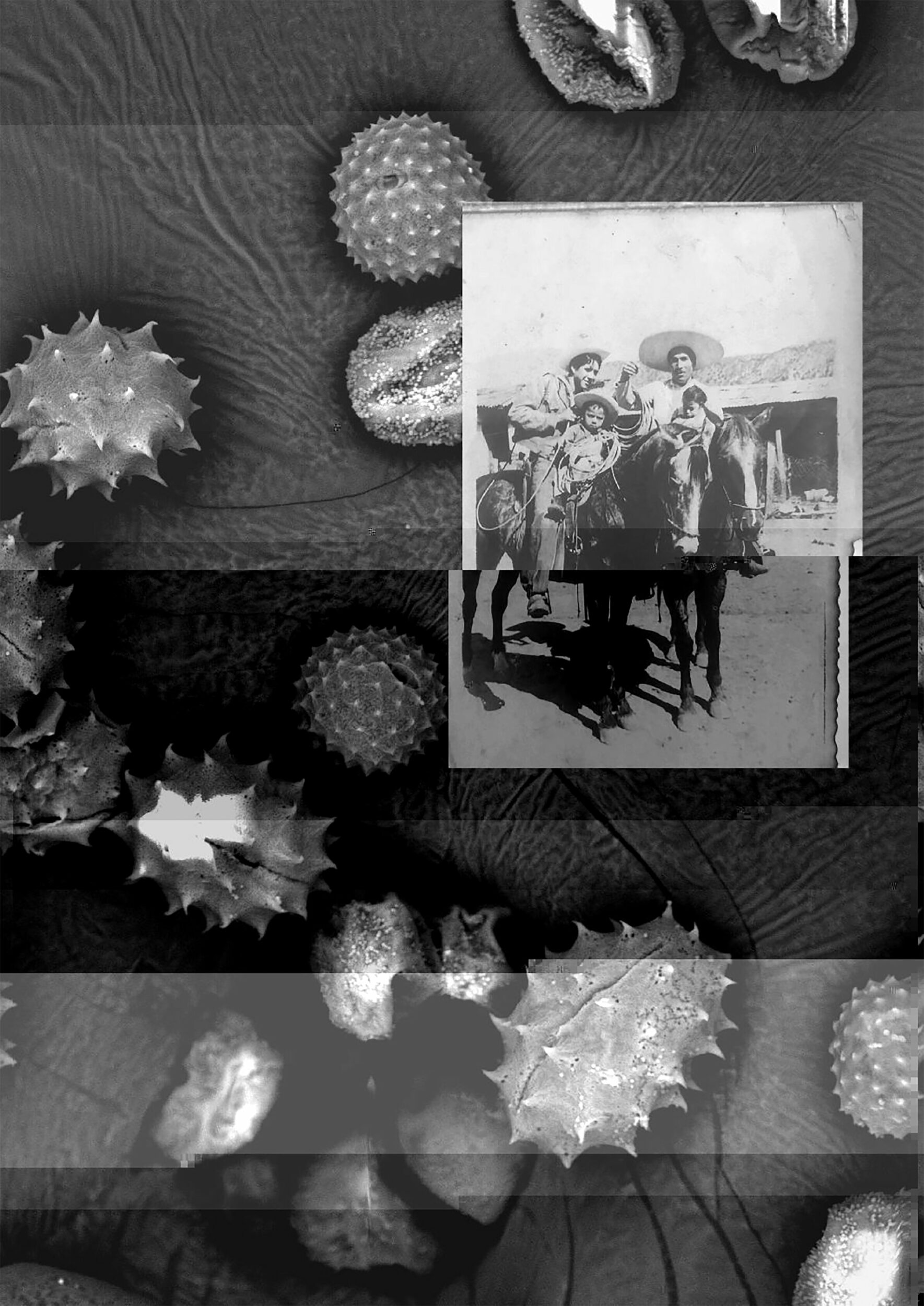
The series combines vernacular family photographs, pre-Columbian sculptures, organic textures and digital fragmentation. Through layering and controlled corruption of image files, photographs appear partially erased, overlaid and displaced. Faces dissolve into stone as archaeological fragments merge with domestic scenes. The image refuses stability.
In order to produce these disruptions, the artist learned to code and began manipulating image files directly. They understood that glitch can emerge from faulty or interrupted code. Rather than simulating error, they introduced deliberate textual interventions into the file structure. Words from their own poems were inserted into the code of the images. The result is a contamination between language and image at the level of digital architecture.
Glitch here functions as a method of modifying the archive, but also as a risk. Altering the file can damage it. The archive may be transformed, but it may also be partially lost. The gesture carries the possibility of erasure. In this sense, the work reflects on the fragility of memory itself: to intervene in an archive is to accept the possibility of its disappearance.
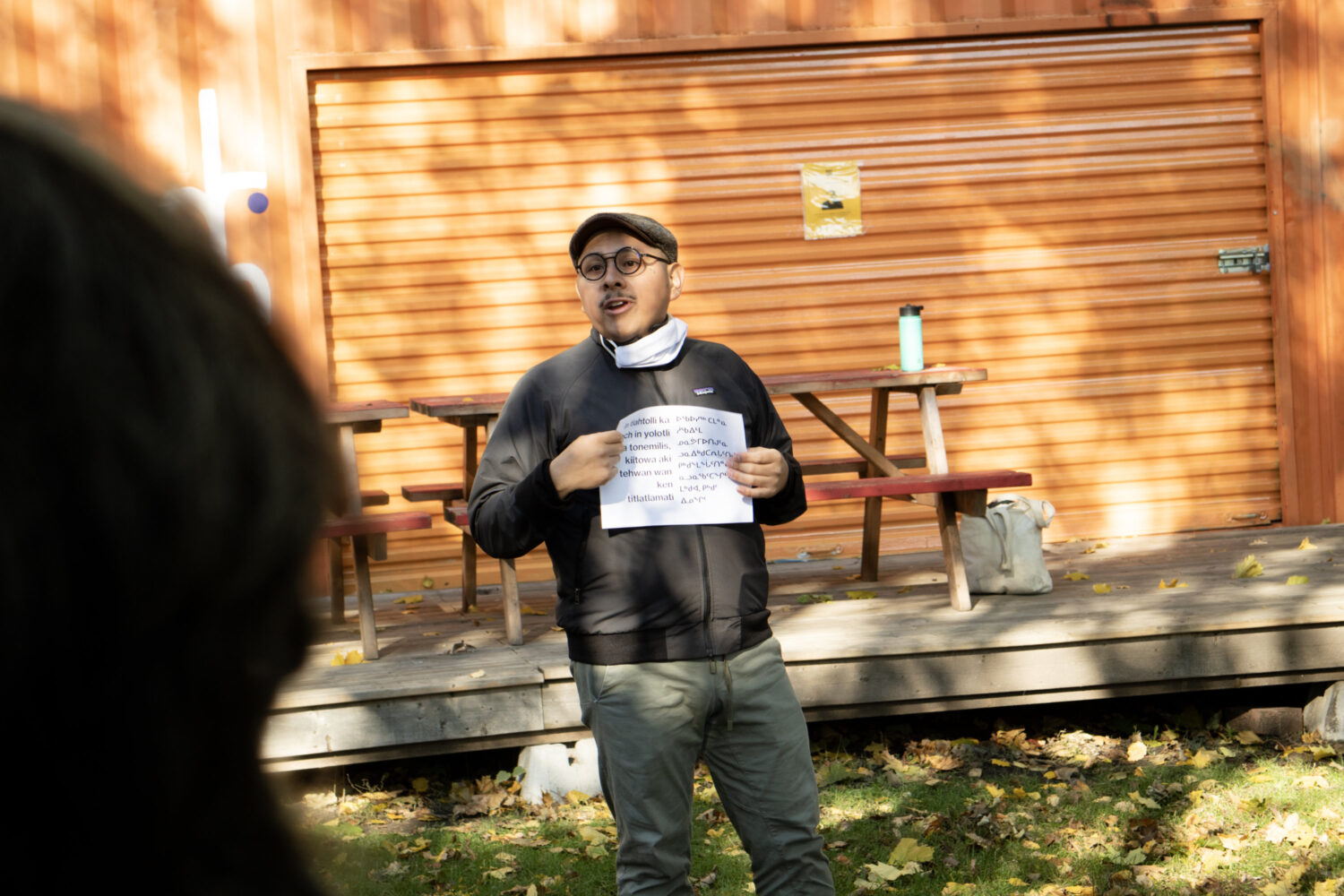
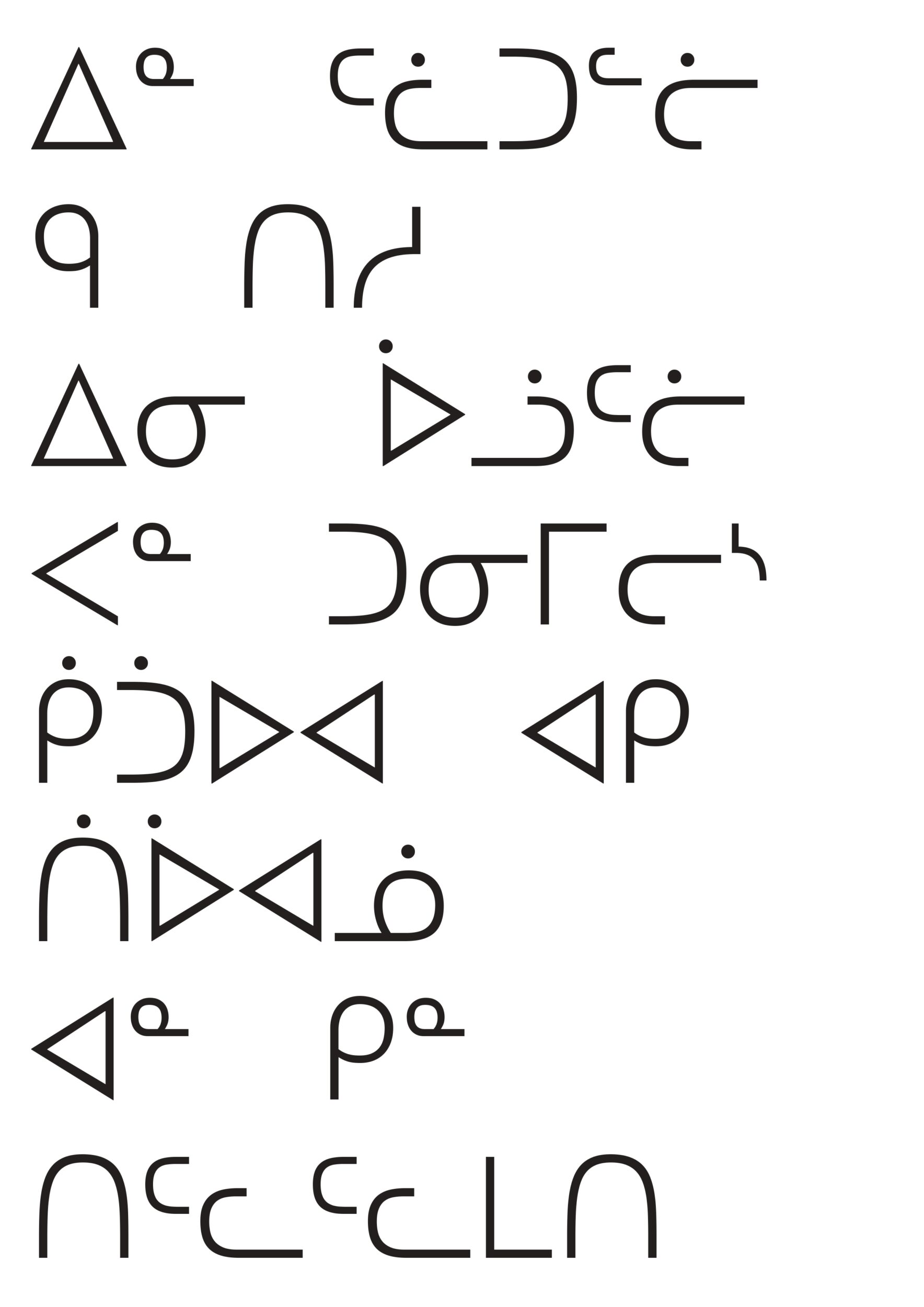
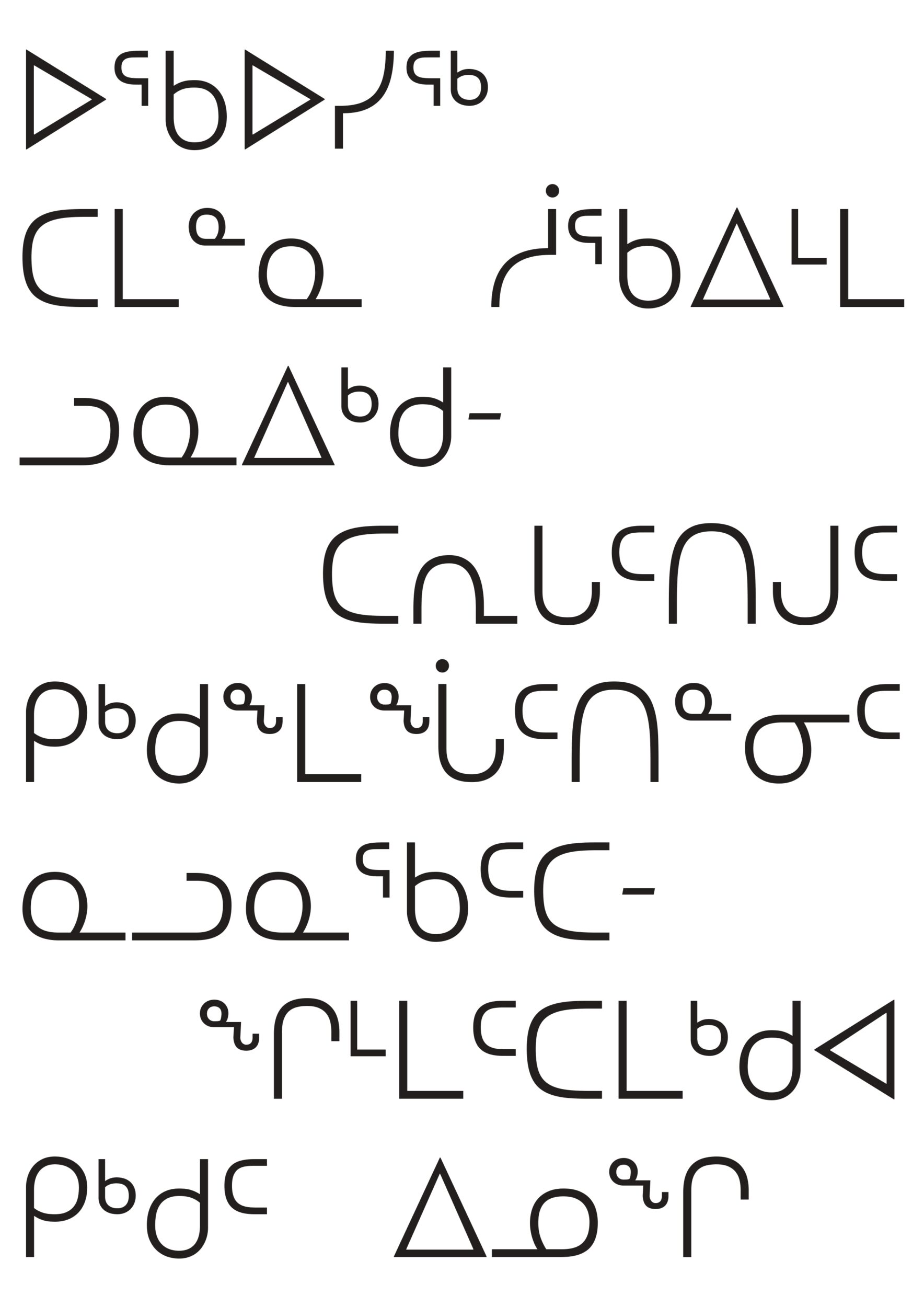
This operation mirrors the linguistic dimension of the project. The Inuktitut syllabary, introduced in the nineteenth century by the missionary James Evans, is used as a device for phonetic displacement. Words from other languages, Spanish and Nahuatl, are transcribed into Inuit syllabics. Meaning becomes partially encrypted and phonemes migrate across writing systems, language detaches from its colonial script and reappears as code.
The reference to EPV, Étranger politiquement vulnérable, introduces a bureaucratic layer of classification. A state-imposed legal status intersects with intimate family history. Administrative language coexists with domestic memory. The archive becomes a site of negotiation between visibility, opacity and vulnerability.