Chantal Pontbriand is a curator, critic, and strategic advisor whose work has shaped contemporary art discourse internationally since the 1970s. Founder and director of PARACHUTE (1975–2007), she continues to develop curatorial and research initiatives through Pontbriand W.O.R.K.S. and SPHERE(S).
Grasping the Skin of the World
2020
Text
Originally published in French in October 2020 as part of the Frac Occitanie – Post Production 2020 Laureates program.
Text by Chantal Pontbriand on Vir Andres Hera’s work.
Grasping the Skin of the World
2020
Text
Originally published in French in October 2020 as part of the Frac Occitanie – Post Production 2020 Laureates program.
Text by Chantal Pontbriand on Vir Andres Hera’s work.
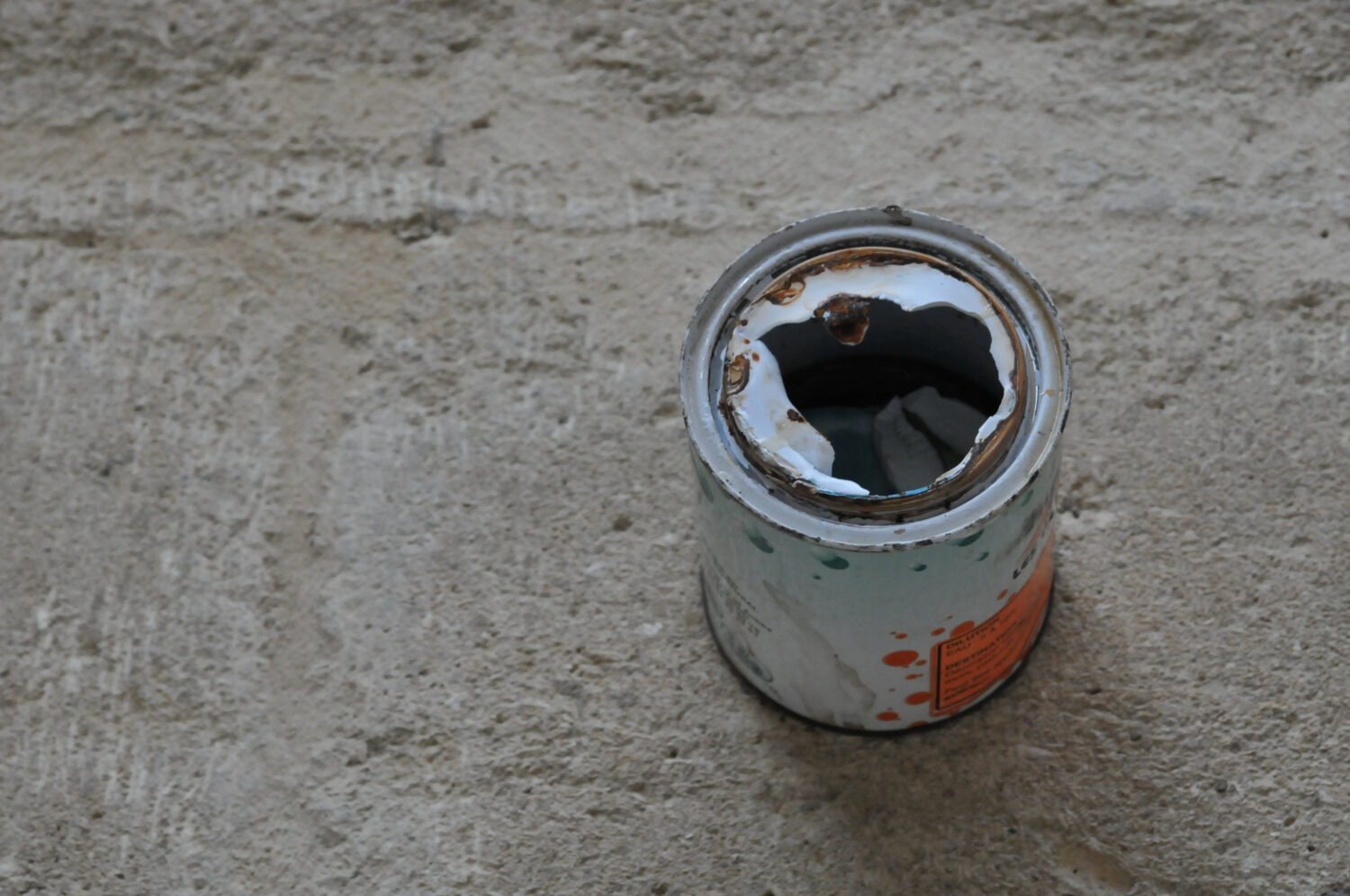
One of Vir Andres Hera’s first works, created in 2014, is entitled 1641-1991. I then found these words to describe and comment on it.
Andres Hera surprises us by grafting used paint cans onto the wall. The neo-Romanesque architecture of the place is parasitized by these ornaments, placed randomly according to anchor points “already there,” and in a way restoring a forgotten history of which these cans become markers in space. » 1 «
In fact, now that Hera has made more than a dozen films, we can say that everything was “already there.”
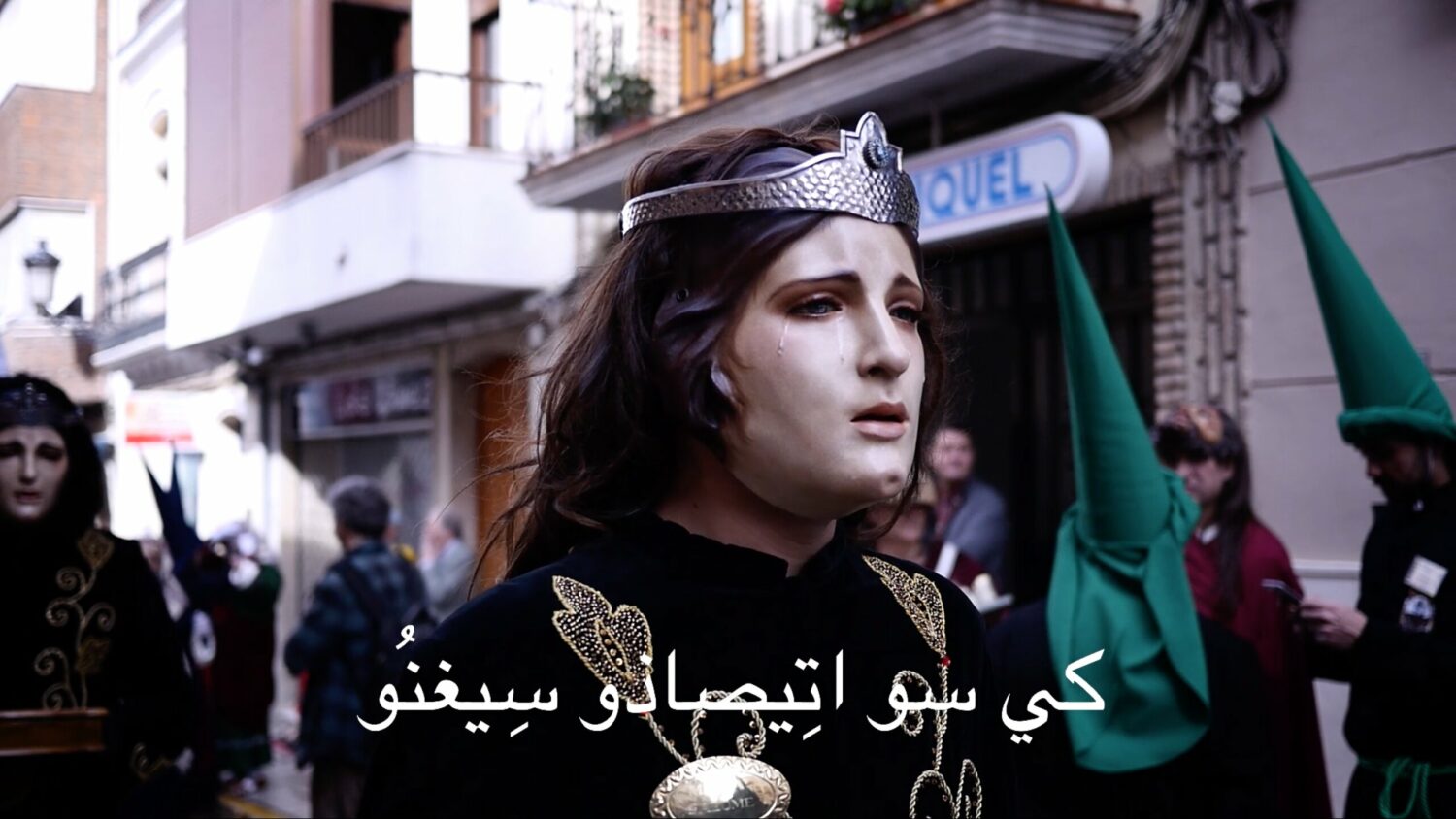
Among their latest films are Misurgia Sisitlallan (2020), made for an installation of the same name, and Piramidal پيراميدال (2016/2020). Misurgia and Piramidal span centuries, if not millennia, of history, the history of the planet and everything that lives and lies on it, whether animal, plant, or mineral. While Piramidal revolves around the religious celebrations of Holy Week in a village in Andalusia, celebrations which, despite their strong references to the Baroque era, are still held today, Misurgia plunges us into a large-scale collision between images taken under a microscope in a state-of-the-art laboratory and choreographies created for the screen. While Piramidal immerses us in history, while filming a contemporary event, Misurgia takes as its starting point some of today’s most sophisticated technology to reveal what the world conceals that is infinitely small and ancient, the very DNA of matter.
Everything begins with words and language for Hera, who comes from a mestizo background including Afro-Mexican and Otomi lineages, and it is through the prism of language and languages that an impressive reflection on history, colonization, and cultural transfers and cross-fertilization is conveyed. Hera’s micro-analysis stems as much from their awareness and knowledge of linguistic transfers over time as from their desire to use cutting-edge technologies and contemporary plastic forms to (re)discover the world. At the heart of Piramidal is the Aljamiado, a process known in Andalusia before the Reconquista, which consists of writing texts in Spanish using the Arabic alphabet. In this case, it is a poem by Juana Inés de la Cruz from 1689, Primero Sueno, using this process, which is reproduced in the film, while images of processions taking place in the village parade across the screen. Allegorical floats richly decorated with gold, revealing the enduring influence of the strong Spanish Baroque heritage from the era of the conquistadors, polychrome statues with religious iconography, lit candles and torches, and many inhabitants dressed in costumes resembling Christ. Between the language we hear and the images we see, we travel through several worlds, both Spanish and Arabic. These are condensed and act as palimpsests with each other. And they are not just the work of an artist, but phenomena that have occurred over time through the ages and eras, continents and geopolitical movements throughout history. To the already-there, Hera adds the complexity and perspective of a young artist who is keenly aware of the issues that drive the planet today.
The City of Words, to borrow Alberto Manguel’s title, inhabiting Hera’s translinguistic world, is also found in Misurgia, of course. Misurgia is again based on the translinguistic work of Juana Inès de la Cruz, but the title refers to Athanasius Kircher and his Misurgia Universalis. This scientist and scholar, a polyglot fascinated by the history of languages, was interested in geography, astronomy, mathematics, medicine, and music. He built himself a microscope to study blood and also invented organs that allowed him to associate places, sounds, and music in order to deepen our knowledge of the universe. This 1650 treatise is an essential reference work of the Baroque period. In it, he compares the birth of the world to a musical score played on an organ operated by God (Kircher was a Jesuit). “Misurgia” is a word invented by Kircher from two Greek words: Μοῦσα (mousa) and organon, pointing to the organic nature of music and the creation of the world. He also wrote the first treatise on geology, Mundus subterraneus, in 1665.
Hera’s film plunges us into a cosmic universe, as animations flash by, frame by frame, developed from photograms extracted using electron microscopes at UMET, a laboratory specializing in materials science. The analysis of samples from various sources gave rise to the images: drops of various liquids, sediments that led to the formation of continents (earth, volcanic rocks), fragments from the mineral world (meteorites), animals (stuffed animals, skin, insects), and plants (leaves and stems, pollen).
Images were filmed based on choreographies developed from sculptures found in archaeological museums. Hera discusses this, the mezzoscopic dimension of their project, linking the microscopic and the macroscopic, in relation to Aztec deities such as Ixtlilton, Mayawel, Tezkatlipoka, Tlalok, and Kowatlikue (phonetic spelling in accordance with the Aztec language). References to these gods structure various “chapters” within the work.
The sound, created in collaboration with Jérôme Nika, echoes this desire to link the infinitely small and the infinitely large, not only through history and culture, but also through the Earth itself, in its geological foundations. In reference to the heteroglossic world (Mikhail Bakhtin) of Juana Inés de la Cruz, the sound is generated using software that plays on the hybridity of languages.
Like the tattoo that appears in the Tlalok sequence, we can put forward the idea (too hastily, as there is still much to be said here) that “language is skin” (Jacques Lacan). That the world of Vir Andres Hera speaks this language through a temporal collision. And yet, as a hybrid and mixed-race 21st-century artist, their position is undoubtedly more in line with cosmopolitics (Isabelle Stengers) than with Kircher’s cosmology.
Chantal Pontbriand, "Autour de", in autour de PRESENCE WITHOUT PRESENCE, Du Périmètre scénique en art : re/penser la skéné, RDV VII, Montpellier, 2015. Http//:esbama.fr › skene › cahier7 › Cahier_7
Biography
><
Author
Chantal Pontbriand
Editor
Emmanuel Latreille
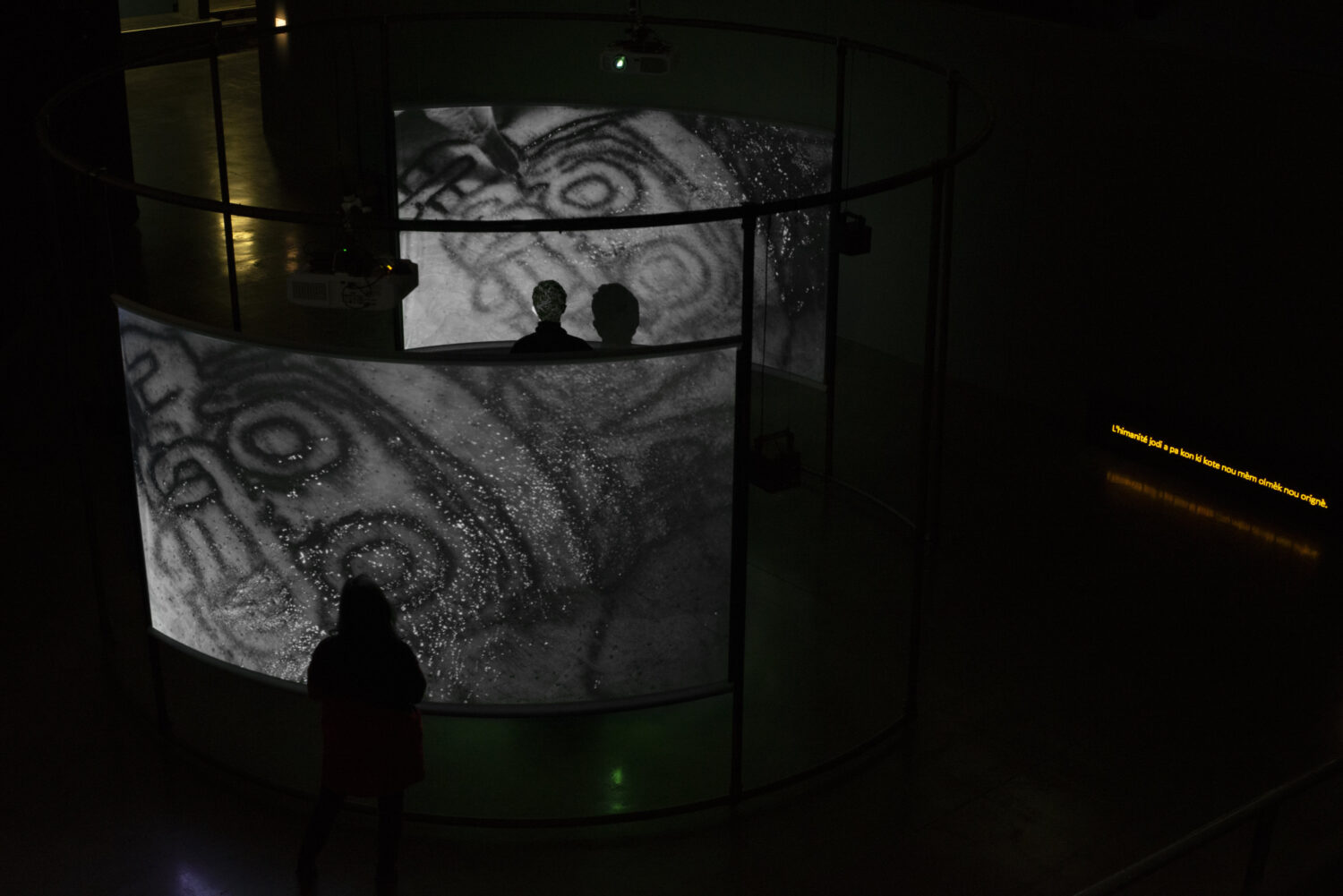
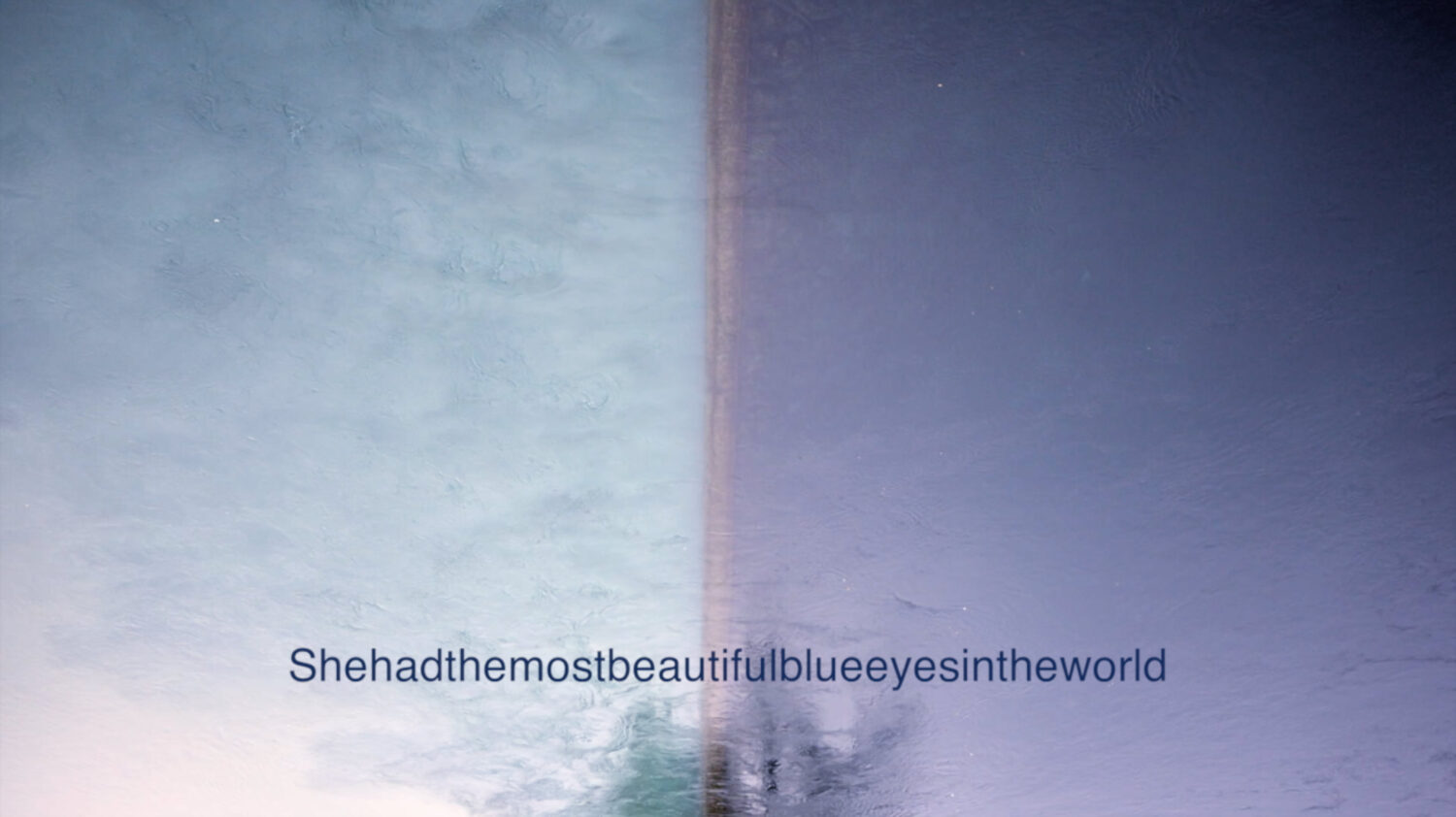
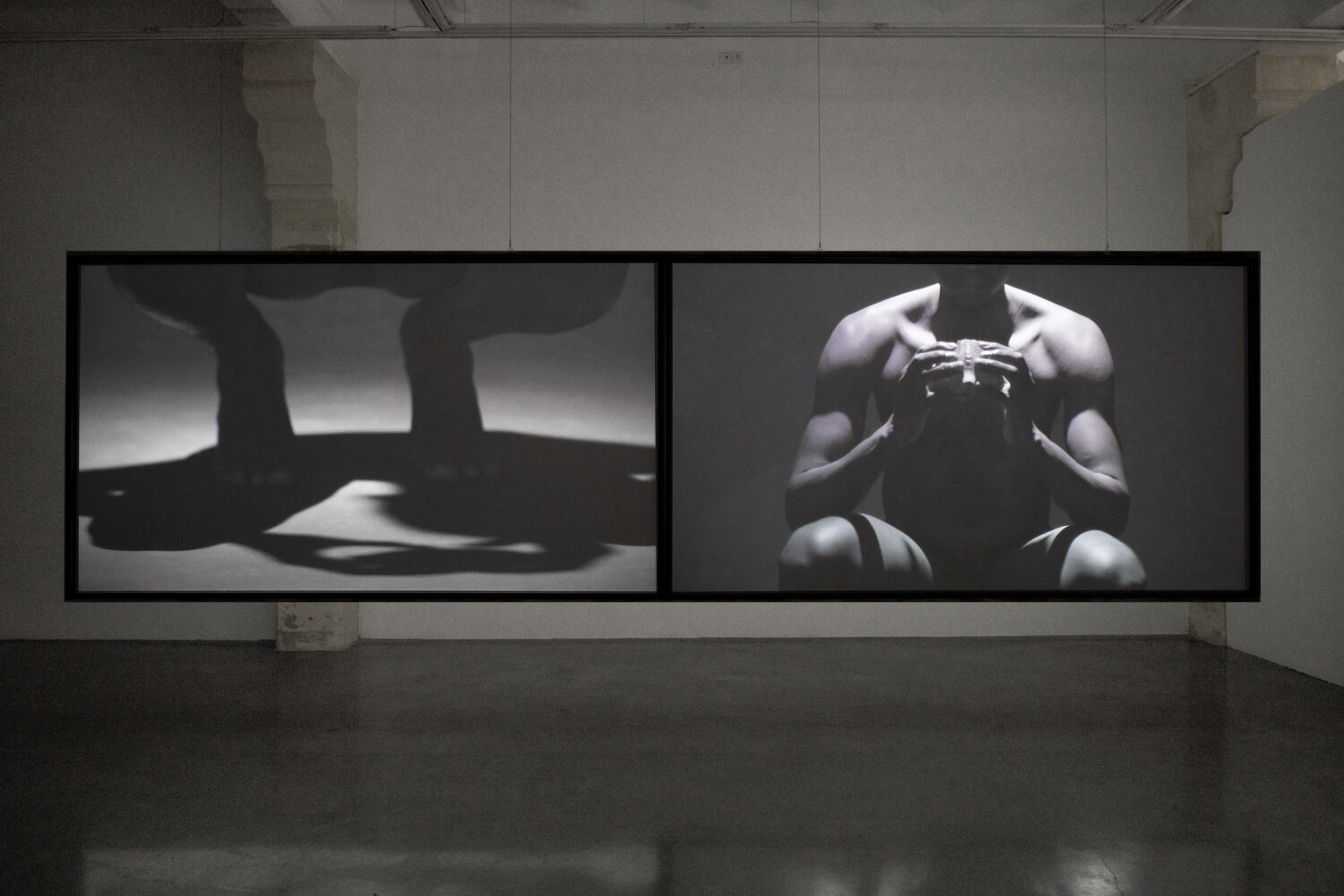
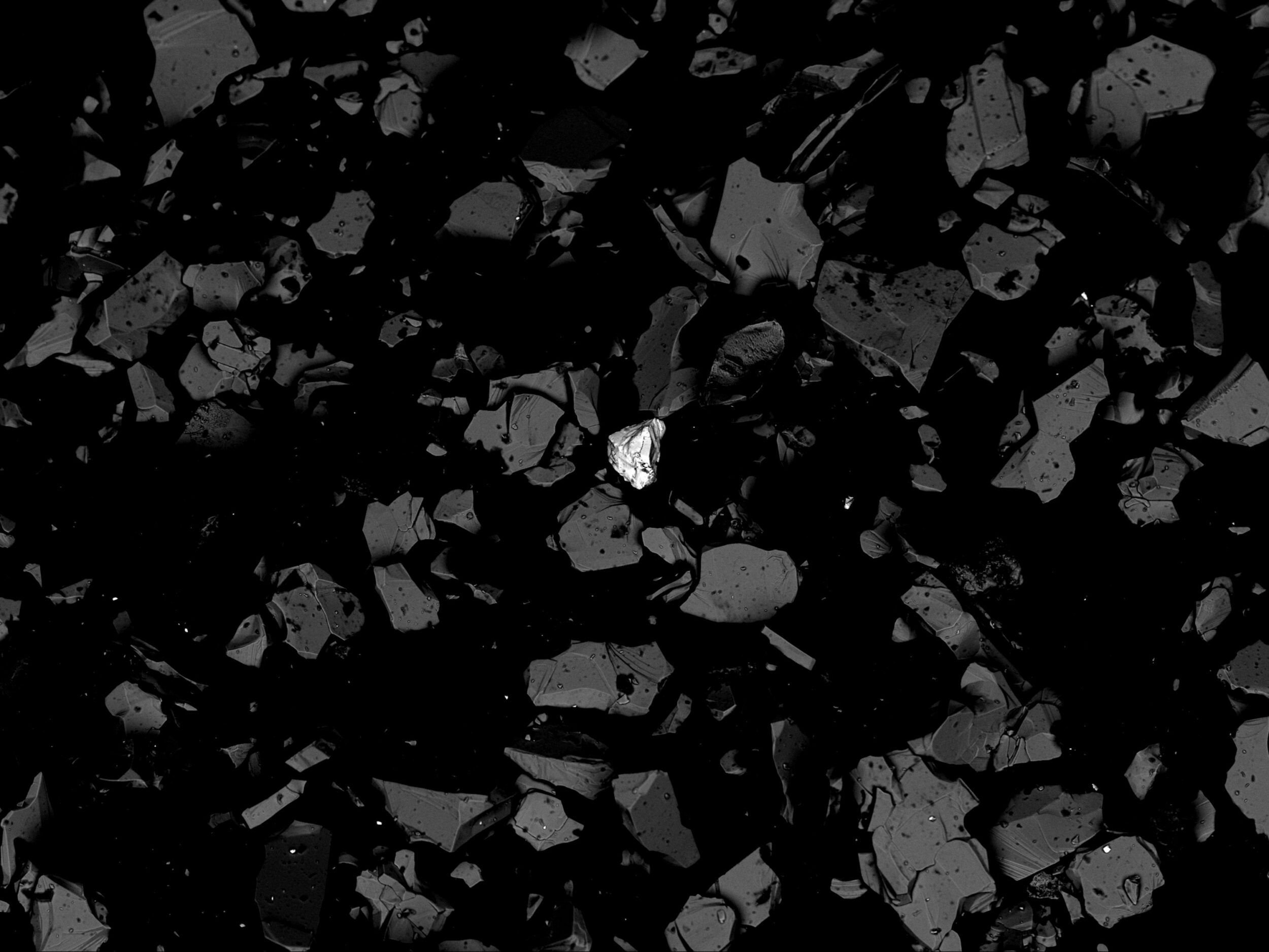
Misurgia Sisitlallan (screenshot). 2020. © Vir Andres Hera – Le Fresnoy, Studio national des arts contemporains.
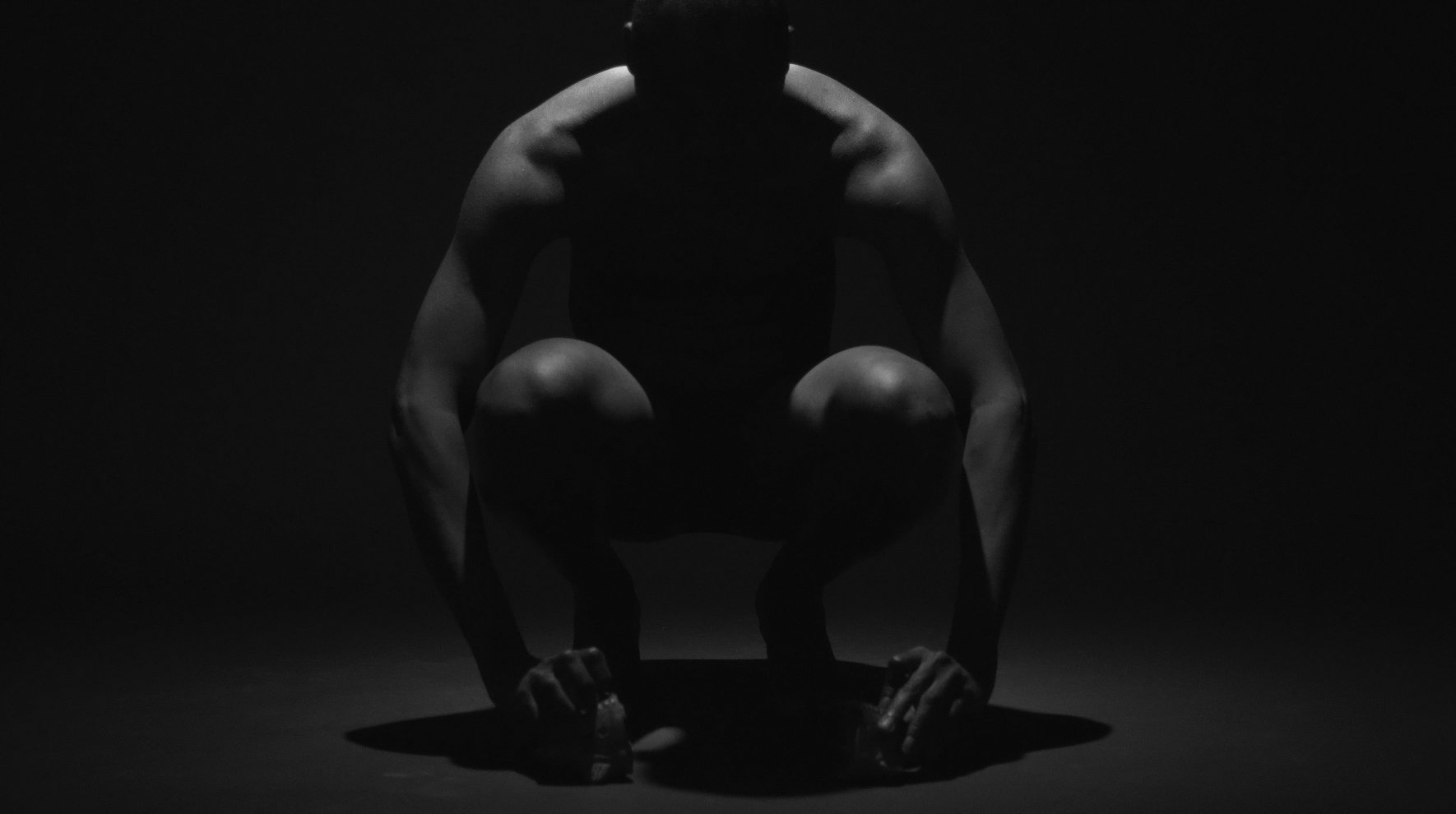
Misurgia Sisitlallan (screenshot). 2020. © Vir Andres Hera – Le Fresnoy, Studio national des arts contemporains.
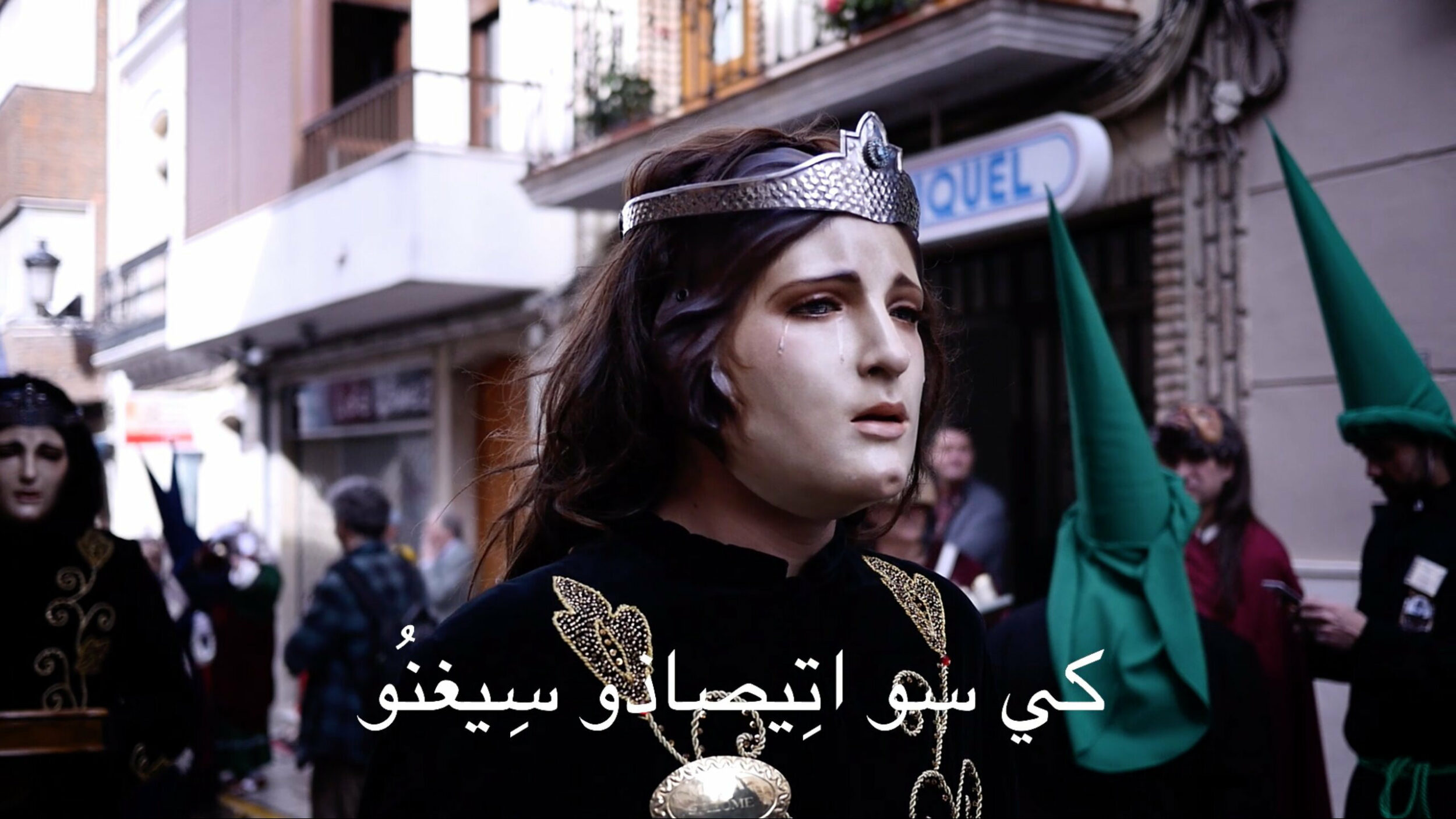
Piramidal پيراميدال (screenshot). 2016–2020. © Vir Andres Hera.