Tout dans le Cabinet Mental
Tout dans le Cabinet Mental
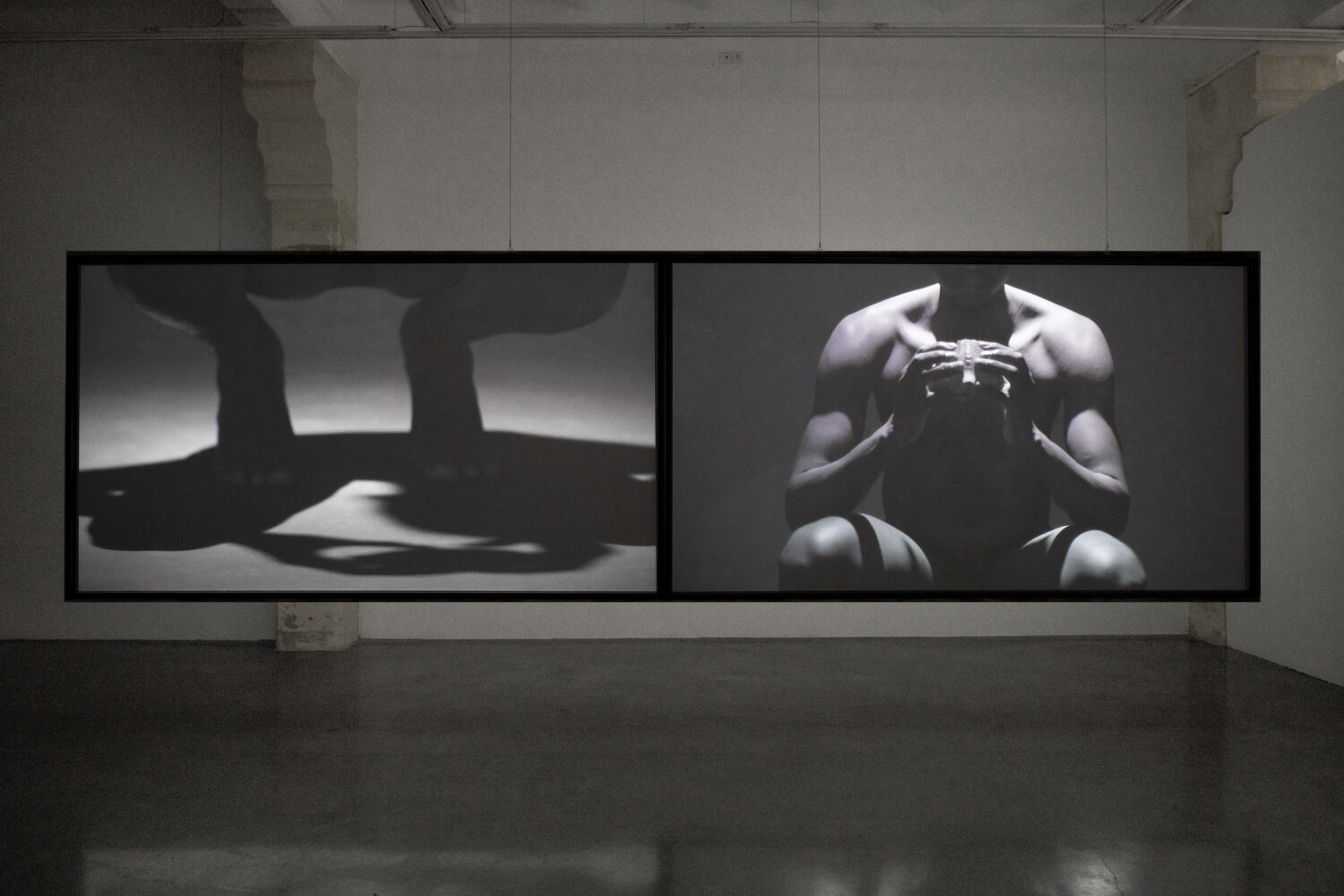
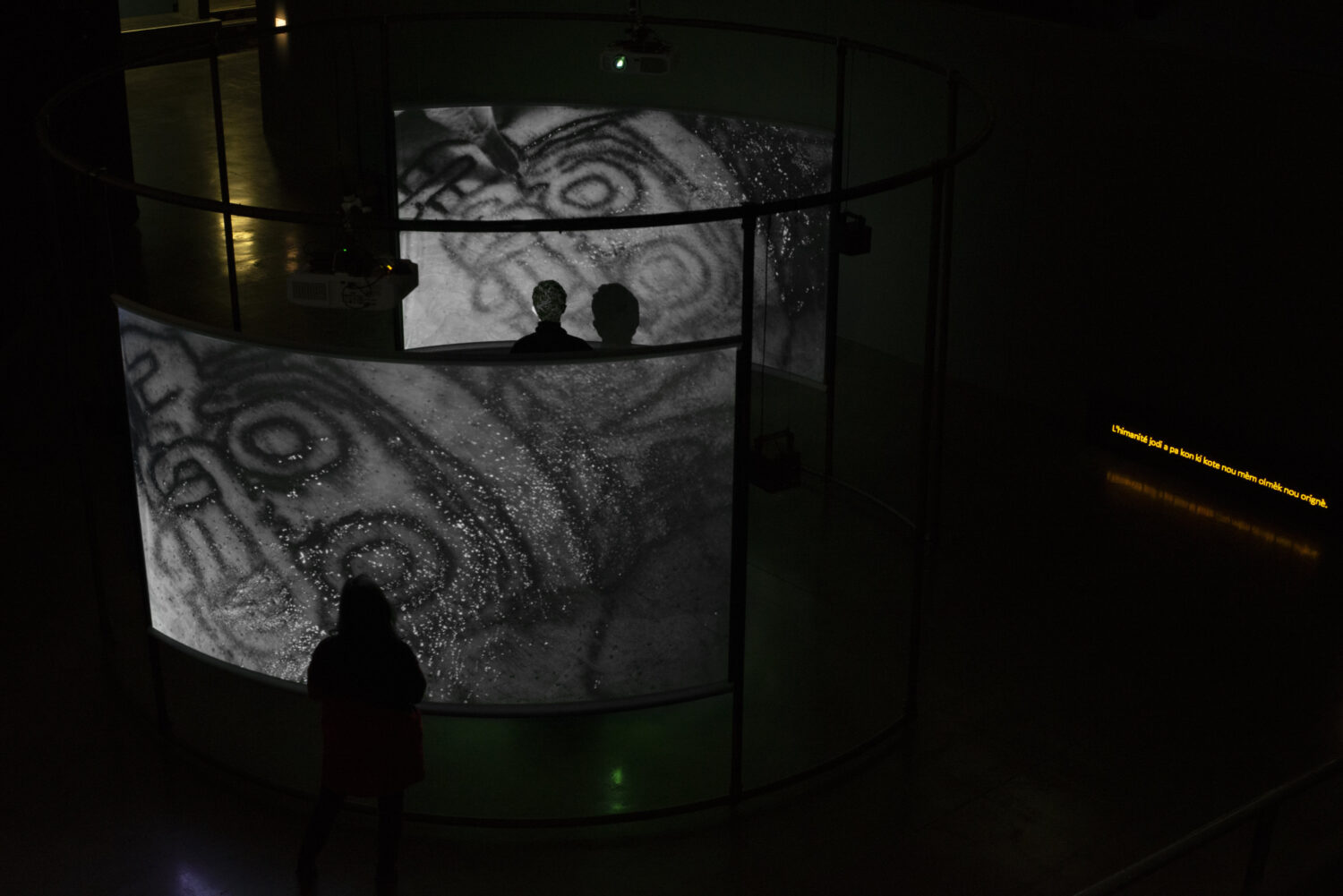
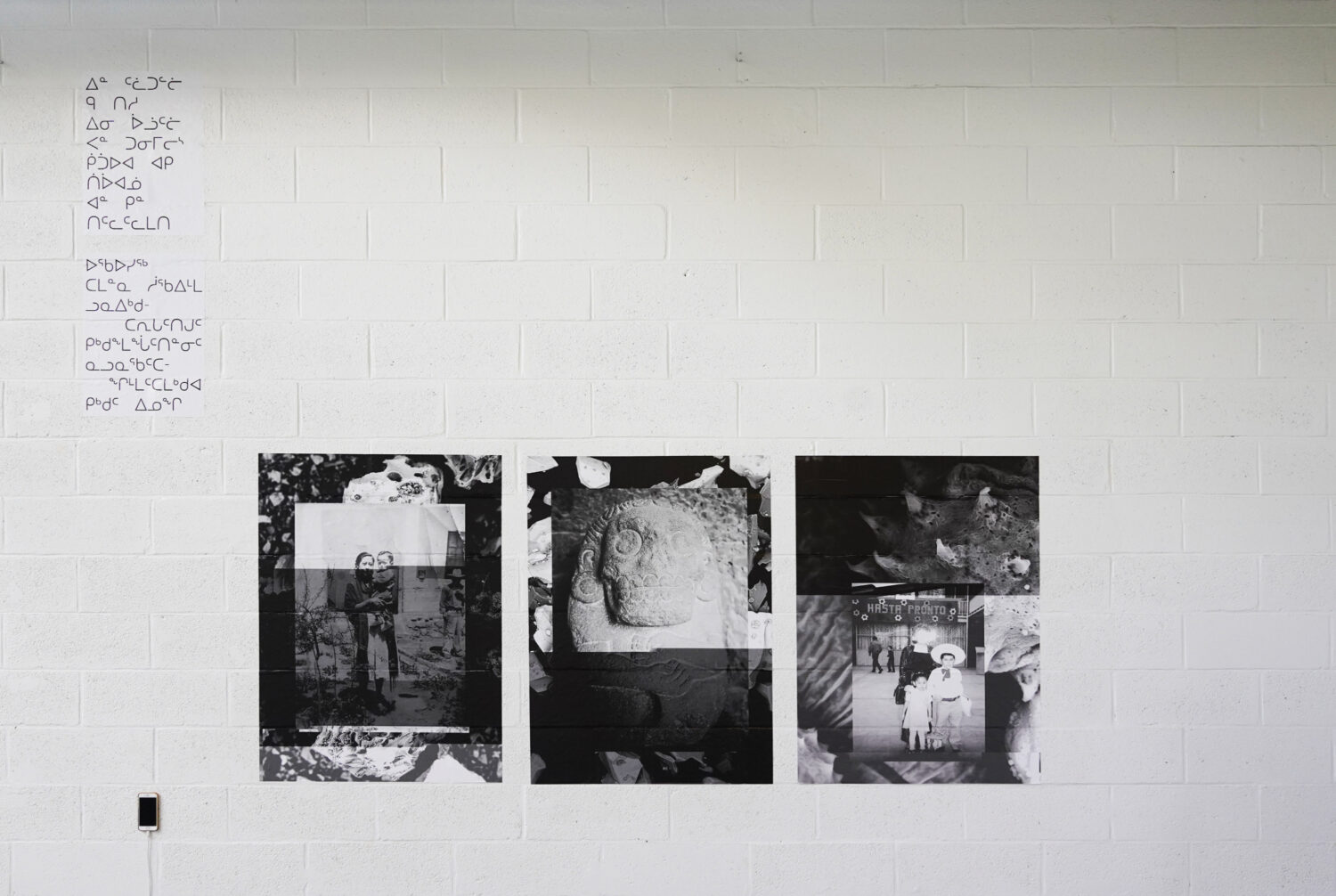
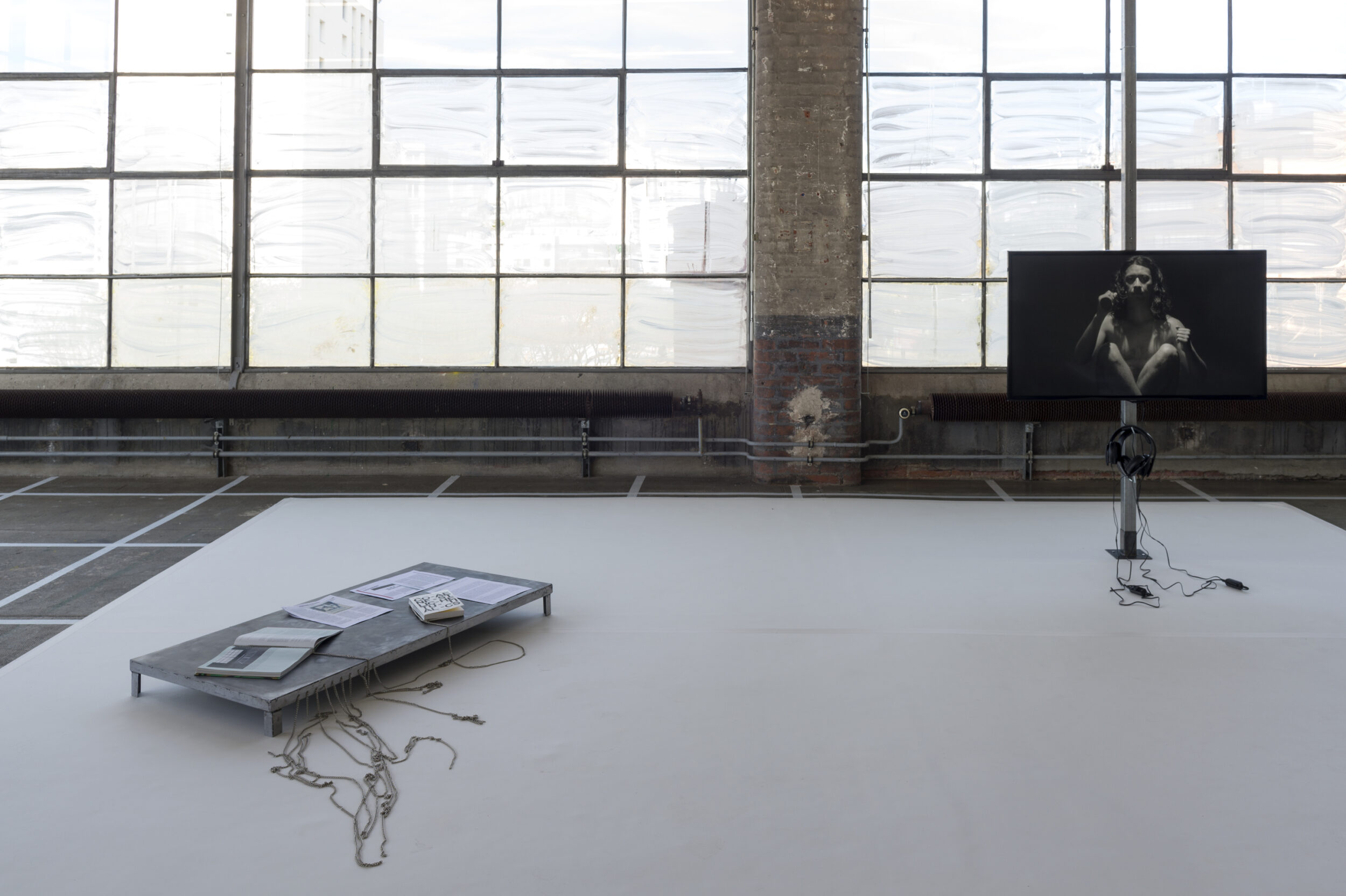
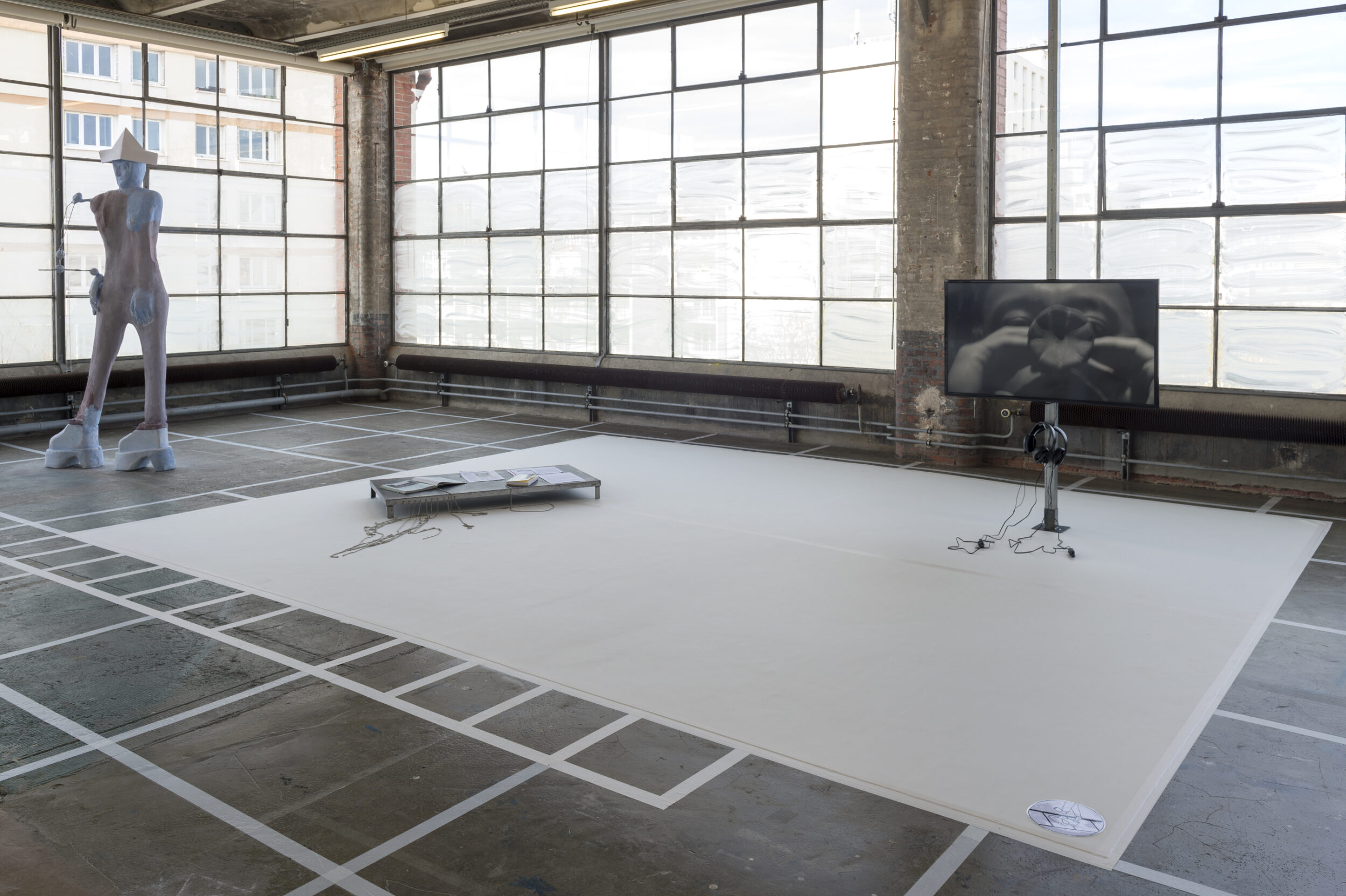
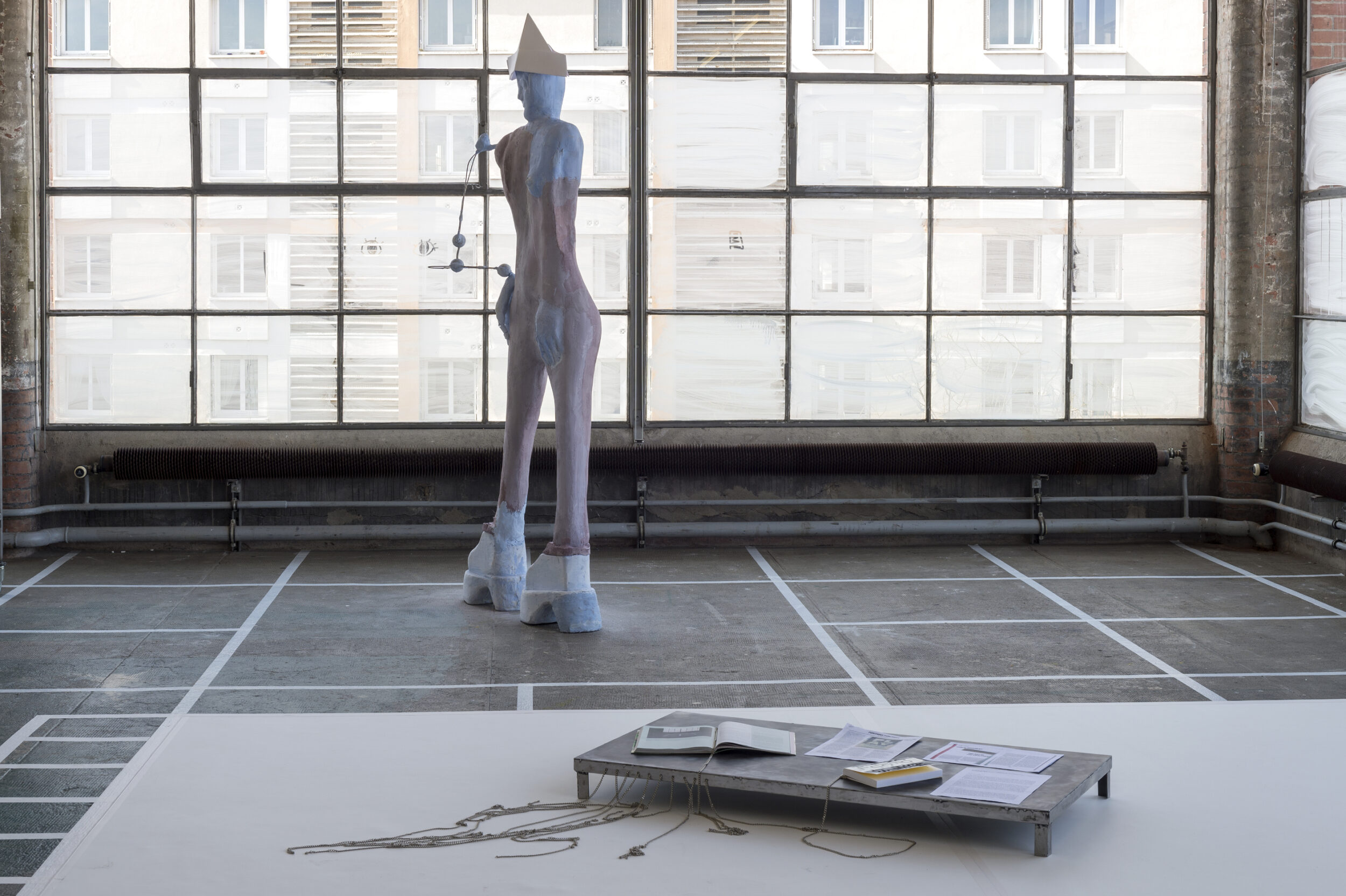
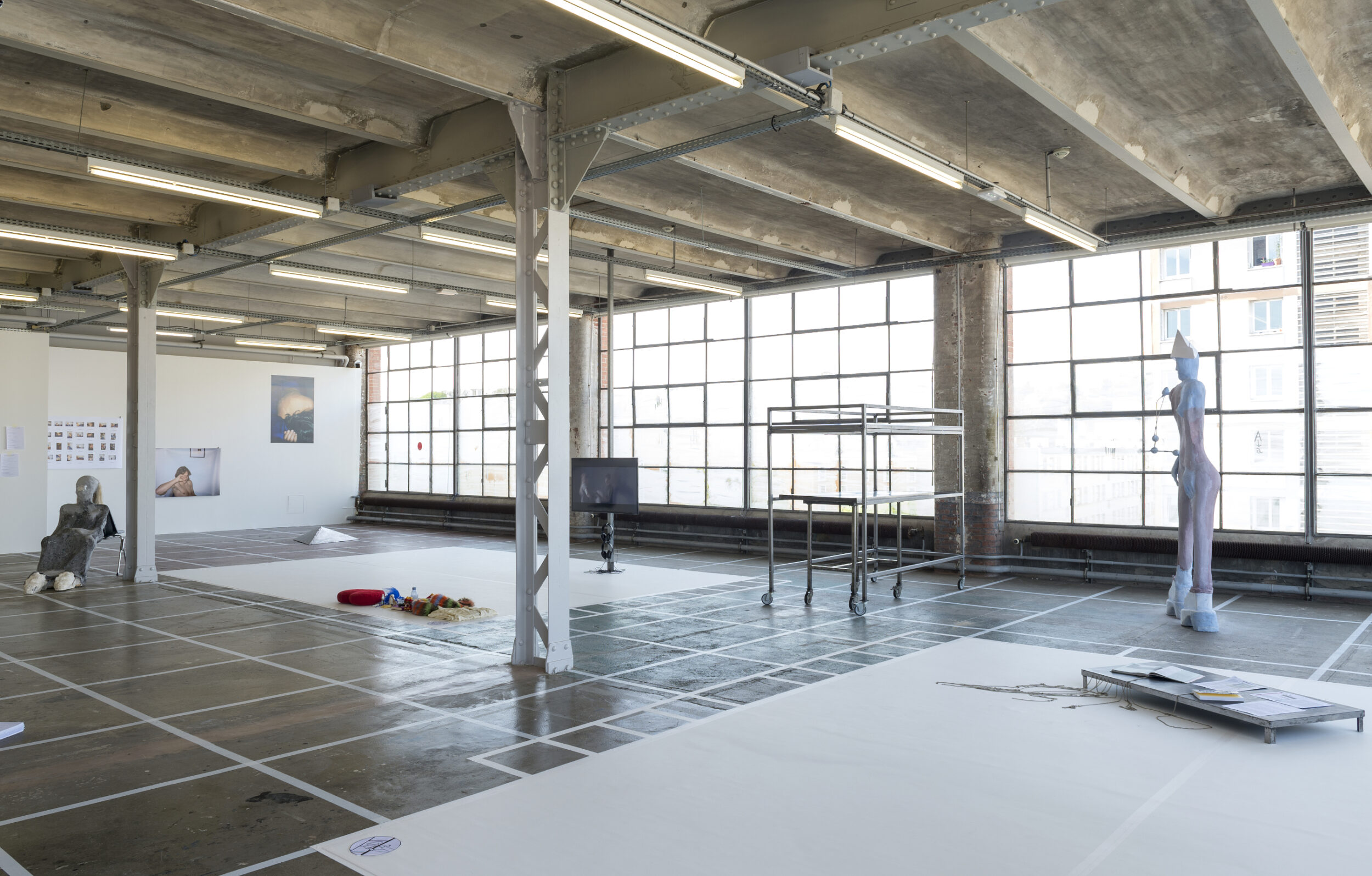
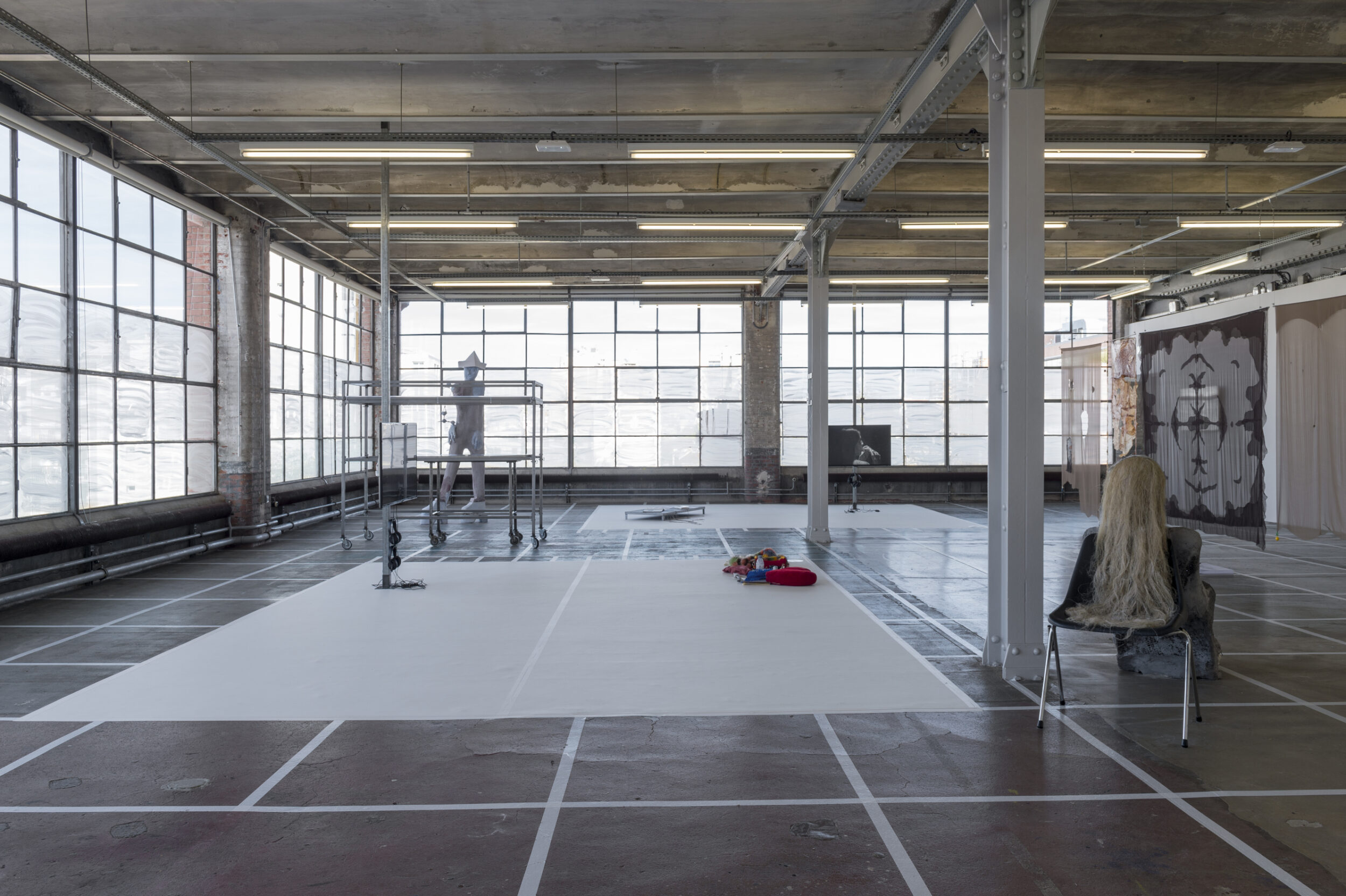
Within the exhibition, Misurgia Sisitlallan was presented as an augmented installation developed in dialogue with performance, language, and absence. Rather than functioning as a fixed scenography, the work opened a space for ongoing experimentation, where gestures, voices, documents, and temporalities could circulate and overlap.
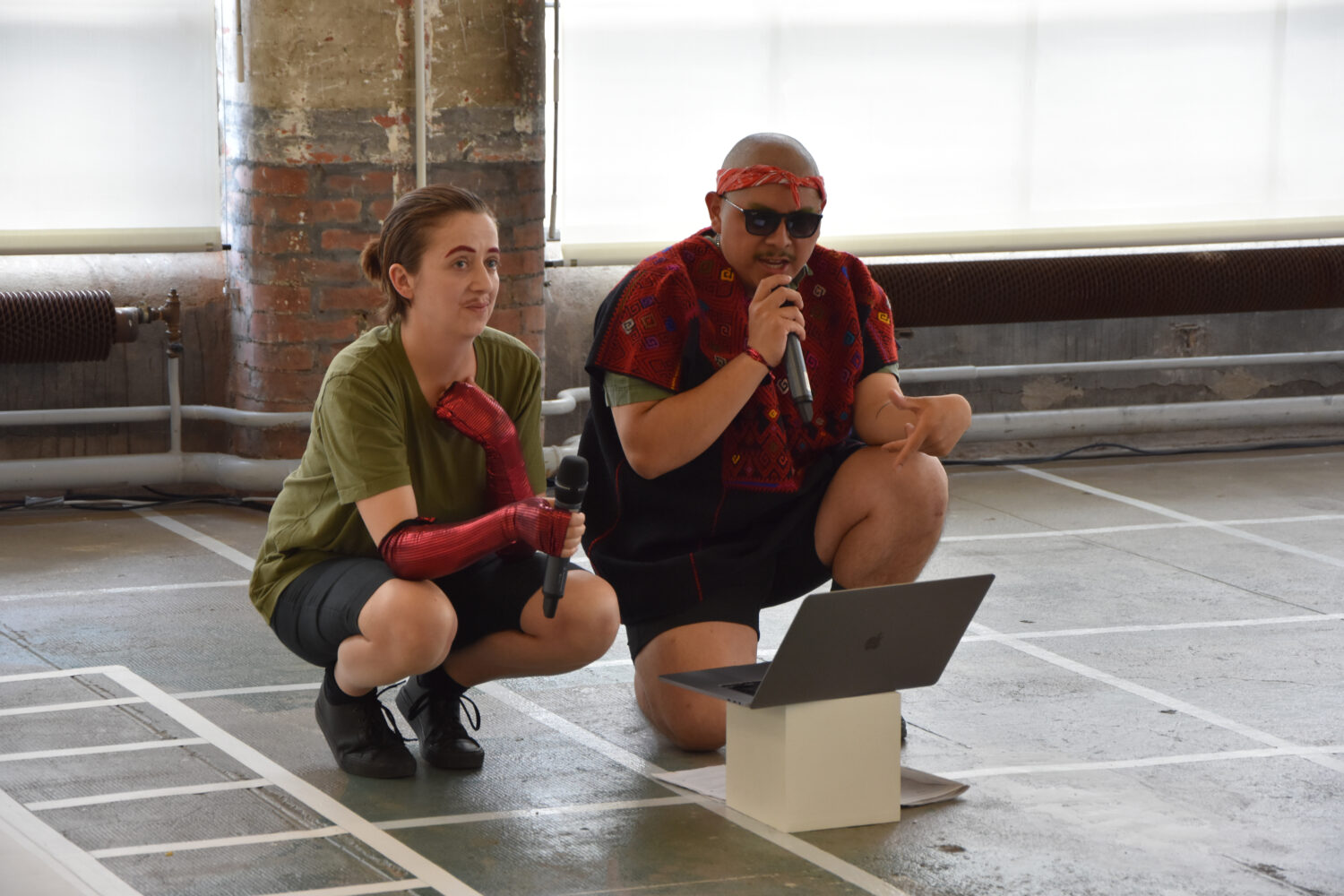
Rehearsal-performances unfolded over several days and were approached as moments of testing rather than presentation. The installation functioned simultaneously as a scenic space, a working environment, and a provisional production studio, allowing performance to exist in states of preparation, suspension, or withdrawal.
As curator Cassandre Langlois writes, this space operates through a logic of pre-enactment, understood as a form of anticipation: “a place conceived as an active zone, welcoming new materials as they arrive, and questioning what a space can do today.” » 1 « Rather than staging finished acts, the installation develops “a place within a place,” where performance practices, research, and curatorial gestures are exercised before they fully take form.
The installation brought together fixed elements, discursive moments, fragments of research, and exposed documentation. These components coexist without resolving into a single narrative, allowing absence, latency, and projection to remain central. In this sense, the exhibition proposes performance as a process of articulation and anticipation, rather than as a closed event.
Pierre Bal-Blanc and Marianne Marić, Virginie Bobin, Flora Bouteille, Katya Ev, Dora García, Vir Andrees Hera, Myriam Lefkowitz and Julie Laporte, Marine Leleu, Oliver Marchart, Aapo Nikkanen, Alevtyna Kakhidze and Sasha Pevak, Cally Spooner, Nora Sternfeld, Sabine Teyssonneyre, Victor Villafagne, Victor Yudaev.
Cassandre is a curator, researcher, and teacher working across performance, collaborative practices, and long-term projects. Her work convenes participants in research-driven formats that foreground critical perspectives and generate situated knowledge.