Minia lives in Saint-Claude, Guadeloupe. Working across film & installation, her practice explores the entanglements of body, territory, and memory in the Caribbean, addressing the afterlive of colonialism through a powerful poetics of relation. She is also a healer.
Cartilages, Archipels
2022
Text
Originally commissioned within the editorial research of Qalqalah قلقلة and later published by Lili, la rozell et le marimba.
Dialogue between Vir Andres Hera and Minia Biabiany on heteroglossia, colonial languages, and Afro-diasporic presences within Mexican and Caribbean histories.
Cartilages, Archipels
2022
Text
Originally commissioned within the editorial research of Qalqalah قلقلة and later published by Lili, la rozell et le marimba.
Dialogue between Vir Andres Hera and Minia Biabiany on heteroglossia, colonial languages, and Afro-diasporic presences within Mexican and Caribbean histories.
FROM VOLCANO TO VOLCANO
VAH: Before meeting you, Minia, I thought about your stays in Mexico and the mark I believe I see from those trips in the narration of your films, such as Toli Toli and Musa. I shared two of my films with you, Negrillas Kuiloni and Misurgia Sisitlallan. Even though we haven’t met yet, you told me about your relationship with La Soufrière, Vyé madanm-la, and you also know my volcano, Iztaccihuatl, both evoking eruptive and feminine forces. During our conversations, I have seen you literally and metaphorically traverse this world, ours, made up of former colonies, historical fractures, and borders. I wonder how we address, within artistic institutions, the diasporic minority experiences of our countries’ histories. Now that we are in dialogue, I would like to weave connections and textures with you, as you do symbolically in your films. This is in order to think from the perspective of collective and individual trauma; from your stories from Guadeloupe and mine from Mexico, from our words, research, and images that are rooted in distinct but connected experiences and starting points. It is here, where we can no longer trust the (treacherous) archives, nor a version of history written by the Béké and white elites, Mexican and French, by the weight of hegemonies, that I share with you an excerpt from Audre Lorde’s trip to Mexico. Her text saddens me because it reflects the ambivalence of Mexicans towards Black people, what I call el olvido de la belleza (the forgetting of beauty).
At the same time, there are very few texts by Afro-Mexican authors that can be used as a reference point. Today, as you know, things are changing. We have the voices of Doris Carreaga, Cecilia Estrada, Donaji Jimenez, Sagrario Cruz-Guerrero, and Aleida Violeta Vazquez Cisneros, to name a few Afro-Mexican writers and researchers. In this panorama of 1954, when Mexican institutions believed they had buried the traces of our Black history for good, Audre Lorde’s text reactivates emotional connections that pass through the gaze and the body. The Afrophobic erasers of our history could not prevent her from feeling love and freedom, nor from writing and describing Mexico from her English-speaking, black, and queer voice:
“Walking through streets filled with brown faces had a profoundly exhilarating effect on me, unlike anything I had ever experienced before. Warm strangers smiled at me as they passed by, their gazes admiring or questioning, giving me the impression that I was somewhere I wanted to be, somewhere I had chosen to be.[…] Ah, la señorita Morena! (morena means dark-skinned), buenos dias! […] Because of my skin color and haircut, I was frequently asked if I was Cuban. […] No, yo estoy de Nueva York. […] Everywhere I went, golden faces of all shades met mine, and seeing my own skin color reflected in so many people on the streets was a kind of affirmation for me, something completely new and very exciting. I had never felt visible before and hadn’t even realized that I was missing that » 1 « ”
Lorde, A.. 2021. Zami: A New Way of Writing My Name. [Translated from American English by Frédérique Pressmann]. Trois. pp. 376-379.
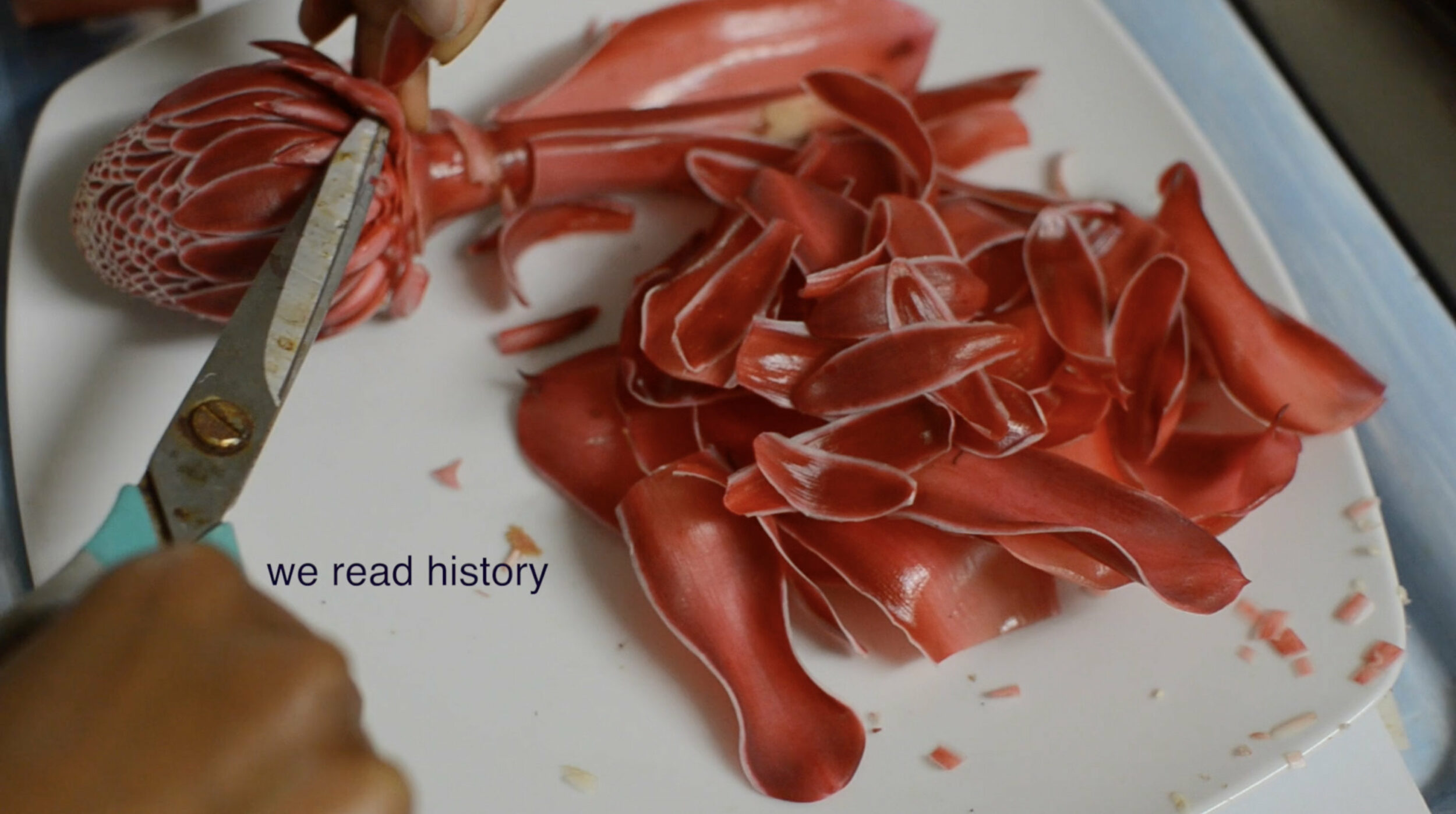
Musa. 2020. Minia Biabiany. HD film: Screenshot 06’19”
MB: The forgotten beauty. These words you utter in Negrillas Kuiloni make me think of dispossession, of the erasure of imagination in both our territories. I would even call it assimilation. In your films, not everything is translated in its entirety. It’s a choice I can relate to, that of not making everything explicit, of including different levels of relationships with language and languages. It is important to allow languages such as Creole, Fon, and Nahuatl to retain their poetic meaning, to allow them to reveal everything that can be understood through listening to the body. Language is not just meaning; it is also listening to our bodies, modern bodies that are the descendants of those who spoke and listened to this language and other languages. The body acts as a sounding board.
When we pronounce a word, a sound, a vibration, the whole history that constitutes us, that runs through us and is found in our flesh through our tensions, our filters, our attitudes, gives a sound to the present. I was able to experiment with my resonances during voice lessons with Yane Mareine, a great Guadeloupean lady who has traveled the world to listen to stories and their frequencies, extending and nurturing a solely oral sharing of knowledge transmission using the Roy Hart method. There is a listening to the emotional geography of the body through sound, through the voice. Another link between my film Musa and yours, Negrillas Kuiloni, can also be found in the phrase: “losing the ability to remember.” In Musa, I tried to go back in time to find out who the women in my maternal lineage were, until I could go no further. I used the banana flower as a metaphor to express both this loss and to signify their presence.
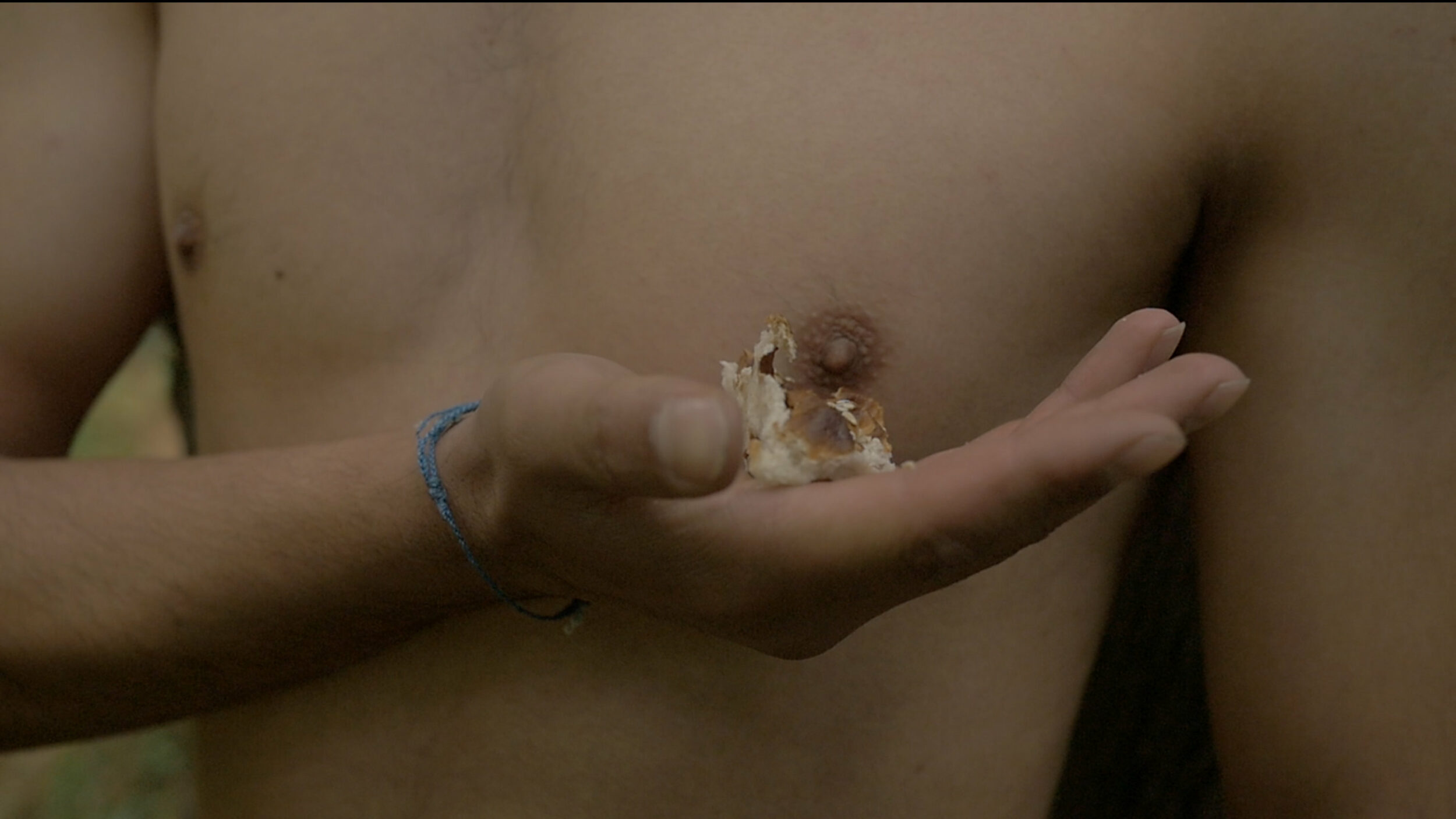
Negrillas Kuïloni. 2021. Vir Andres Hera. HD film: Screenshot 08’42”
We carry this forgetfulness in our bodies, in layers of stories, emotions, repeated vibrations, skin, flesh, trauma, and resistance. Time can open up in these spaces that are both personal and collective. I would like to share with you an excerpt from a text by Guadeloupean historian Jean Pierre Sainton, which we used with Rokia Bamba » 2 « for a performance at the Pernod-Ricard Foundation in early September:
“The trauma of slavery has been passed down to us by those who experienced it, that is to say […] by the slave owners and the enslaved, and then by their descendants. […] But we must understand the term ‘descendants’ not only in the ‘biological’ sense (which obviously cannot be ignored) but above all in its ‘social’ sense. What we mean here is that descendants must be understood as the social heirs of a given society with its characteristics embedded in economic, social, and cultural structures. […] Here we touch on a notion that we believe to be important: that of the existence of a social (historical) culture of slavery, which shared culture of the slave relationship dating back to the establishment of colonialism in the Caribbean region obviously and primarily permeates the relationship between whites and blacksBlacks, but also the entire range of interrelated relationships in post-slavery society, which, if we want to continue to interpret in “ethnic” terms, we would have to multiply: Black/Black, White/Indian » 3 « , Indian/Black, Indian/Indian, and even White/White). It is not only a dialogical confrontation between Whites and Blacks for reconciliation or restitution that should be opened, but rather a conversation with multiple interlocutors. » 4 «
VAH: Thank you for sharing that. I would like us to discuss the relationship between imposed language and chosen language, and how our bodies navigate these systems. In Learning from the White Birds, you made the decision to use English. In several other videos, you chose to include parts in Guadeloupean Creole. When you use French, or don’t use it, what meaning do you attach to it?
MB: I can understand your choice not to use the language imposed by the colonizer. In my case, my relationship with French has evolved over the years and through my videos. I felt the need to assert other imaginaries, other ways of thinking that took me beyond a solely Franco-French understanding of my language. Who am I speaking for? From where? Based on what construction? I used Creole or English but not French, and that gave me space to understand how and why I would want to use it, to question its place for me and not make it a necessary step. Now I sometimes use French in my writing, and I no longer perceive the French language as merely a colonial imposition, even though in Guadeloupe the relationship between Creole and French is one of constant conflict, with Creole resisting the official domination of French. In some families, only French is spoken, with a certain disdain for Creole. In others, raising children by speaking Creole to them is a militant stance. Creole is currently undergoing a strong revival, although it has also lost part of its vocabulary. But podemos hablar en español si quieres! (laughs)
VAH: I think that as former colonized peoples, the question of language presents us with an often insurmountable barrier. In the Spanish-speaking context, we often don’t have the opportunity to learn about the literature of formerly colonized French-speaking territories. During my stays in Quebec in 2017 , I discovered some of the pillars of Francophone Caribbean literature and philosophy, such as Fanon, Condé, Lahens, and many others. Spanish translations are often distributed on the Iberian Peninsula, or non-existent, which complicates access to them… When I discovered Maryse Condé, for example, I realized that there was a bridge between these two literary traditions, which I tried to materialize in the form of a video installation project called Diarchie, featuring Gilbert Laumord, a friend, actor, and Guadeloupean.
Rokia Bamba is a DJ, sound explorer, and artivist. Her work has also been influenced by performance and theater. Combining groovy hip-hop, African rhythms, house, and a cappella, she mixes particularly in socially engaged contexts and often works from archives. In 1989, she became a radio producer, then presenter of the Radio Campus program "Sous l'Arbre à Palabres," focused on the African diaspora in Brussels. In 1992, she co-founded Full Mix on Radio Campus, one of the first radio programs dedicated to hip-hop, R&B, and funk.
Sainton is referring here to Indians from India, not to the indigenous peoples or natives of the Caribbean.
Sainton J.-P. (2018). Les vecteurs de la continuité en Guadeloupe et Martinique : présences de l’esclavage dans les structures sociales et dans les représentations post esclavagistes. In L’esclavage quel impact sur la psychologie des populations ? Edited by Nicolas A.-C., Bowser, B.. pp. 205-207.

Musa. 2020. Minia Biabiany. HD film: Screenshot 03'24"
In the two videos that make up the series, he recited excerpts from two books in Guadeloupean Creole and Mexican Spanish: “Moi, Tituba, sorcière” (I, Tituba, Witch) by Maryse Condé and “Azucar negro” (Black Sugar) by Mexican writer Carmen Boullosa. Gilbert introduced me to Maryse Condé, who graciously allowed me to use her lines. It reminds me of a phrase in Spanish in your film: El pasado no es una conclusión, hay que preguntarle (The past is not a conclusion, you have to question it). When I “came out” of Spanish, the path to your home in Guadeloupe became a little clearer. I wanted to know what things you can distinguish since you are fluent in Spanish.
MB: Life has made my accent these days more Colombian, with Mexican words! The phrase El pasado no es una conclusión, hay que preguntarle (The past is not a conclusion, we must question it) comes from a collective called Cráter Invertido (Inverted Crater), a group of activist artists and friends from Mexico City with whom I have learned a lot and collaborated. It is a collective that uses self-publishing as a form of support and to raise awareness of discrimination in Mexican society. This phrase comes from an investigation that used hypnosis to trace back memories related to school and education.
There is a mesh, a weaving in our relationship to these dominant languages between the assimilation carried out by European colonial languages, your idea of forgotten beauty, dispossession, the erasure of the imaginary in both your films and mine, our relationship to territory, to the earth. It reminds me of a traditional practice that shows a link of memory between us, Afro-descendants living in Guadeloupe, and the indigenous peoples who lived on the island before the European invasion. To this day, babies’ umbilical cords are buried in a chosen place where a tree is planted. The Creole expression “sé la lonbrik-aw téré” refers to a connection to a place, an inevitable relationship of love for one’s country. This practice is also found in Colombia, for example, as the first stage of the ombligada, which also involves this thread-like anchoring to the land.
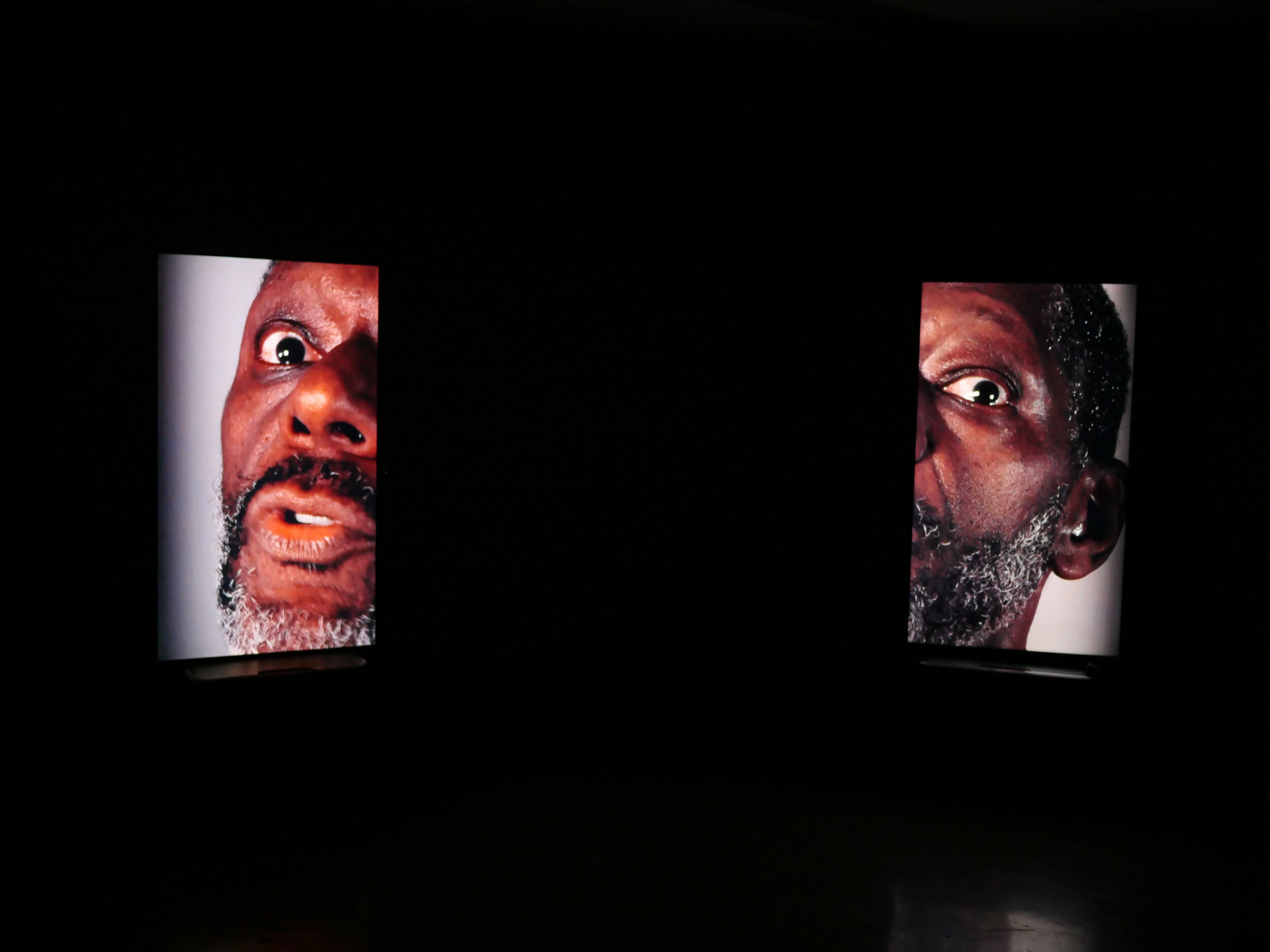
Diarchy. 2019. Vir Andres Hera. Two-screen installation. View of the installation. UQÀM, Montreal, 2019.
MB: It is possible to interpret this gesture of burying a part of the body as a way of becoming one with the territory, of remembering those who were there. Our indigenous and Afro-descendant histories relay and accompany each other in this Caribbean space. There is a connection, a coming together in defiance of the historical rupture with the native populations, with the ancestors who lie there. Just yesterday, my mother, my sister, and I were researching the languages spoken by indigenous peoples—the Taínos, the Arawaks, the Caribs—according to their gender. There is also vague information within my family that one of our ancestors was indigenous… Even though the Caribbean territory has been radically transformed, I consider our current bodies to be linked to those of the past.
VAH: I’m touched that you mention this, as it connects to an image I’m fond of, Los mulatos de Esmeraldas (the “mulattos” of the emeralds). It’s a painting from 1599 that depicts exchanges we hear little or nothing about. The three Afro-descendant figures in the painting are wearing piercings and indigenous jewelry from what is now Ecuador, as well as Spanish-inspired clothing. The image transports me to moments in the history of colonization when alliances were formed between subordinates, that is, between Black and indigenous people. How, and by circumventing which power(s), was this made possible? And how, today, in the context of independent Latin American nations and departmentalized colonies, can we, or cannot we, reflect on these alliances?
Learning from the white birds. 2021. Minia Biabiany. HD film: Screenshot 05'10"
MB: Talking about these potential alliances necessarily involves talking about a multiplicity of categorizations and vocabulary that were created for the purpose of subjugating populations. For example, the word mestizo » 5 « , means different things depending on the country. The word métis, in Guadeloupe, means that one of your parents is not Black. In Canada, the word métis refers to a completely different community. The same is true of the word criollo, or créole, whose meaning varies depending on whether you are in Mexico or Guadeloupe.
In the sense that mestizo is used in Guadeloupe, I consider that there is a link with the Mexican figure of La Malinche » 6 « , insofar as she is attributed with the qualities of a traitor, of being between worlds, with the very particular role of mestizos and mulattos in our history of having been able to reconcile the irreconcilable, of being neither one nor the other, between negotiating survival in the house of the slave-owning master and in the context of the plantation world with its many mechanisms for destroying self-esteem. Mixed race is largely the product of a succession of rapes and abuse resulting from racist hierarchies, the consequences of which are still felt today. Although there has been an extraordinary revaluation of black bodies, dark skin, and frizzy hair over the past fifteen years, light-skinned mestizos with wavy hair, as well as white bodies, remain the ideals of beauty in the Guadeloupean context. In Mexico, on the other hand, the word mestizo refers to the majority of the population. If I remember correctly, this concept comes from José Vasconcelos and his essay “La Raza Cosmica » 7 « .”
VAH: This racist and toxic ideology of “la Raza cosmica” continues to pollute our imaginations…
MB: The terms black, chabin, capresse, negre, mulatre, métis, blanc, mestizo, negrita, remain to be deconstructed in both our territories. In Mexico, what I have noticed is that the work of identity dispossession today remains brutal and direct: there is a devaluation of indigenous peoples » 8 « , and Black people that contradicts the sense of national pride represented by mestizo nationalism. In the Spanish-speaking Mexican context, there is a veil that diverts the gaze, protects racist language, and perpetuates it. I have been trying to understand this since the symbolic birth of the majority groups in our countries: on the one hand, the total uprooting that the slave ship represents, and on the other, the strong link to indigenous cultures that Mexico maintains.
Navarrete, F. (2005). El mestizaje y las culturas regionales. Las Relaciones Interétnicas en México, Programa México Nación Multicultural de la UNAM. "Mestizos are an ethnic category that encompasses many different ethnic groups with distinct identities. However, the ideology of mestizaje defined them as a single ethnic identity and asserted that all other ethnic groups in the country—Europeans, Africans, new immigrants, and especially indigenous peoples—should join this entity." [our translation]
La Malinche, or Malintzin, was an indigenous woman, translator, and advisor in Mesoamerican diplomacy who married the Spanish conquistador Hernán Cortés and helped him defeat the Aztec Empire by conquering Mexico and its capital, Tenochtitlan.
Vasconcelos, J. (1979). The cosmic race [La raza cósmica]: a bilingual edition, [translated by Didier T. Jaén]. Johns Hopkins University Press
Although the term indigena is most commonly used in Mexico and other Latin American countries, we have opted for the term autochtone in French, which is used in particular by the indigenous peoples of Canada.
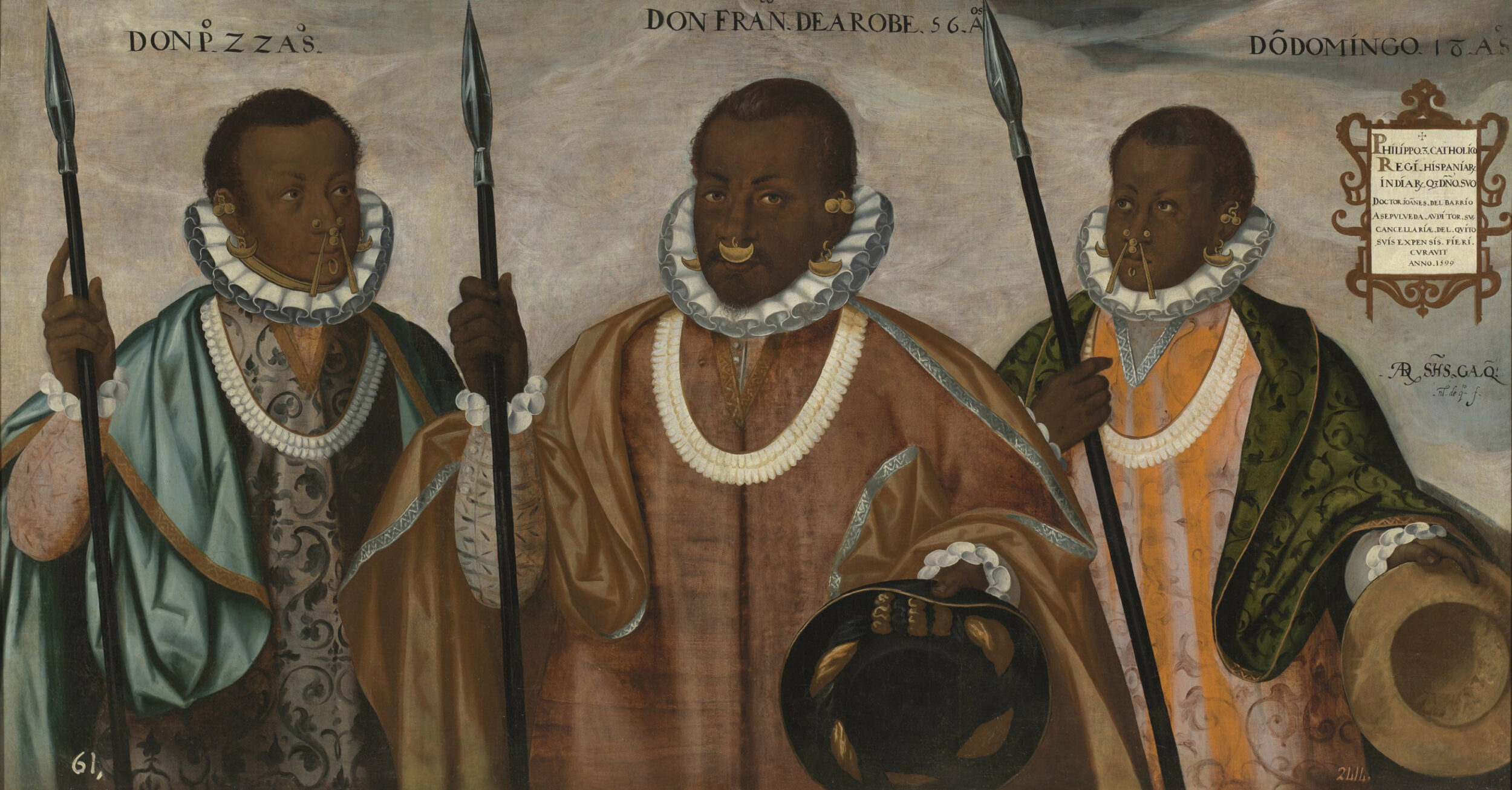
Los tres mulatos de Esmeraldas. 1599. Andres Sanchez Galque. Museo de America, Madrid.
VAH: That also needs to be deconstructed. For example, many of the clothes we consider indigenous are in fact impositions by white Spaniards, in order to differentiate between different linguistic and ethnic groups. Over time, this imposition has been transformed into a sign of self-recognition and pride. It reminds me of the fantasized image of the Creole woman from Guadeloupe, which is both a sign of identity and something imposed by the colonizer.
MB: Que hacemos de esa huella hoy? [What do we do with that mark today?] In the face of dehumanization, re-signifying words is also a struggle for freedom of bodies and gestures. Shall we stop there for today?
VAH: OK, Hablemos pronto, I’ll leave you with the poem To Live in the Borderlands, by Chicana writer Gloria Anzaldua. It’s interesting to think back on the similarities between the demands of the Chicana » 9 « and Black Power movements in what we’re trying to reflect on together…
World perspective. Chavez, C. (1968). Manifestations of the Chicano movement. University of Sherbrooke, QC, Canada. "In the spirit of protest of the 1960s, the Chicano movement, which is an extension of the Mexican-American civil rights movement of the 1940s, seeks greater recognition of its rights through strikes and demonstrations." https://perspective.usherbrooke.ca/bilan/servlet/BMEve/898
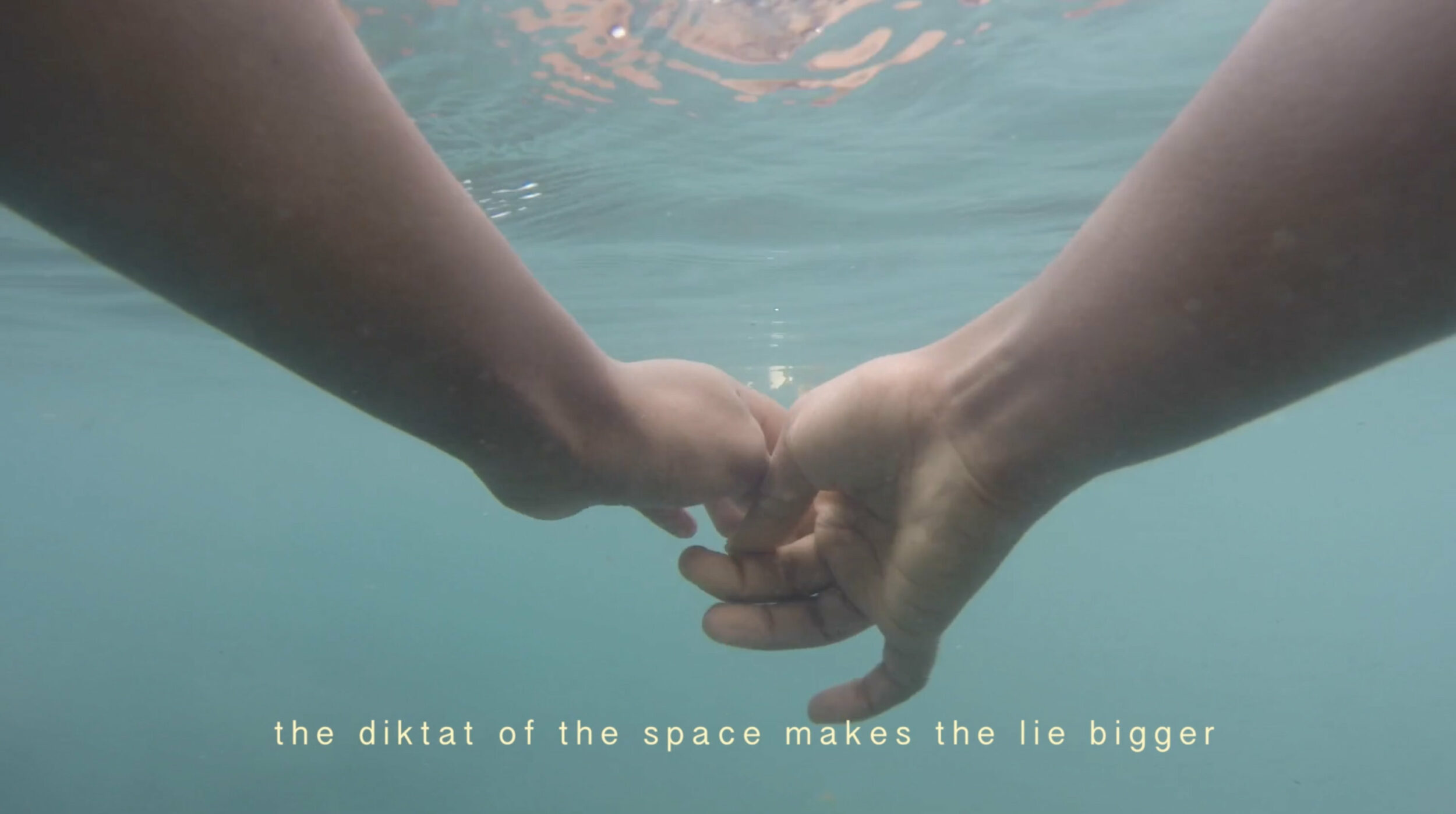
Toli Toli. 2018. Minia Biabiany. HD film: Screenshot 04'33"
Digression 1
TO LIVE IN THE BORDERLANDS » 10 « [Vivre à la Frontière]
by Gloria Anzaldua (Free French translation from the original English version)
Vivre à la frontière veut dire que
t’es » 11 « pas latina » 12 « autochtone noire espagnole
ni blanche, t’es mestiza, mulâtre, sang-mêlée
prise dans les feux croisés des camps ennemis
tandis que tu portes les cinq « races » sur ton dos
Ne sachant de quel côté te tourner, ni où aller ;
Vivre à la frontière veut dire
que l’autochtone » 13 « en toi, trahie pendant 500 ans,
ne te parle plus,
les mexicanas » 14 « te traitent de lâche,
que nier l’anglo qui est en toi
est aussi néfaste que d’avoir nié l’autochtone ou la noire ;
Quand tu vis à la frontière
les gens te marchent dessus, le vent vole ta voix,
t’es une bourrique, un bœuf, un bouc émissaire
annonciatrice d’une nouvelle « race »,
kif-kif » 15 « , autant femme qu’homme, aucun des deux,
d’un nouveau genre
Anzaldua, G. (1987). Borderlands-La Frontera. The New Mestiza. Aunt Lute Books. pp. 194-195.
We have decided to use the form "T'es" instead of "Tu es," which, in our opinion, better reflects the oral nature of Anzaldua's writing.
We replaced "Hispanic" with "Latina" to avoid confusion with "hispanique," which in French refers to the Iberian Peninsula.
We translated "india," literally "Indian," as "indigenous."
We decided not to translate "mexicanas" as "Mexican," as this preserves the otherness of the word as attributed by Anzaldua.
We translated "half and half" with the North African term "kif-kif," which is widely used in French.
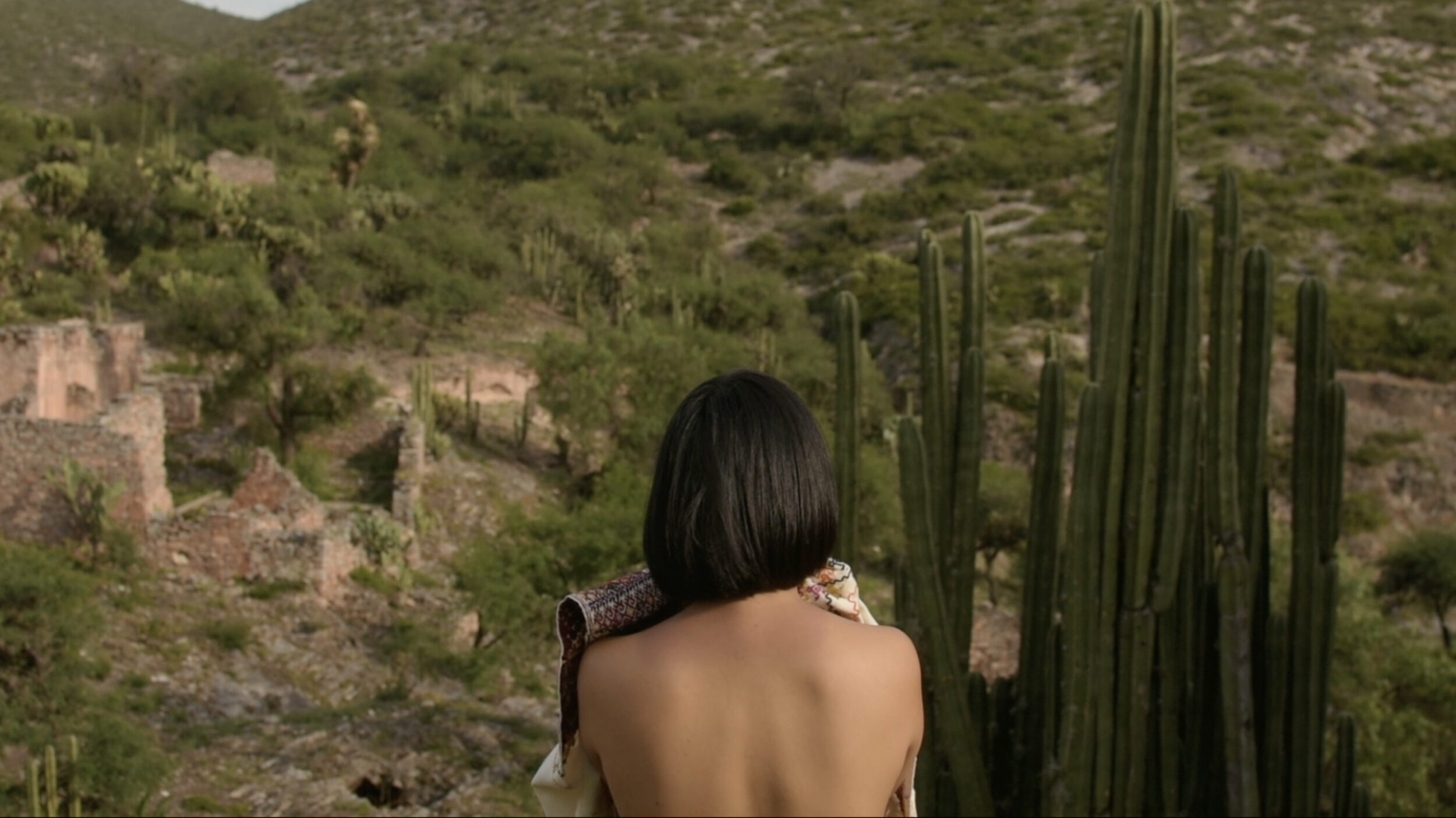
Negrillas Kuïloni. 2021. Vir Andres Hera. HD film: Screenshot 06’51”
THE DESTRUCTION OF THE MESTIZO FATHER
Foreword
VAH: This text follows the first discussion we had with Minia. It traces and attempts to unravel the identity of Mexican mestiza·o·s, of whom I am one, but also to confront internalized racism and the lack of perspective in relation to the history of slavery in Mexico. This work, which I believe is necessary, seeks to establish the necessary links between Mexico and the Afrodiasporic communities of the world.
After the Mexican Revolution, starting in the 1920s, a dominant narrative gradually emerged, idealizing the Mexican population as being predominantly the result of intermarriage between Spaniards and indigenous peoples, the fruit of a civilizing Christian “love.” The concept of mestiza·o became central to the formation of a Mexican identity that was neither totally Spanish nor totally indigenous. The word mestiza·o thus acquired its current meaning, coined by the Mexican government to refer to all Mexican s who do not speak an indigenous language, including people of European, indigenous, and African descent.
In his book Mexico profundo » 16 « , mestizo anthropologist Guillermo Bonfil takes the opposite view, arguing that Mexican mestizaje, far from being a positive process of integration, consists in the destruction of indigenous cultures. This is why he called it “de-Indianization » 17 « .” This term emphasizes a key aspect of mestizaje: the voluntary or forced, individual or collective abandonment of languages and other aspects of indigenous cultural traditions. Bonfil identified this process as a form of “ethnocide,” that is, a form of destruction of the ethnic and cultural identities of the indigenous peoples of Mexico. This concept continues to operate through the bodies of those who identify as mestizas and mestizos, in order to “improve the race » 18 « .” This Eurocentrism is still present in the Mexican collective unconscious » 19 « . Among the mestizo communities of Mexico, many of us are very close to indigenous and Afro-descendant cultures, as is the case with my family. We retain a strong sense of their ethnic identity, although the project of miscegenation prevents us from identifying as Afro-descendants and/or indigenous people.
Bonfil, G. (2017). Deep Mexico: A Denied Civilization. Ciesas/Sep, Foro, 1987. Translated and published by Zones sensibles.
Bonfil uses the term "indigena," which we have chosen to translate as "indigenous."
Mejorar la Raza is a phrase that refers to the phenomenon of blanqueamiento, or whitening, a social, political, and economic practice used in many post-colonial countries in the Americas to "improve the race" towards a supposed ideal of whiteness. Rahier, J.M. (1999). "Body politics in black and white: Señoras, Mujeres, Blanqueamiento and Miss Esmeraldas 1997-1998, Ecuador." Women & Performance: A Journal of Feminist Theory. 11 (1): 103–120.
Hernandez Cuevas M.P.. (2004). African Mexicans and the Discourse on Modern Nation. University Press of America.
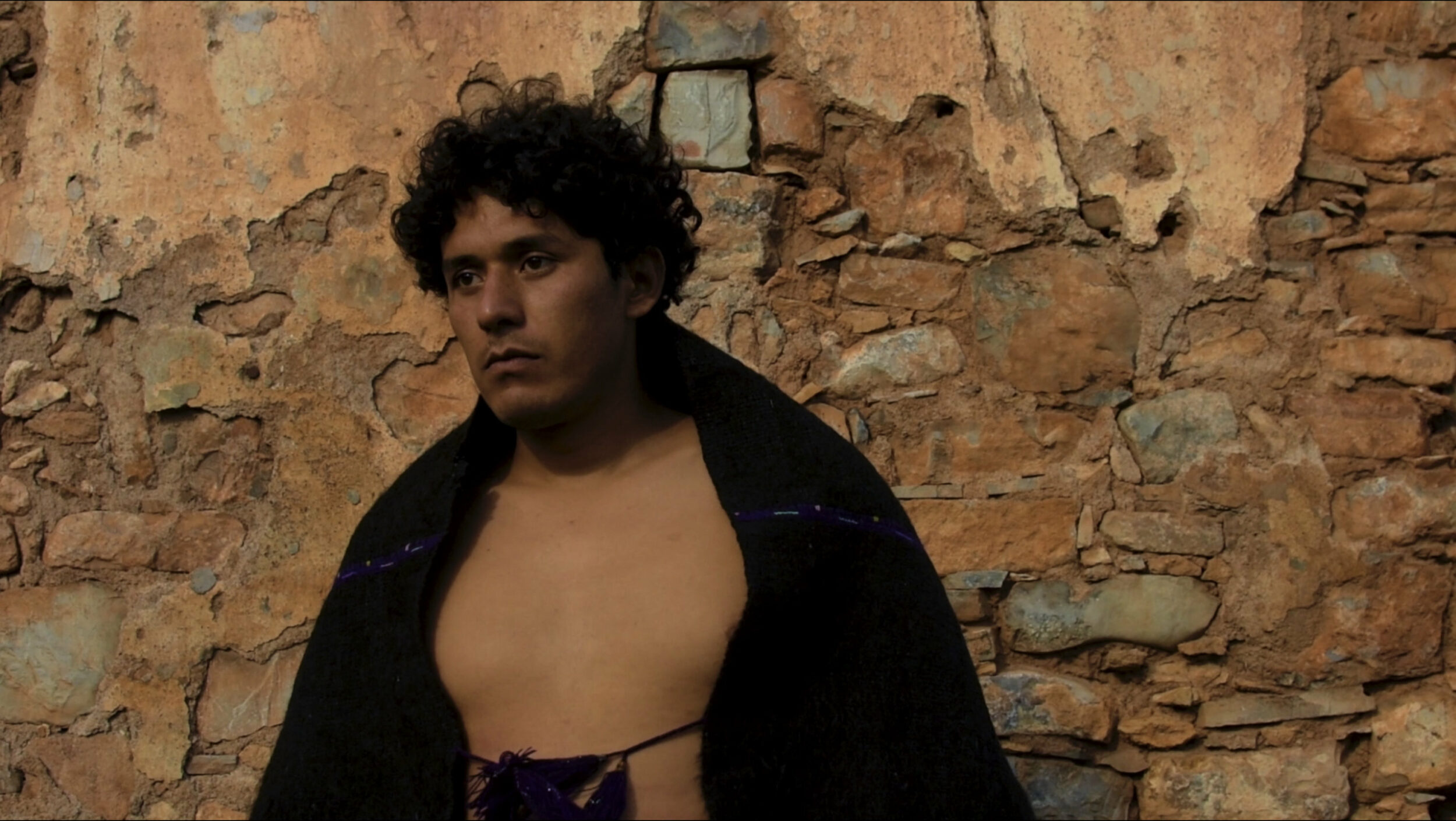
Negrillas Kuïloni. 2021. Vir Andres Hera. HD film: Screenshot 07'37"
What has not yet been problematized in the concept of mestizo, nor in Bonfil’s critique, is the Black component of this multitude of communities that make up the majority of Mexicans who identify as mestizos. The negative “pseudo-characteristics” associated with black skin color for many years were considered detrimental to the nation and hardly worth discussing so as not to tarnish Mexico’s future. Although Black people were part of the Mexican population, José Vasconcelos believed that their only legacies were disease and the evils of sensuality and immorality, in contrast to the “great cultural and intellectual advantages” that Europeans and indigenous peoples had passed on to the Mexican people » 20 « . Thus, the Mexican Béké elite » 21 « institutionalized a magic mirror, materialized in the nation’s narrative, where the Black populations of Mexican mestizaje were completely excluded from the ideal of the “cosmic race.”
Mestizo researcher Natividad Gutierrez asserts that the exacerbation of the indigenous past was designed primarily for consumption by a privileged segment of the urban population aspiring to become mestizo » 22 « . During the 20th century, mestiza·o·s—once a minority—became the largest and most influential group in modern Mexican history. Afro-Mexican historian and researcher Marco Polo Hernandez Cuevas takes stock in order to highlight what he describes as a “black heritage » 23 « ” in the figure of the mestiza·o·s: “It is clear, particularly in light of new ways of interpreting history, that a considerable portion of Mexican mestiza·o·s, including those whose phenotype does not show it, genetically inherit a black component,” he says.
This “genetic makeup” does not presume anything about the political, cultural, or linguistic consequences for Mexico, however, most Mexican mestiza·o·s could be considered the children of hundreds of thousands of enslaved Black people. Although the “rediscovery” of Black people in Mexico took place in the late 1940s, notably through the writings of anthropologist Gonzalo Aguirre Beltrán[24] , the nation’s discourse insists that Black people are already few in number and that they continue to be “assimilated” through miscegenation.
This institutional denial continues to this day despite the government’s historical recognition of the existence of Afro-Mexicans in 2015, made possible by the activism of certain Afro-Mexican groups. This confiscation of memories has had psychological consequences for mestizo populations, who can only see a partial reflection of themselves, and who are still in the process of assimilation into a white hegemony that is still being constructed. These psychological consequences are also physical and are manifested in our bodies, our traditions, and the image of ourselves that we wish to convey. I would like to propose a » 25 « rejection of this identity figure that is the mestizo/a and, more generally, of colonial, modern, and contemporary Mexican identities. This exercise does not run counter to other indigenous and Afro-Mexican struggles and demands. On the contrary, it allows us to problematize and reintegrate the voices of the so-called mestiza·o·s into these debates, and to dare to look at the history of Mexico with a black gaze » 26 « :
A black gaze does not describe the viewpoint of black people. It is not a gaze defined by race or phenotype. […] It is a gaze that transforms this precarity into creative forms of affirmation. It repurposes vulnerability and makes it (re)generative. In doing so, it shifts the optics of “looking at” to an intentional practice of looking with and alongside. A black gaze does not allow viewers to be passive to its labor or impassive to its affects. It is a gaze that demands work. It demands the work of maintaining a relation to, contact and connection with, another. The black gaze I am describing should not be confused with empathy. It is not a gaze that allows you to put yourself in the place of another, nor does it allow you to presume you share another person’s experiences or emotions. It’s not about sharing the pain or suffering of differently racialized subjects. It is recognizing the disparity between your position and theirs and working to address it. It demands the affective labor of adjacency. » 27 «
Vasconcelos J., (1958). La raza cósmica: misión de la raza iberoamericana. Barcelona, Agencia Mundial de Librería. pp. 19.
In the French West Indies, a béké is a white Creole descended from the first settlers. We are creating a neologism by calling the white Mexican elites "békés."
Gutiérrez, N., (1999). Nationalist Myths and Ethnic Identities: Indigenous Intellectuals and the Mexican State. University of Nebraska Press.
Hernandez Cuevas M.P.. (2001) The Erasure of the Afro Element of Mestizaje in Modern Mexico: The Coding of Visibly Black Mestizos According to a White Aesthetic In and Through the discourse of nation during the Phase of the Mexican Revolution, 1920-1968. The University of British Columbia
Campt, T. (2019). Black visuality and the practice of refusal. Women & Performance; a journal of feminist theory
https://www.womenandperformance.org/ampersand/29-1/campt
https://www.womenandperformance.org/ampersand/29-1/campt
Campt, T. (2019). Adjacency: Luke Willis Thompson’s Poethics of Care. Flash Art.
https://flash---art.com/article/adjacency-luke-willis-thompsons-poethics-of-care/
https://flash---art.com/article/adjacency-luke-willis-thompsons-poethics-of-care/
Campt, T. (2019). Adjacency: Luke Willis Thompson’s Poethics of Care. Flash Art.
https://flash---art.com/article/adjacency-luke-willis-thompsons-poethics-of-care/
https://flash---art.com/article/adjacency-luke-willis-thompsons-poethics-of-care/
Pawòl sé van. 2020. Minia Biabiany. HD film: Screenshot 04'33"
If institutional history has separated mestiza·o from their black past, it is up to us to reformulate, or rather, to reject this exclusion. Drawing on the Afro-Mexican component of history means not allowing names to evaporate into the obscuring and comforting cloud of the mestizo entity, but rather dissolving these cumulus clouds in order to glimpse common horizons, particularly with the Caribbean, an archipelagic region where—let us not forget—one-third of Mexican territory is located. The former colonial powers, including France, now advocate a certain idea of miscegenation that ignores this colonial history and the violence perpetrated in the present.
In this context, the formerly colonized can, on the one hand, reject the lure of the idea of miscegenation and integration, and on the other hand, navigate toward the past in search of names, as Ariella Aïsha Azoulay explains with regard to her grandmother’s first name, Aïsha, which she has taken on: “By not letting the name disappear—by rejecting my father’s legacy to renew the family’s pre-colonial heritage —I stand with my ancestors and not against them, trying to indefinitely reverse my father’s predisposition to replace the wound of the colonized by transforming himself into a ‘colonial merchant’ who turns against himself, his family, and his world.” » 28 «
In The Labyrinth of Solitude » 29 « , Paz provides an analysis of the psychological and cultural traumas that miscegenation has caused among Mexican mestizos. According to him, Mexican mestizos are the children of white men and indigenous women, “la chingada.” Mexican psychiatrist Néstor Braunstein considers “la chingada” to be a woman who passively surrenders herself to the foreign conqueror » 30 « . According to Hernandez, this word encapsulates the narrative of rape and predation: “[chingar] fixes in the collective memory the image of an indigenous woman taken by force. The conqueror becomes the ‘chingón’, the father figure of supposed success » 31 « .”
There are differing explanations for the word chingar. Paz attributes it to an indigenous origin, from the Nahuatl word xinaxtli (fermented mead). But it is interesting to note that Rolando Antonio Pérez Fernández » 32 « , a Cuban musicologist, contradicts Paz’s claims about the origin of the word, deducing that chingar originates from the Kimbundú word xingar. According to him, chingar is a word bequeathed by Angolan slaves, whose presence and legacy in Mexico are well documented.
We, the children of the chingada, the mestizos, must reposition Afro-descendants within our history. The mestizo continues to exist as an extension of white hegemony, indigenous subjugation, and black erasure. This recognition cannot be achieved without taking a journey into the past to carry out a symbolic parricide, that of the “destruction of the mestizo father » 33 « .” This exercise in critical nostalgia » 34 « is an act aimed at highlighting the countless knowledge and affections shared between indigenous peoples and Afro-descendants during the colonial period.
This perspective suggests intersectionalities in history, where the children of the chingada are also the children of Yanga » 35 « . As Ruth Levitas » 36 « observed: “Representations that seem to break radically with the past cannot forget it; to be intelligible, they inevitably draw on sources borrowed from shared collective memories. » 37 « Rather than embodying the expression of conservative politics, critical nostalgia responds to a range of political desires and needs found in the past(s), both in Spanish-speaking and French-speaking American contexts. The characters that Minia Biabiany and I propose below are therefore resources addressed to the struggles of all subaltern groups. That is why we hope that this constitutive and dialogical shift will immediately multiply voices, geographies, threads tied and untied, bodies recognized and those put to death.
Azoullay, A. (2019). Potential History: Unlearning Imperialism: Aïsha. Verso Books. “By not letting the name go—by rejecting my father’s legacy for the sake of renewing the precolonial legacy of the family— I am standing with my ancestors and not against them, trying to reverse my father’s readiness, once and again, to replace the wound of the colonized by converting into a “colonial monger” who turns against himself, his family, and his world.”
Paz, O. (1950). Le labyrinthe de la solitude [El laberinto de la soledad]. Gallimard.
Braunstein N. A.. (2001). Por el camino de Freud, Siglo XXI, p. 199.
Hernández, M. P. (2018) El abolengo negro afromexicano nacional [4/10]. Number 62. Year I. El Sambo de Guerrero, Cuajinicuilapa.
Pérez Fernández, R. A. (1997). The Verb Chingar, A Key Word. Michoacana University of San Nicolás de Hidalgo.
Bourgeois, L. (2000). Destruction of the Father / Reconstruction of the Father. LELONG
Magagnoli, P.. (2015). Documents of Utopia. Introduction: Pathological and Critical. Columbia University Press. p. 9
Gaspar Yanga, of West African (Senegal) origin according to some, or Central African (Gabon) origin according to others, led the first black rebellion in Mexico in 1570. He founded a community of fugitive slaves, or "black maroons." In 1609, they founded the city of San Lorenzo de los Negros (Saint Lawrence of the Blacks). Yanga was its ruler.
Levitas, R. (2013). Utopia as Method: The Imaginary Reconstitution of Society.
Levitas, R. (2007). The Archive of the Feet: Memory, Place and Utopia, in Griffin M. J.; Moylan, T.. Exploring the Utopian Impulse: Essays on Utopian Thought and Practice. Peter Lang. p. 20.
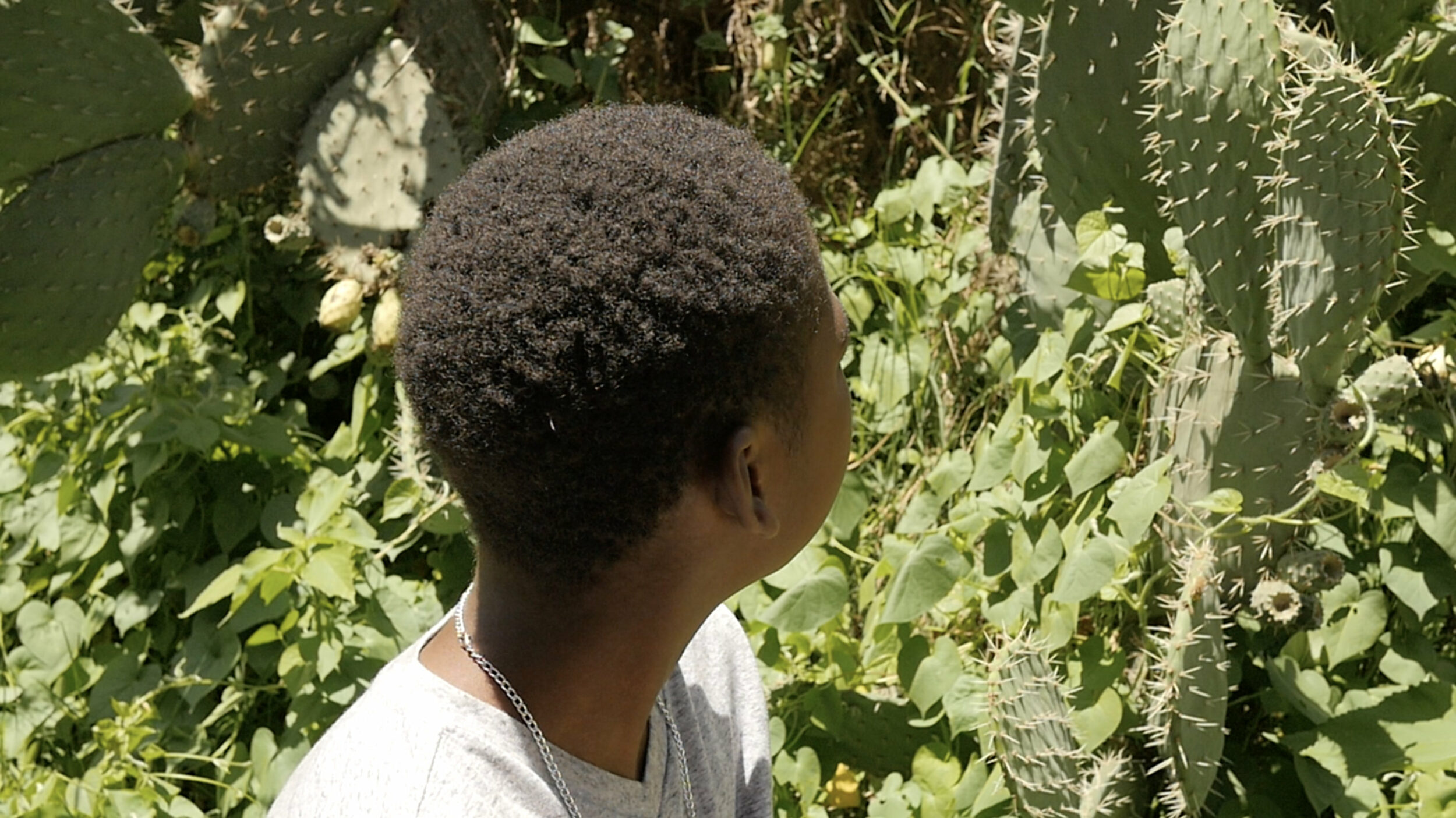
Negrillas Kuïloni. 2021. Vir Andres Hera. HD film: Screenshot 07’55”
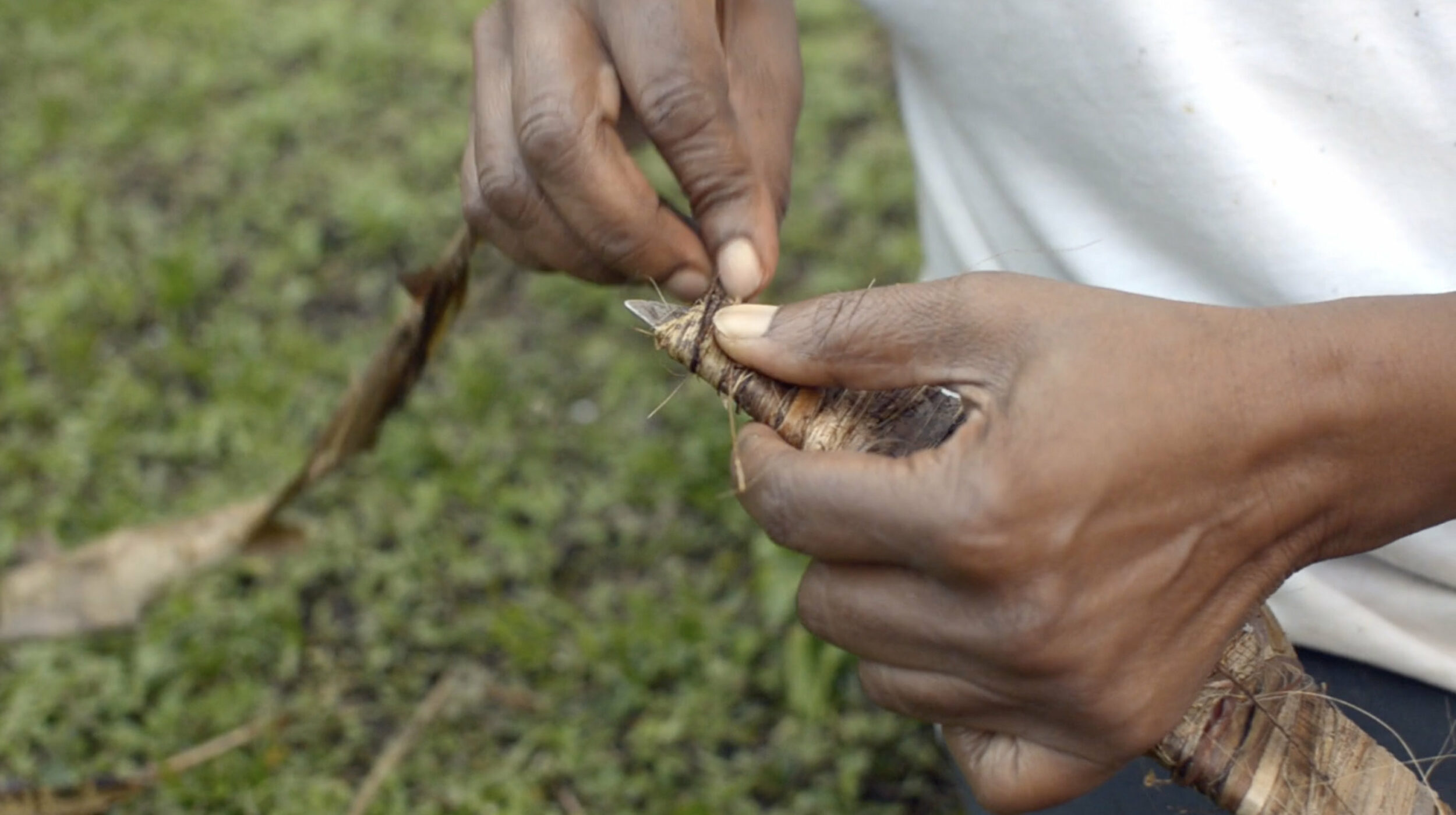
Pawòl sé van. 2020. Minia Biabiany. HD film: Screenshot 09’54”
Digression 2
NEGRILLAS [Afro-Mexican verses] » 38 «
by Sor Juana Inés de la Cruz
Negros, Negrillas, Guineos. This is how the poems and songs performed by black people during the Spanish colonization of Mexico were known. Today, they are among the few documents that transcribe what some linguists call Afro-Mexican Creole. This one was written by Sor Juana Inés de la Cruz in 1677. In these verses, the Afro-Mexican character laments the discriminatory treatment that he and his community receive from Spanish monks and society in general at the time, and demands recognition of his humanity.
“La otra noche con mi conga
turo sin durmí pensaba,
que no quiele gente plieta,
como eya so gente branca
Sola saca la pañole,
well, God, look at the trap,
because even though we are black, we are people,
even if you call us cabaya!
De la Cruz, S. J. I.. (1677). Sor Juana Inés de la Cruz, Villancicos qve se cantaron en los maitines del gloriosissimo Padre S. Pedro Nolasco, fundador de la Sagrada Familia de Redemptores del Orden de Nuestra Señora de la Merced, dia 31 de Henero de 1677 años. In Mexico, by the widow of Bernardo Calderón; in Complete Works. Vol. II: Villancicos y letras sacras. Fondo de Cultura Económica.
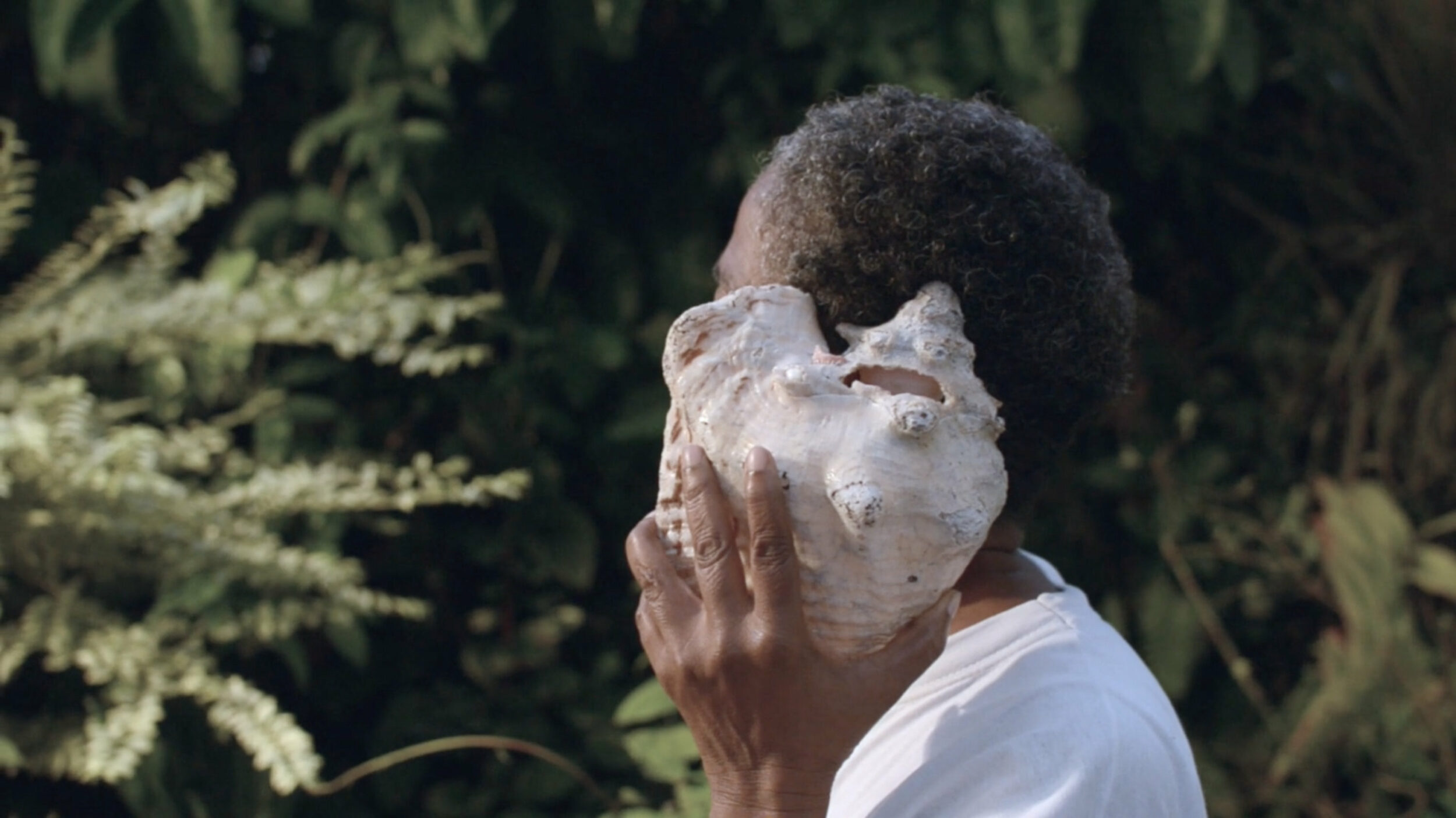
Pawòl sé van. 2020. Minia Biabiany. HD film: Screenshot 09’54”
Digression 3
PULQUERIA LA CALAVERA [Cartilagos cantando]
It is Wednesday, December 17, 1657, 1:50 p.m., and it is snowing in Mexico City’s Plaza Mayor. To the south of the large square, construction work continues on the new cathedral of New Spain, which will soon be inaugurated. Groups of men swing blocks of reddish volcanic stone in the air. They are black and indigenous for the most part, with a few mestizos blending into the brown mass of workers. A carriage gilded with gold leaf makes its way across the wet and icy cobblestones of the square, its lightning-fast passage forcing street vendors to pack up and move their stalls. The wheels of the carriage splash snow on the indigenous vendors, who respond to this aggression with chingonas insults in Otomi, Nahuatl, and Popoloca.
In the obscene silence left behind by the disdainful passage of the masters, a figure emerges at the intersection of San Miguel and Necatitlán streets, at the corner of the square. It is a small man running out of the pulqueria “La calavera,” his agitated steps forming a cloud of dust and snowflakes. He bumps into an almond-eyed barber, a bailiff wearing a doublet, a clerk, a Mixtec shoemaker, an Indian vendor, a Filipino beggar, an Augustinian monk with Quechua features from Lima, an Afro-Dominican merchant, an octogenarian Spanish woman, and black masons.
He laughs and stops in the middle of the square. Half troubadour, half griot » 39 « , half Nezahualcoyotl » 40 « , he sings and recites spontaneous, playful verses: These are lullabies mixing the miracles performed by the Yoruba and Aztec deities; descriptions of the alleys he knows so well, those of Santo Domingo and the village of Basse-Terre in Karukéra » 41 « , where his cousins live; or stories of Black people fighting with their masters on slave ships. This is the “negrito poeta » 42 « ,” the little black poet. From this plaza mayor, the cross of Jesus above the pyramid coexists in a cold war, but there are also black bodies and diasporic voices trying to communicate through this snowy weather to the island of Hispaniola and the Bambara Kingdom.
In West Africa, a griot is a person who specializes in praising and reciting historical and mythological stories.
Nezahualcoyotl (1402-1472). King of Texcoco, poet, and philosopher. Also a renowned architect and philosopher, he was one of the most important figures in post-classical Mesoamerica.
Karukéra or Kaloucera is one of the pre-Columbian names for the Guadeloupe archipelago. The word comes from the indigenous Arawak language.
"El Negrito Poeta" [the black poet] was a semi-legendary poet from New Spain [Mexico] who lived in the 18th century. The poet was of African origin, hence his name. He was born in what is now Veracruz. His parents had been brought to Mexico as slaves from the Congo, and his name was probably José Vasconcelos, not to be confused with the author of the same name, La Raza Cosmica.
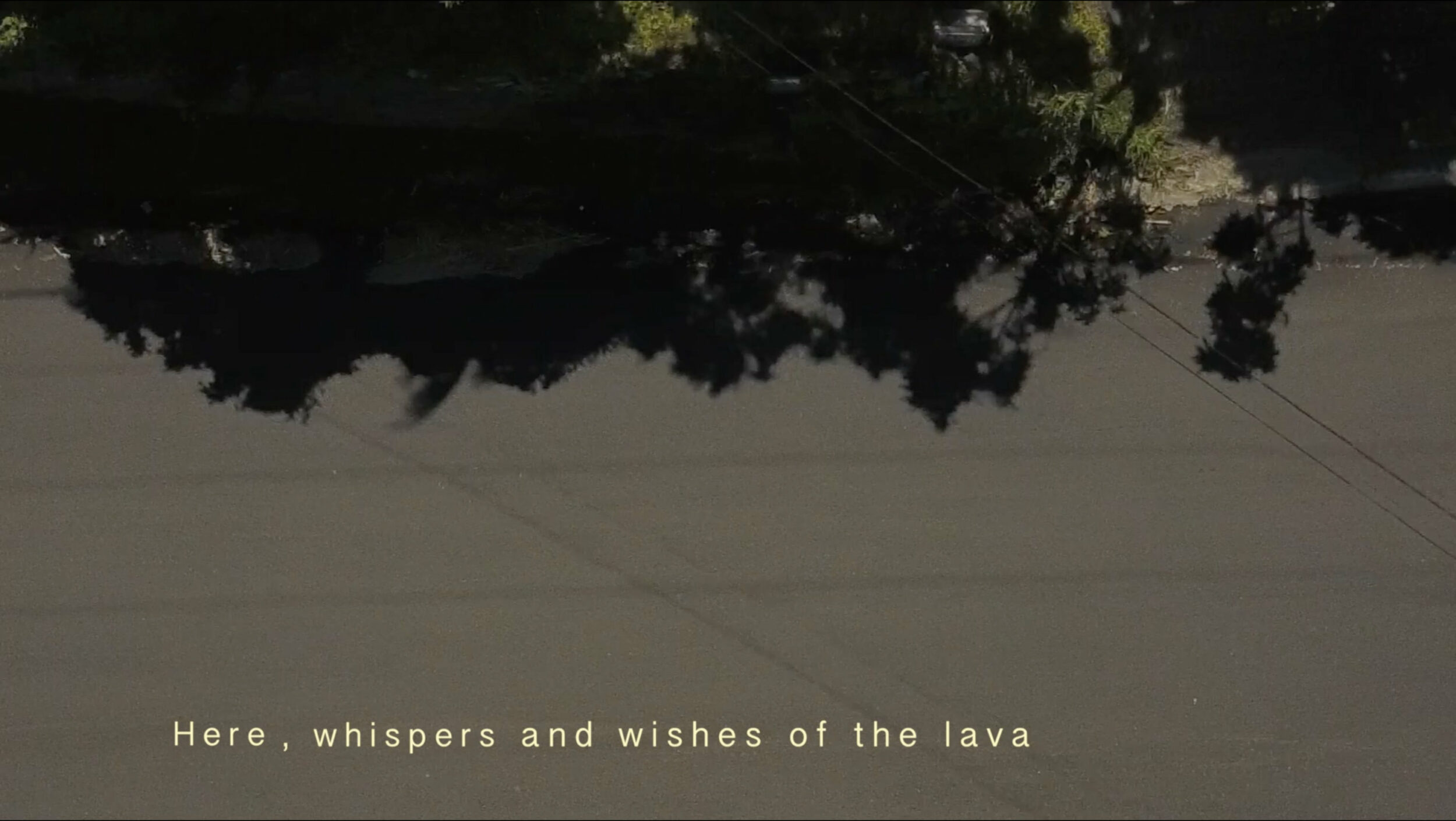
Toli Toli. 2018. Minia Biabiany. HD film: Screenshot 00'45"
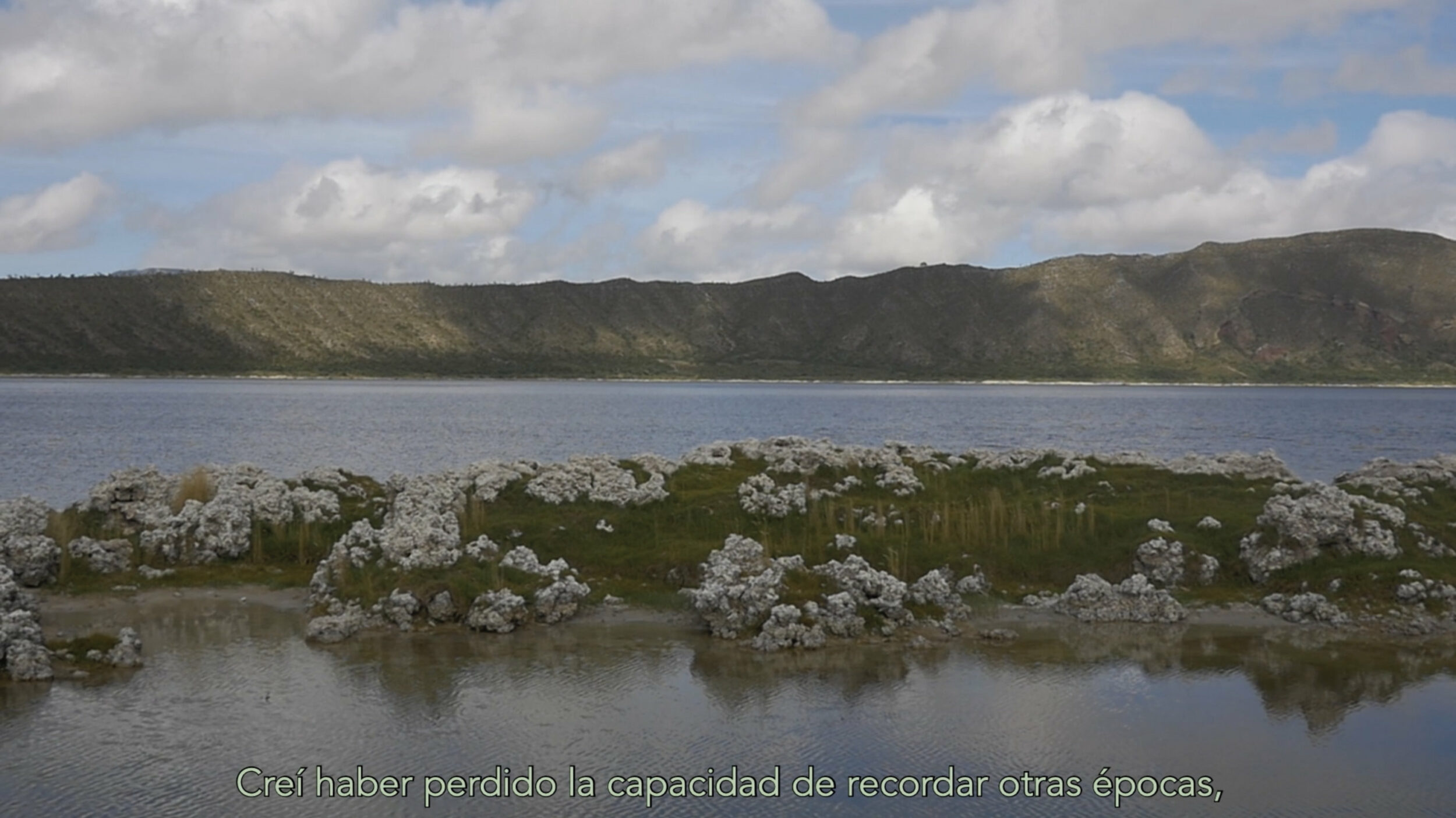
Negrillas Kuïloni. 2021. Vir Andres Hera. HD film: Screenshot 06’44”
THANK YOU VIRGEN DE GUADALUPE
Introduction: In this second part of our exchange, we reflect on the bodies of the past from our bodies of the present, while taking into consideration our respective backgrounds and places of enunciation. This joint reflection attempts to reflect on black figures, past and present, in order to reject the rancid and eugenicist concepts of miscegenation in our respective contexts. Drawing on imagined visions of the past, we can imagine a kind of connective tissue, like cartilage. This cartilaginous image can be seen as an extension of the relational dialectic that Edouard Glissant proposed in the form of an archipelago, a rhizome, or a banyan tree » 43 « , with the difference that cartilage is a tissue that binds flesh and bone. These images aim, on the one hand, to trace axes ranging from the Afro-Mexican continental imagination to the Caribbean universe; and on the other hand, they seek to reconnect the bodies that inhabit them in the present.
Ciprut, M. A.. (2014). Caribbean Banyan Identity: Formation, Transformations, and Expansion in Diversity. Sens-Dessous No. 13, pp. 35-48
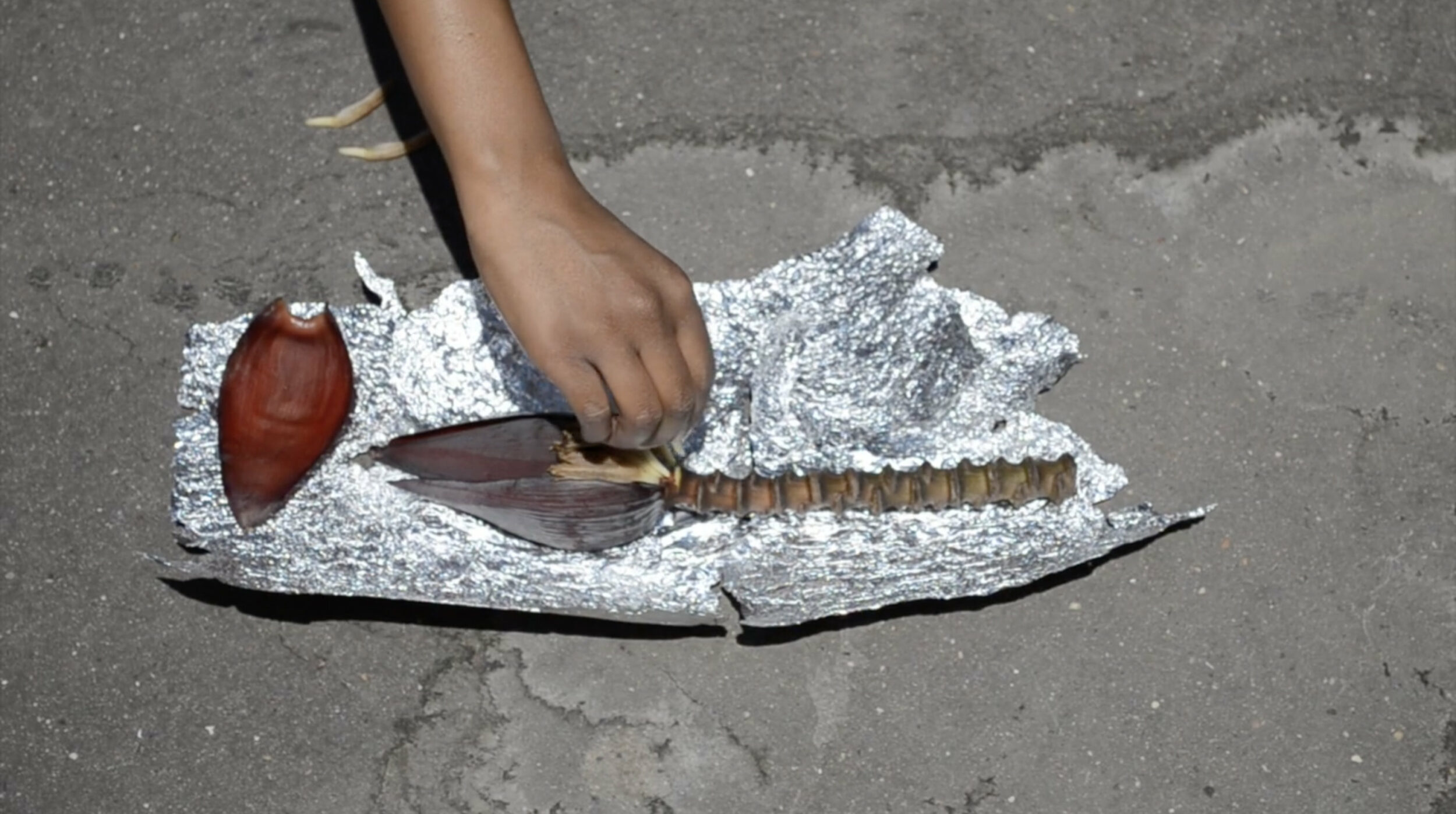
Flè a pòyò, restoring the body. 2018. Minia Biabiany. HD film: Screenshot 02'40"
VAH: It was in Montreal, in 2017, that I began theoretical research into the Afro-Mexican language, which disappeared in the 18th century and of which only a few verses remain, written by Sor Juana Inés de la Cruz, among others. She wrote poems in Afro-Creole » 44 « , perhaps appropriating the language of the other Juana, her Afro-Mexican slave, who lived with her between 1673 and 1683. When they began living together, Juana was 17 years old. I have often dreamed of being a mosquito in the streets of Mexico City in the 17th century, so that I could listen to the linguistic diversity—indigenous, African, European—that existed there. It is with this diversity in mind that I refuse to describe Mexico only in Spanish, because to take this for granted is to accept the lie that the diversity of our subjectivities exists only through this language. Although the Spanish we speak has an originality that any Spanish speaker can recognize by pronouncing two simple words, Mexico has no official language. The same post-revolutionary reforms that prevented the learning and transmission of indigenous languages and erased our Black past are the ones that further imposed Spanish. I was unable to inherit the Nahuatl language from my grandmother, nor the Otomi language from some of my other ancestors, let alone the now extinct Afro-Mexican Creole. I speak French by choice. My first French teacher was a Haitian woman who lived in Tlaxcala. My father, who is mestizo, accompanied me to my first class, but he refused to let me continue learning French from a Black woman, saying that she spoke poorly, without knowing a word of French himself. We continue to inherit Afrophobia. Just as my father was able to detect the diasporic speech of this Haitian teacher, we detect our black past and continue to drown it in the opaque waters of miscegenation.
MB: We talk about the enslavement of human beings, but we must also understand that a culture was born out of this slavery. Sainton does not limit himself to genealogy and explains how the cultural system that existed before the second abolition of slavery remained in place until a century after 1848, citing the example of the labor system of the “gens casés » 45 « ” (settled people). Agricultural workers lived directly on the plantations in exchange for rent. They were available labor, still referred to in the registers by their first names and according to their skin color. The psychological conditions of agricultural workers’ lives remained almost identical to those of slaves, and the situation only changed thanks to the independence struggles of the 1960s. Colonial control and power remained unaffected, with the békés continuing to rule the plantations and the local economy, keeping their hierarchical power intact. Certain rhythms mark the historical timeline. The need to view the violence of history from a distance in order to move forward and be together has finally given way, and forgetting is no longer an option. We can now talk about the concrete consequences of the slave-owning past and the assimilationist and colonial present.
You and I share a desire to trace our family trees, but the Mexican and Guadeloupean archives make this work very difficult, often impossible. We cannot trace our lineages back far enough to know exactly who our ancestors were. We have the experiences of our close relatives and our bodies. What would be the consequences of the slave-owning past in Mexico?
I told you about the collective work Slavery: What Impact on the Psychology of Populations?, and I would like to share with you a second excerpt that emphasizes the emotional history shared by the heirs of colonial societies: “Self-esteem is not a free creation of an individual’s will. It is built unconsciously at a very early age from self-confidence and trust in others, shaped by early interactions with the mother and then by social interactions in the plantation house and on the plantation. In an environment of contempt, servitude, arrogance inherent in the slave system, betrayal, and widespread mistrust, the quality of narcissism will depend on the impact of the system on the mother. […] They (enslaved people) resisted. They also always retained this aspiration for freedom (even if vague), which helped them to fight against the loss of self-esteem and the guilt of being. It was not a taste for freedom that came from outside, but a need for freedom. » 45 «
Bennett, H. L. (2005) Africans in Colonial Mexico: Absolutism, Christianity, and Afro-Creole Consciousness, 1570-1640. Indiana University Press.
Sainton J.-P. (2018). The vectors of continuity in Guadeloupe and Martinique: the presence of slavery in social structures and post-slavery representations. In Slavery: what impact on the psychology of populations? Edited by Nicolas A.-C., Bowser, B.. pp. 201-203
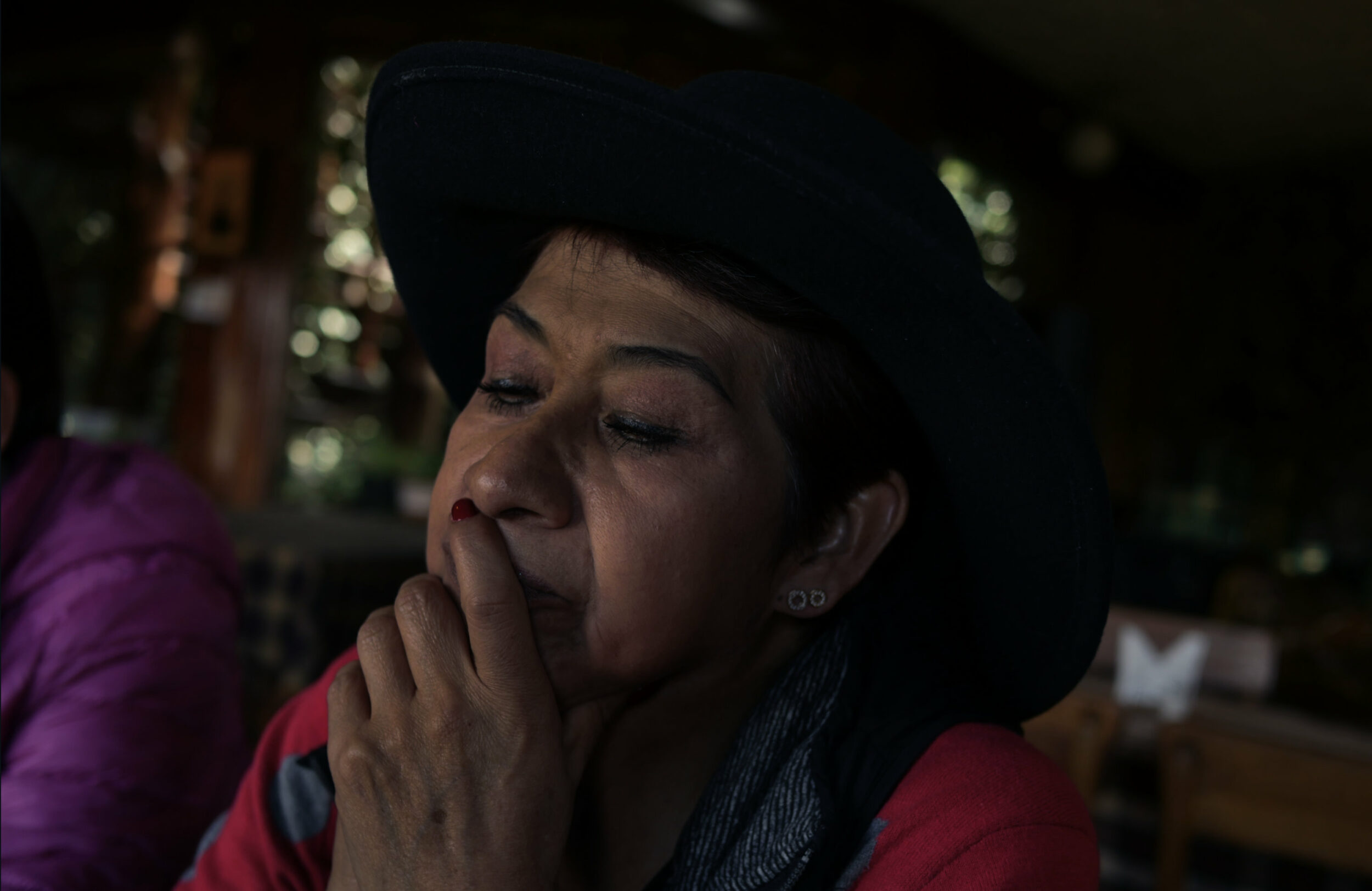
Maria Luisa Taurina. 2020. Vir Andres Hera. Lambda Print.
VAH: The excerpt you mention, originally written by Martinican psychiatrist Aimé Charles-Nicolas, refers to the Caribbean context, but we can apply this issue to our mestizo families in Mexico. I am thinking of the Afrophobia that still exists, even when members of our families have black phenotypic traits, such as Maria Luisa Taurina, my mother’s sister, or Leovigilda, my maternal great-aunt. When I moved to France permanently, my aunt Maria Luisa, whom her brothers and sisters call la negra tomasa, gave me a little black doll that I keep in my studio. She gave it to me, explaining that this little doll represented the child she was unable to have. She imagines that if she had been able to give birth, her child would have been a negrito. I wonder to what extent her inability to have children was caused by sociopsychological and psychosomatic factors due to racism. It is as if her body, locked into the concept of mestiza, had chosen not to give birth to a black body.
MB: The question of the black body, in the context of Mexico, reminds me of our first conversation, where we talked about dispossession. The phrase “My uterus was a hull for four centuries,” which I used in my film Musa, comes to mind. I was thinking about the link between female sexuality, motherhood, lineage, and the rediscovery of the body as a space for self-care and autonomy. The image of the slave ship’s hold, as proposed by Saidiya Hartman, is that of the bodies of enslaved people born on the plantation who had always been in slavery. The slave ship as a maternal cavity, an intimate space, charged with emotion and yet forgotten, abandoned:
“The slave ship is a womb/abyss. The plantation is the belly of the world. Partus sequitur ventrem—the child follows the belly. The master dreams of future increase. The modern world follows the belly. Gestational language has been key to describing the world-making and world-breaking capacities of racial slavery. What it created and what it destroyed has been explicated by way of gendered figures of conception, birth, parturition, and severed or negated maternity. To be a slave is to be “excluded from the prerogatives of birth.” The mother’s only claim—to transfer her dispossession to the child. The material relations of sexuality and reproduction defined black women’s historical experiences as laborers and shaped the character of their refusal of and resistance to slavery. » 47 « .”
Following on from Hartman, we need to take the time to understand what these boat-cavities mean to us today, to perceive them also as organic forms that allow us to heal the wounds of the past, to extend this motherhood to the bodies of the present. In other words, the uterus-boat is an aquatic figure that connects the bodies of the sea to the land. In Musa, we see banana flower petals manipulated as if in a ritual, to engage in dialogue with these historical oversights and traumas associated with motherhood under slavery.
Hartman, S. (2016) The Belly of the World: A Note on Black Women’s Labors, Souls, 18:1, 166-173, DOI: 10.1080/10999949.2016.1162596
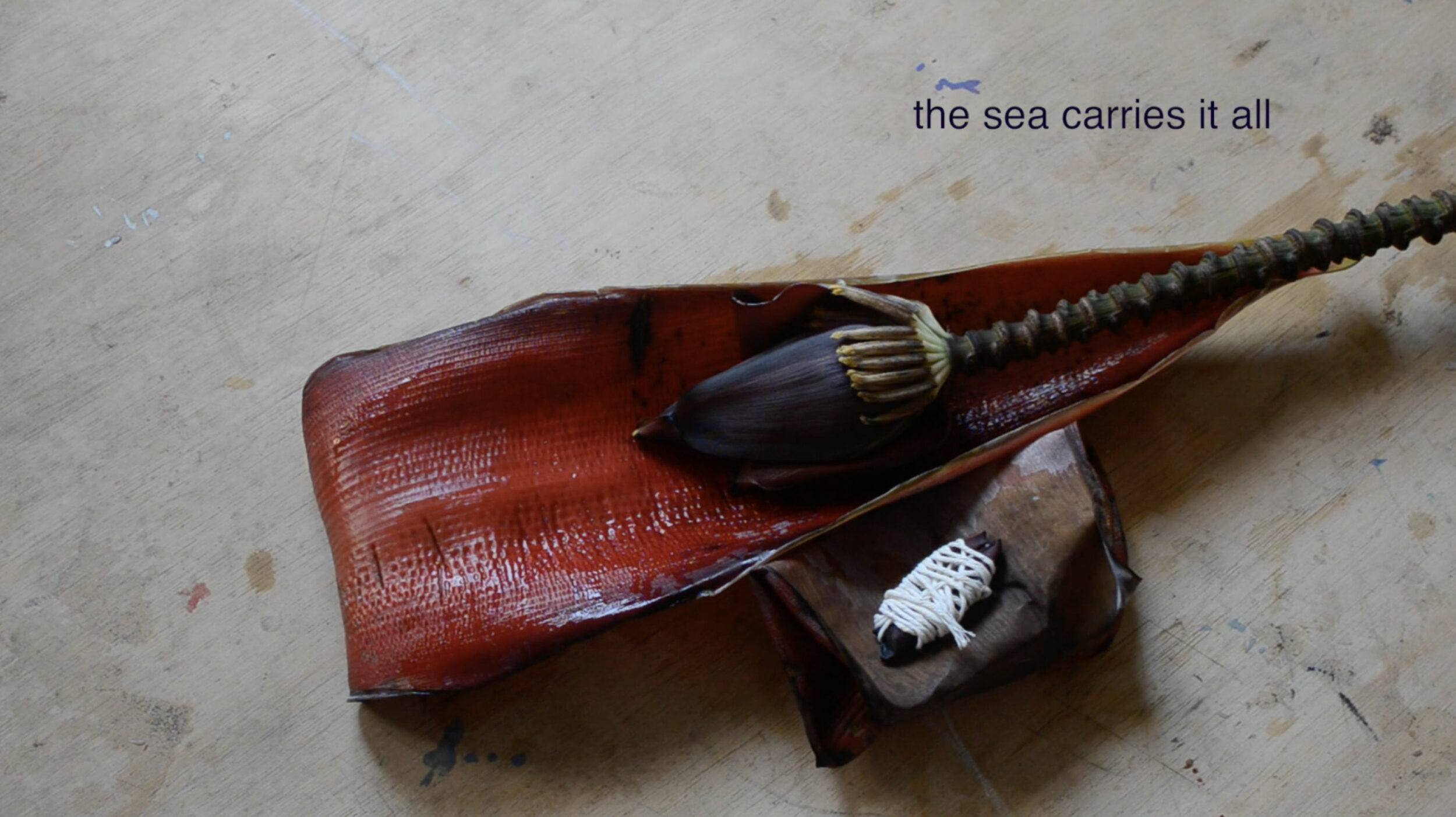
Musa. 2020. Minia Biabiany. HD film: Screenshot 03'53".
VAH: I think of all the Black bodies that have passed through Mexico, especially Juana’s. The scattered fragments of her subjectivity and her Afro-Mexican speech, like scattered scraps, have not been erased. Thinking back on the stories of my Haitian French teacher, my aunt, and Juana, I try to gauge the weight of mestizo and white entities in particular, which prevent us from dissolving the cumulus clouds into forms of bodily affirmation that do not fit within these standards. I think again of the Guadeloupean historian Jean-Pierre Sainton: “One need only consult the written sources on slavery, immerse oneself in the social and cultural universe of colonial slavery, to see the evidence of the destruction of humanity inscribed in every interstice of the system’s logic . But there is also a flip side to the sources, those that are not given a priori, which must be deduced, reconstructed, established, interpreted, and are subjective.” » 48 «
Marco Polo Hernandez says that the history of every American country has a black capital: Bahia in Brazil, Atlanta or New Orleans in the United States, Cartagena in Colombia, Santo Domingo in the Dominican Republic, and so on. Even Bolivia, a country with an indigenous majority, can rejoice in having recognized the descendants of the only African aristocratic lineage on the continent » 49 « . Mexico stands out as the exception to a titanic oversight. Where is our Black capital? Is it Veracruz, the main slave port throughout the colonial period? Is it the Costa Chica, home to a large Afro-Mexican community? I have often thought that it might be in Mexico City, which could be explained by its history, with its population of African descent ten times greater than that of whites throughout the colonial period.
Could this Afro-Mexican capital be located in a non-place? Firstly, because Afro-Mexican history is now, at least, binational: a large number of Afro-Mexicans who identify as such have emigrated to the United States, where their racial identity remains enigmatic and has allowed them to create new identities on both sides of the border. Second, because the racist and supremacist institutional erasure of the Mexican nation has prevented Afro-Mexicans from forging links with other diasporic communities. Thirdly, as long as the symbol of mestiza·o·s is not problematized and its black past is not recognized, we cannot speak of a specific place of black memory; this place is multiple » 50 « .
If the language of Mexico is not only Spanish, nor the great diversity of indigenous languages that continue to exist today, I like to believe that there is no single language from which to reflect on the Black history of Mexico. Based on this principle, it is not only up to mestizos and Afro-Mexicans to redefine this space. In my opinion, it can be constructed by taking into account all the experiences of Black people who have traversed the space of Mexican history, such as Audre Lorde.
In 2017, I made a film, Negrillas Kuiloni, a documentary that came about by chance, with images shot at different times and places. The film’s script was written in French, and I asked a Beninese artist friend, Moufouli Bello, to interpret it based on her French and her own experiences, even though she had never been to Mexico. In my view, Negrillas Kuiloni was meant to tell the story of Mexico from this missing place, that of the Black presence that we dare not invoke. I called on a shaman to visit one of the iconic figures of the Mexican Revolution, Emiliano Zapata » 51 « , who, in addition to being Afro-Mexican and indigenous, is increasingly claimed as an LGBT figure, but that’s another story (laughs). This film had to be narrated by a French person who was “different,” far from the “universal” voice associated with mainland France. I wanted a Black narrator from the future to “narrate” today’s Mexico. If the Spanish of the present is mostly brown, then the French of the future will be black.
MB: In addition to our intersecting paths between Guadeloupe, known as overseas France, and mainland France, rural and urban Mexico(es), gestures and the body recur in our videos—slow gestures, gestures that take on new meaning. I am interested in how psychological and traumatic space codifies the perception of physical space, how we perceive or receive this space in our bodies, and how the movements of our bodies unconsciously change according to our histories and the of our interpretations of our contexts. Your research, Hétéroglossies litteraires, and your installation, Misurgia Sisitlallan, are based on this heterolinguistic landscape of colonial Mexico in order to create a listening device where Creole, indigenous, African, and European voices coexist in space. I return to the idea of resonance. This text gives us the opportunity to let languages resonate in our bodies. It is a continuation of our research, while creating a critical extension and a dialogue in favor of a Caribbean geography and a history of transatlantic affinities and trajectories.
Since we are speaking in quotations, your aunt’s story reminds me of the experience en nube, “in the cloud,” of all women, indigenous women, black and white women. Who wants to reconnect the old and the new in all its multiplicity? Who wants to look at the history of continents and colonization, each from their own vernacular, as Simone Schwarz-Bart was able to do? “I have never suffered from the smallness of my country, without claiming to have a big heart. If I were given the power, it is here, in Guadeloupe, that I would choose to be reborn, to suffer, and to die. Yet not long ago, my ancestors were slaves on this island of volcanoes, cyclones, mosquitoes, and bad attitudes. But I did not come to earth to weigh all the sadness in the world. Instead, I prefer to dream, again and again, standing in the middle of my garden, as all old women my age do, until death takes me in my dream, with all my joy… » 52 « “
Sainton, J. P. (2018). Slavery: what impact on the psychology of populations? Edited by Nicolas A. C., Bowser, B.. pp. 201-202.
The Afro-Bolivian Royal House is a monarchy recognized by the Plurinational State of Bolivia, which does not interfere with the current presidential republic system. It is composed of the descendants of an ancient African monarchy enslaved in America.
Editor's note [Qalqalah]: In our opinion, this also applies to Mexican indigenous memory sites. It would be difficult to say that a specific memory site can represent all memories, unless we admit that the only memory that counts is institutional memory. The absence of institutional memory does indeed lead to a fragmentation of memories, but in the case of indigenous memory, for example, it can be just as fragmented when it is no longer dominant—that of the indigenous trans people [muxes] in Oaxaca, for example. It is not enough to recognize a past memory in order to channel it into a single entity.
Luján Aldana, C.. (2019). Emiliano Zapata, his African roots and his role as a source of inspiration in the African agrarian struggle: https://tlilxayac.com/emiliano-zapata-sus-raices-afros-y-su-figura-como-fuente-de-inspiracion-en-la-lucha-agraria-africana/
Schwarz-Bart, S.. (1972). Rain and Wind on Telumée Miracle. Seuil, p. 8.
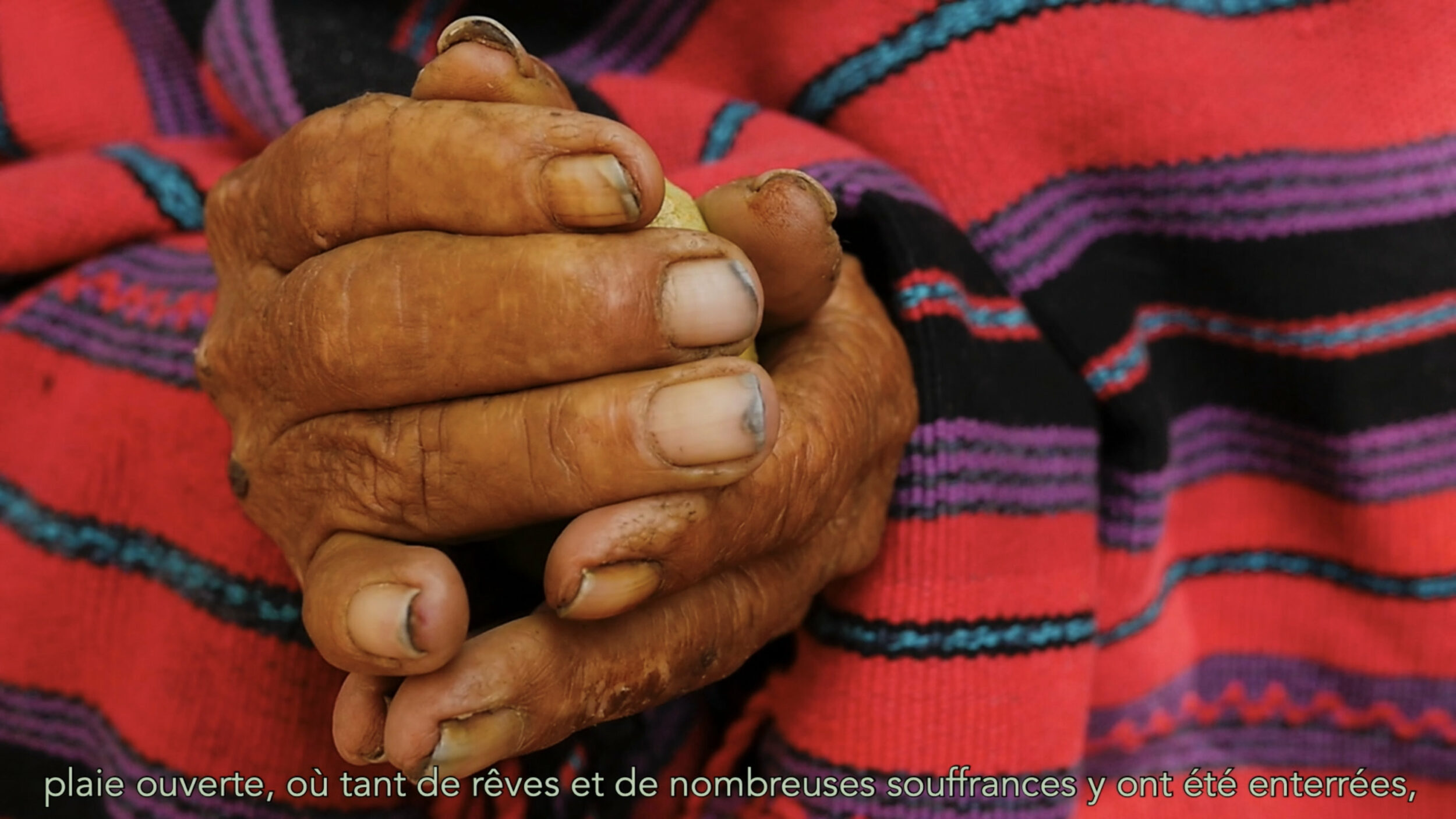
Negrillas Kuïloni. 2021. Vir Andres Hera. HD film: Screenshot 16'43"
Digression 4
YARA – KOWATLIKUE
[word for Minia]
These connections are vivid in all those who are willing to make the necessary symbolic and physical journeys. To make loops that allow us to pass through other places to acquire tools for here; but also to remain here to create tools that anchor us, that help us rediscover a perspective connected to the place. Paying tribute to Glissant, who said: “It was Christopher Columbus who left, and it was I who returned!” Or to Inca Garcilazo de la Vega (whitewashed by institutional history), the first Peruvian indigenous person to write about America from Europe in the 16th century. These national myths are responsible for whitewashing Vicente Guerrero, the first Afro-Mexican and therefore North American president; responsible for the non-recognition of Gaspar Yanga; responsible for the erasure of the other Juana, or Yara, slave and maid of the great poetess descended from the conquistadors, Sister Juana Inés de la Cruz, and whose Afro-Mexican speech, I would like to believe, has come down to us today in the verses written in “bozal” speech, transcribed by the latter.
I would like to think that Yara also had a way with words, and, to rephrase the closing words of Virginia Woolf’s A Room of One’s Own » 53 « : She never wrote a single word. She is buried beneath the Great Temple of Mexico City, where Kowatlikue, the vengeful goddess of fertility and the earth in Aztec mythology, was found in 1970. I am convinced that this poet, who never wrote a word and was buried at this crossroads, still lives. She lives in you and me, and in many others who are not here tonight because they are, for example, working at the checkout of one of the many Oxxo convenience stores. But she lives on, for great poets never die; they are eternal presences, waiting only for the opportunity to appear among us in the flesh. I believe that opportunity is now in our power to give her, in the pursuit of Afromestizo alliances, without a hyphen.
Woolf, V.. (1929). A Room of One's Own. Hogarth Press. “I told you in the course of this paper that Shakespeare had a sister; but do not look for her in Sir Sidney Lee’s life of the poet. She died young—alas, she never wrote a word. She lies buried where the omnibuses now stop, opposite the Elephant and Castle. Now my belief is that this poet who never wrote a word and was buried at the crossroads still lives. She lives in you and in me, and in many other women who are not here tonight, for they are washing up the dishes and putting the children to bed. But she lives; for great poets do not die; they are continuing presences; they need only the opportunity to walk among us in the flesh. This opportunity, as I think, it is now coming within your power to give her.”
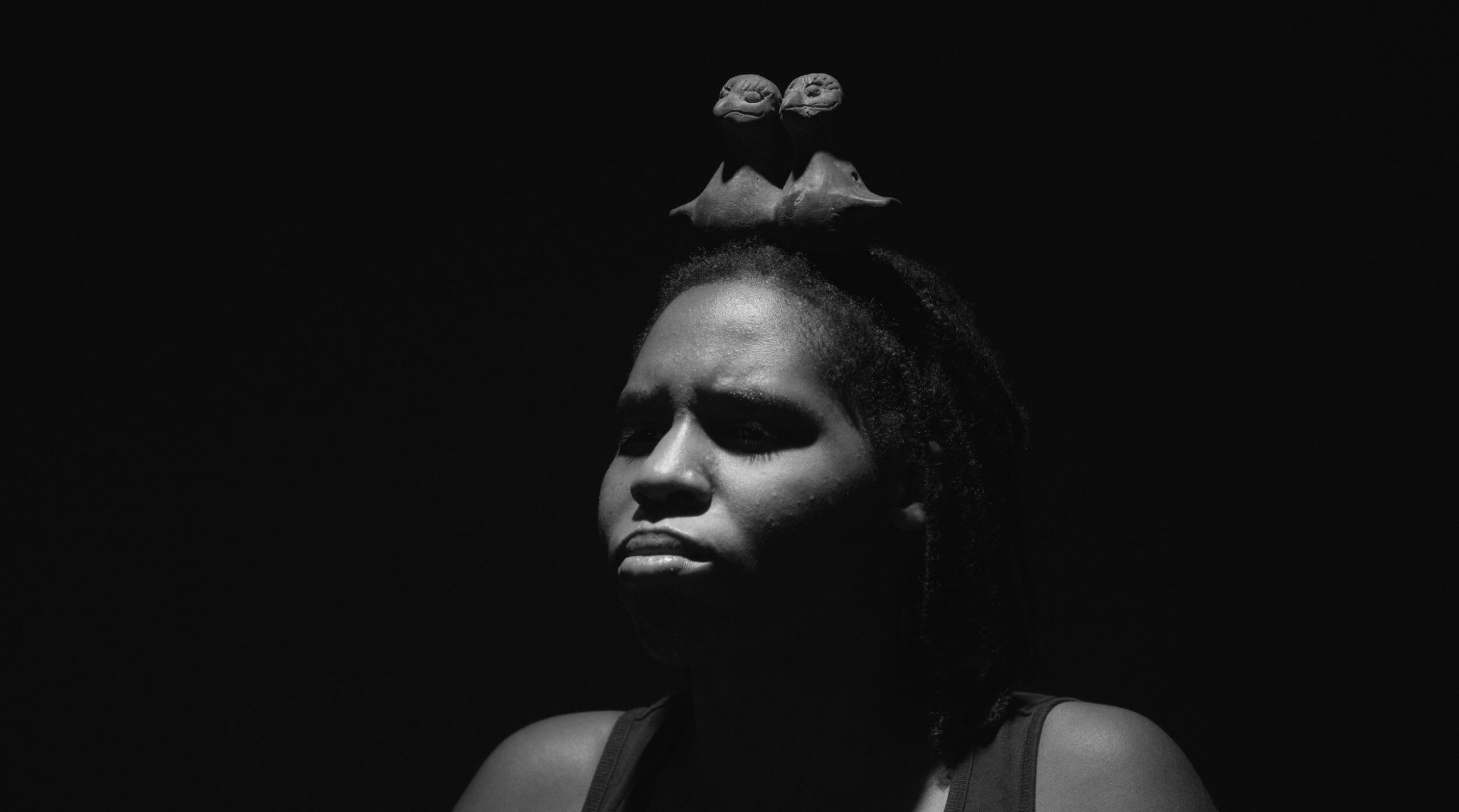
Misurgia Sisitlallan. 2020. Vir Andres Hera. HD film: Screenshot 25'44"
with
Minia Biabiany
Biographies
><
Minia Biabiany
Victorine Grataloup
Victorine is a curator, co-founder of Qalqalah Qق, and Director of Triangle-Astérides, whose collaborative practice explores language, political imaginaries, and minority representations.
See also
Salma Mochtari
Salma is a Marseille-based researcher and curator, member of Qalqalah Qق, whose work engages archival absence, Black studies, and decolonial and queer critical theory.
Sor Juana Inés de la Cruz
Juana was a poet and philosopher in colonial Mexico. She wrote with unusual intellectual freedom, expressing what we would today call queer desire. She publicly defended women’s right to study and think, enduring the tension between faith and insubordination.
See also
Figures referenced in the text
Audre Lorde; Jean-Pierre Sainton; Gloria Anzaldúa; Guillermo Bonfil Batalla; José Vasconcelos; Marco Polo Hernández Cuevas; Ariella Aïsha Azoulay; Octavio Paz; Néstor Braunstein; Rolando Antonio Pérez Fernández; Ruth Levitas; Saidiya Hartman; Aimé Charles-Nicolas; Sor Juana Inés de la Cruz.
Editorial direction (Qalqalah قلقلة)
Victorine Grataloup, Salma Mochtari
Editorial direction (Lili, la rozell et le marimba)
Lotte Arndt, Sophie Kaplan
Originally developed following an invitation from Lili, la rozell et le marimba to Qalqalah قلقلة. First published in Lili, la rozell et le marimba, issue 4, La Criée centre d’art contemporain, Rennes.